Key Takeaways
- Montana rule requires every licensed SUD facility to keep a written waitlist procedure with priority protocols and referrals, so ‘no waitlist’ really means beds are open right now 5, 7.
- The state aimed to grow residential capacity 10% in FY2025 but reached 6.09%, leaving most facilities near full and making who answers the phone decide whether you get a bed 1.
- Distance, weather, and missing bus routes stall admissions across rural Montana, which is why complimentary pickup from Billings, Missoula, Havre, or Kalispell removes a common reason people delay 11.
- Call Rocky Mountain Treatment Center’s 24/7 line in Great Falls for a live clinical screen, same-line insurance check, and same-day admission when a bed fits; Medicaid clients get pointed toward HEART waiver programs 2.
The 72 Hours That Decide Everything
You already know the hardest part. It wasn’t the drinking. It was picking up the phone.
Maybe you’re the one who finally sat down and searched “no waitlist rehab Montana” at 2 a.m. Maybe you’re a spouse, a parent, an adult kid watching someone you love disappear one bottle at a time. Either way, you’re here now, and that took something. That matters.
Here’s what nobody says out loud: the window between deciding to get help and actually walking through the door is small. Really small. One national study of substance users found the average wait from initial contact to treatment entry ran about 42.6 days, and roughly a quarter to half of people fall off waitlists before they ever get a bed 13. That’s not a statistic about them. That’s a statistic about how hard it is to hold onto willingness when nothing happens after you ask for help.
Which is why the next 72 hours matter more than the last 72 months.
Rocky Mountain Treatment Center in Great Falls answers the phone around the clock. A real person, not a voicemail box, not a callback promise. When a bed is available and the clinical screen says it’s the right fit, admission can happen the same day you call. If you’re stuck in Billings, Missoula, Havre, or somewhere with no bus route out, complimentary Montana pickup is part of the deal.
You don’t have to be ready for the rest of your life today. You just have to be willing for the next 72 hours. Call now, admissions answers 24/7. The rest, we’ll walk through together.
What “No Waitlist” Actually Means in Montana
The Legal Reality: Every Licensed Facility Has a Waitlist Procedure
Here’s something worth knowing before you make another call: every licensed substance use disorder facility in Montana is required by state rule to have a written waitlist procedure. That’s not a loophole or a red flag. It’s the law.
Montana’s SUDF rules require every facility to keep policies that spell out how they handle a wait list, including unique client identifiers, referrals to other treatment facilities when they’re full, and clear rules about when someone can be removed from the list 5. The same rulebook requires admission criteria and priority protocols for people in the most urgent shape 7. So when a rehab tells you they have “no waitlist,” what they usually mean is that they don’t currently have anyone waiting, not that they’ve torn up the procedure that governs what happens if they fill up next Tuesday.
That matters for you because it changes the question. You’re not asking, “Do you have a waitlist?” You’re asking, “Do you have a bed today, and if not, will you help me find one that does?” A facility that answers both parts honestly is a facility worth trusting.
What Rocky Mountain Treatment Center’s 24/7 Admissions Line Actually Does
When you call Rocky Mountain Treatment Center in Great Falls, a real person answers. Day, night, Sunday morning, the middle of a snowstorm. There’s no phone tree that dumps you into a voicemail box that promises a callback “within one business day.” One national study of 192 addiction treatment clinics found callers often needed multiple attempts just to get through and schedule a first appointment 15. That’s exactly the gap RMTC’s live intake is built to close.
Here’s what actually happens on that call. Someone listens first. Then they walk you through a quick clinical screening, the kind that checks whether inpatient care is the right level for what you’re going through, especially if alcohol detox is on the table. If it is, and a bed at the 26-bed Great Falls facility is open, admission can happen the same day. You don’t wait two weeks. You don’t drive four hours on your own. Complimentary Montana pickup is arranged from wherever you are.
If RMTC isn’t the right fit clinically, or if every bed is full that hour, they don’t just hang up. They help you find somewhere that can take you. That’s what “no waitlist” is supposed to mean in practice: a live human, a real answer, and a next step tonight, not next month.
Why Waiting Kills the Decision to Get Sober
You’ve probably felt it before. The moment you decide something has to change, there’s a small, quiet window where the decision feels real. Then a day passes. Then another. And that window starts to close.
That’s not weakness. That’s how addiction works. It waits for the willingness to fade, and it usually doesn’t have to wait very long.
Researchers who studied phone scheduling at 192 addiction treatment clinics measured exactly how long that fade takes to become a problem. The average wait from a first phone call to a first assessment appointment was 7.2 days. After the clinics were coached to improve their intake process, it dropped to 5.8 days. On top of the wait, callers averaged 0.47 callbacks just to get someone on the line and get an appointment on the calendar 15. That study looked at outpatient scheduling, not residential admission, so the numbers aren’t a direct match to what you’re facing. But the shape of the problem is the same everywhere: the longer the gap between the call and the care, the more people slip.
Think about your own week. Five to seven days is a Friday night. It’s a fight with your spouse. It’s a bad memory that shows up at 11 p.m. and a bottle within reach. It’s the coworker who says, “One drink, come on.” A week is more than enough time to talk yourself out of the thing you were sure of on Monday.
This is why Rocky Mountain Treatment Center built the admissions line the way it did. When you call, a real person picks up. Not a queue, not a callback slip, not a promise that someone will get back to you Tuesday. You get a live clinical conversation the same hour you find the courage to dial. If you’re a fit for the 26-bed Great Falls program and a bed is open, you can be in it that day. If you’re not, they help you find somewhere that can take you tonight.
Montana’s Bed Shortage in Plain Numbers
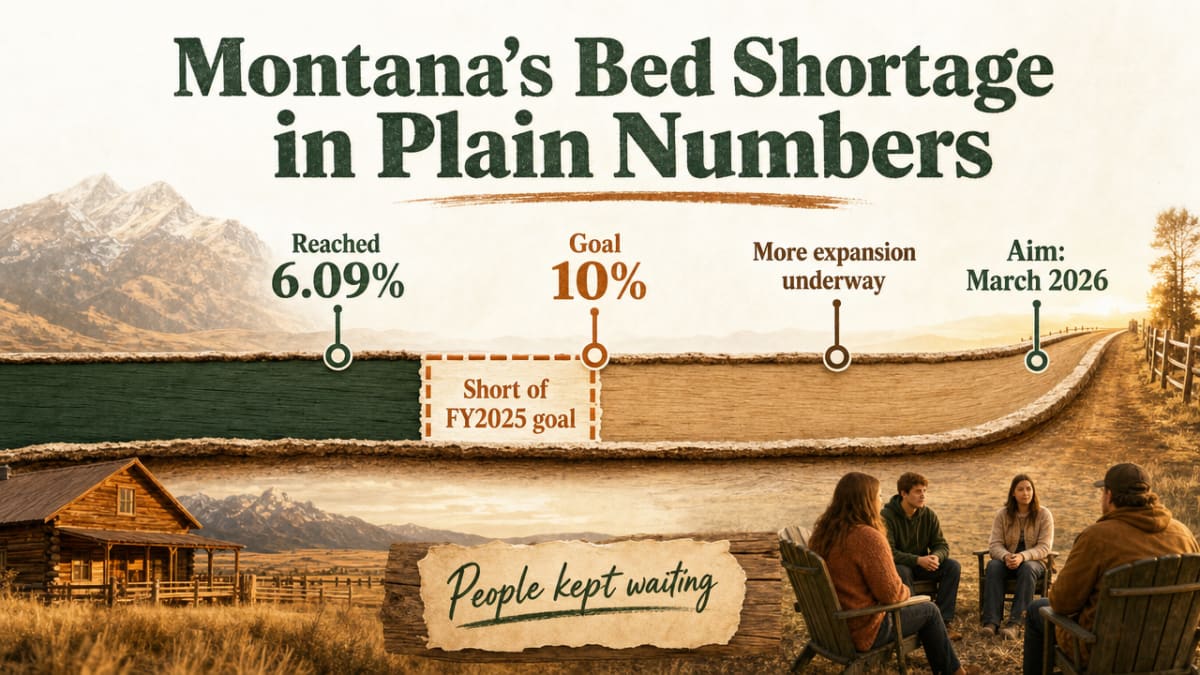
You might be wondering why any of this is so hard in the first place. Why is a bed for alcohol detox in Montana harder to come by than a hotel room in Bozeman during ski season? The answer isn’t that nobody cares. It’s that the math has been working against you for a long time.
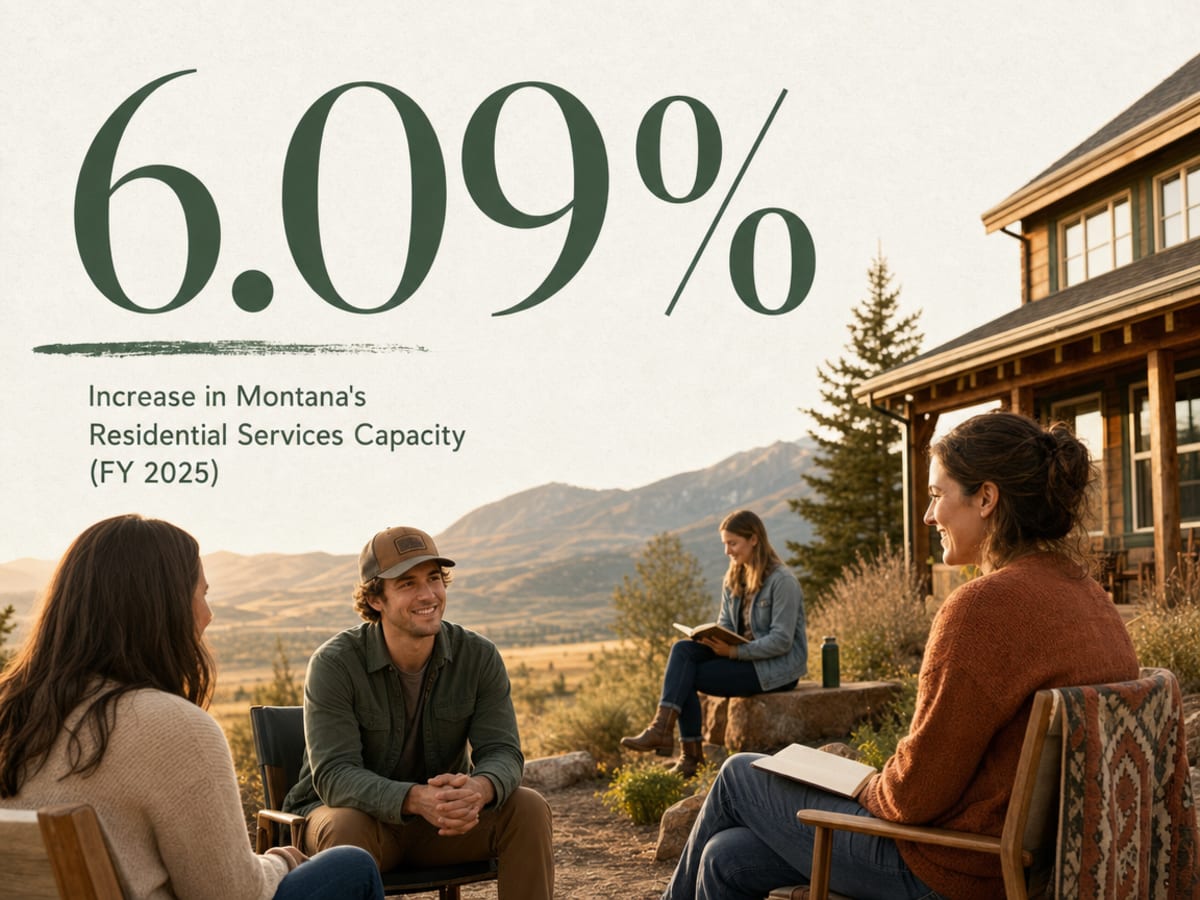
Montana’s Department of Public Health and Human Services set a goal in fiscal year 2025 to grow residential treatment capacity by 10%. The state made real progress and got there by 6.09%, with more construction and grant-funded expansion aimed at finishing by March 2026 1. That’s movement in the right direction. It’s also a plain admission that the state fell short of what it planned to add this year, while people kept calling, kept relapsing, and kept waiting.
Growth of a few percentage points doesn’t feel like much when you’re the one on the phone at 9 p.m. on a Sunday. It means most facilities are running close to full most of the time. It means a “no waitlist” claim can be true this morning and untrue by dinner. It means the difference between getting a bed and getting told to try back next week often comes down to who answers when you call.
Rocky Mountain Treatment Center runs 26 beds in Great Falls. That’s not a warehouse. It’s a small enough place that admissions actually knows what’s open and what isn’t when they pick up. And when a bed is available and the clinical screen says inpatient care is the right level for you, they can move quickly — same-day admission and complimentary Montana pickup included. When it’s not available that hour, they’ll tell you that too, and help you find somewhere that can take you tonight.
The bed shortage is real. Your window is still open. Both things are true at the same time.
Your First 24 Hours With Rocky Mountain Treatment Center
The Call: What a Live Intake Sounds Like
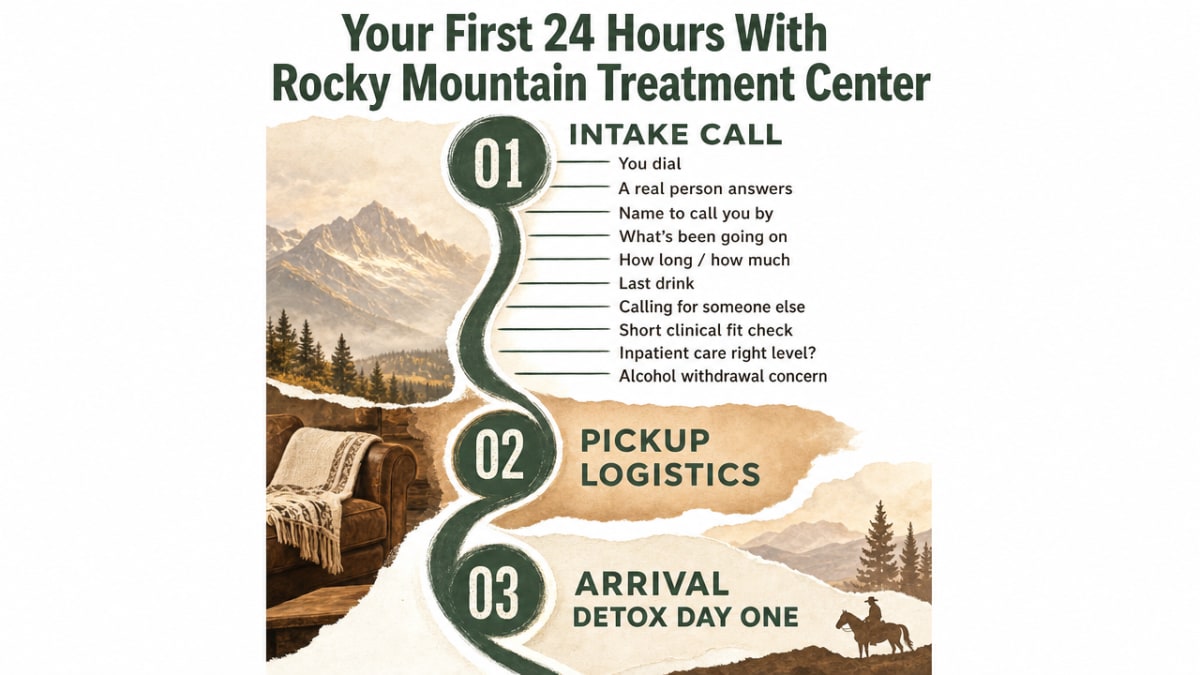
You dial. Someone says hello. That’s the first thing that’s different.
Not a menu. Not “press 2 for admissions.” A person, in Great Falls, who has done this call a thousand times and remembers that the person on the other end of the line is usually shaking a little.
They’ll ask your name, or a name to call you by. They’ll ask what’s been going on with the drinking or the using. How long, how much, when the last drink was. If you’re calling for someone else, they’ll ask what you’ve been watching from the outside. The tone is closer to a kitchen table than a clipboard.
Then comes the clinical part, and it’s shorter than you’d think. A few questions to figure out whether inpatient care at RMTC is the right level for what’s happening in your body right now, especially if alcohol withdrawal is a real risk. They’ll ask about insurance and pull up what your plan covers while you’re still on the line.
If a bed is open and the screening says you’re a fit, you can be admitted the same day. If not, they say so, and they help you find somewhere that can take you tonight.
Complimentary Pickup From Anywhere in Montana
Montana is bigger than most people who don’t live here understand. Great Falls to Billings is about three and a half hours on a good day. Missoula is another three. Havre, Kalispell, Bozeman, the reservations, the small towns off Highway 2 where the nearest counselor is a two-hour drive on ice in February. The state’s own SUD Task Force plan names this out loud: rural and frontier counties have real gaps in treatment access and transportation, and closing those gaps is a stated statewide priority 11.
That’s not an abstract policy problem when you’re the one trying to get to detox. It’s a car you don’t trust, a license you might have lost, a spouse who can’t leave work, a bus route that doesn’t exist. It’s every practical reason the willingness you found this morning might not survive the drive.
Rocky Mountain Treatment Center’s complimentary Montana pickup is built for exactly that. Once admissions confirms you’re a fit and a bed is open, they arrange transportation to Great Falls from wherever you are in the state. You don’t drive yourself through withdrawal. You don’t ask your mom to make an eight-hour round trip. You get in, and someone gets you to the door.
One less reason to say, “Maybe next week.”
Arrival, Medically Monitored Alcohol Detox, and Day One
When you pull up to the 26-bed facility in Great Falls, nobody’s going to hand you a stack of forms and disappear. The building is small on purpose. Staff know the people walking in because there aren’t three hundred of them.
If alcohol has been part of your daily life, the first stop is medically monitored detox. That means nurses and clinicians watching your vitals, managing withdrawal symptoms, and keeping you safe through the hours when quitting on your own can actually be dangerous. Alcohol detox isn’t something to tough out in a motel room. It’s the part of getting sober where the right medical eyes on you matter the most.
Day one is mostly rest, fluids, food when you can keep it down, and short check-ins. Nobody’s going to sit you in a group therapy circle three hours after you arrive. You sleep. You eat something. You meet a counselor, and there’s a good chance that counselor has been where you are — over 80% of RMTC’s staff are in recovery themselves. They’ve had this day. They know what it feels like.
Tomorrow, the work starts. Tonight, the goal is simpler: you’re safe, you’re inside, and the phone call worked.
Questions to Ask Any Montana Rehab Before You Say Yes
You’re allowed to interview them. That’s the first thing to remember. You’re not begging for a favor. You’re deciding where to spend the most important two weeks or two months of your life, and the person on the phone should treat the conversation that way.
Here’s what to ask, and what a good answer sounds like.
- “Do you have a bed available today, and if not, when?”
- Every licensed substance use disorder facility in Montana is required by state rule to keep a written waitlist procedure, complete with priority protocols for the most urgent cases and referral steps when they’re full 5, 7. A straight answer is fine. “Yes, we can admit today.” “No, we’re full until Thursday.” What you’re listening for is honesty, not a sales pitch. If they hedge, ask again.
- “Do you do medically monitored alcohol detox on-site?”
- If alcohol has been daily, this matters. Detox in the wrong setting can be dangerous. You want nurses and clinicians in the same building, not a referral to a hospital across town before your real treatment starts.
- “How do I actually get there?”
- Montana is long, cold, and short on buses. Ask whether transportation is included or whether you’re on your own. Rocky Mountain Treatment Center’s complimentary Montana pickup answers this one before you ask.
- “What does my insurance cover, and can you check while I’m on the line?”
- A facility that can pull up your benefits during the first call is a facility that has done this before. One that says “we’ll get back to you” is a facility that might not.
- “Will my family be part of this?”
- Ask about family programming, visiting, and communication rules. RMTC runs a three-day Family Week and involves people you love in the work, which matters more than most brochures admit.
- “Who will I actually be working with?”
- At Rocky Mountain Treatment Center, over 80% of the staff are in recovery themselves. That’s a specific answer to a question most facilities dodge.
If a rehab won’t answer these plainly, that’s your answer.
Insurance, Self-Pay, and Where RMTC Fits
Money is usually the second question. Right after “can you take me today,” it’s “can I actually afford this.” Both are fair questions to ask on the first call.
Here’s the plain version. Rocky Mountain Treatment Center works with most major private insurance providers. When you call, admissions can pull up your benefits while you’re still on the line — not tomorrow, not “we’ll email you.” You’ll get a real number on what your plan covers for medically monitored detox and inpatient care, and what, if anything, would be left over. If you’re self-pay, they’ll walk you through that too.
What RMTC does not accept is Medicaid or Medicare. That’s worth knowing before you drive to Great Falls. If Medicaid is your coverage, Montana has expanded residential options through the HEART waiver, which now pays for short-term residential substance use treatment in facilities with more than 16 beds and has helped ease waiting times at Medicaid-contracted programs 2. In state fiscal year 2024, 1,350 Montanans were served through that waiver 4. That’s a real door, just not this one. Admissions will point you toward a HEART-participating facility if that’s the fit.
If you have private insurance or you’re paying out of pocket, RMTC is built to move fast. One call, benefits checked, answer tonight.
Who RMTC Is When You Walk Through the Door
You should know who’s on the other side of the door before you drive to it.
Rocky Mountain Treatment Center has been in Great Falls since 1983. That’s more than four decades of one building, one town, one small program that never turned into a chain. It’s Joint Commission accredited, which is the outside stamp that says the clinical work is held to a real standard. Inside, it’s 26 beds. Not a wing of 26. The whole place.
The staff is the part most people don’t expect. More than 80% of the people who work at RMTC are in recovery themselves. The counselor sitting across from you at your first session has almost certainly sat where you’re sitting. They know the shame spiral. They know the 3 a.m. math of how many drinks are left in the cabinet. You don’t have to explain the parts of this you can’t put into words yet.
The work itself blends medically monitored detox, individual and group counseling, family therapy, and things you don’t see at every facility — equine therapy with actual horses, time outside, a three-day Family Week that pulls the people who love you into the room. Optional Bible study is there if you want it, ignored if you don’t.
Make the Call Tonight
You’ve read this far. That’s not nothing. That’s your willingness still holding on, and it deserves an actual next step before the night gets any longer.
Pick up the phone. A real person at Rocky Mountain Treatment Center will answer, whether it’s 2 p.m. on a Tuesday or 3 a.m. on a holiday. They’ll listen first. Then they’ll walk you through a quick clinical check, look at your insurance while you’re on the line, and tell you plainly whether a bed in Great Falls is open tonight. If it is, complimentary Montana pickup can start moving toward you today.
You don’t have to be sure about a 90-day program right now. You just have to be sure about the next phone call. Call now. Admissions answers 24/7.
Frequently Asked Questions
Is a truly no-waitlist rehab possible in Montana?
Yes and no, and the honest version helps you. Every licensed substance use disorder facility in Montana is required by state rule to have a written waitlist procedure, including referrals when they’re full 5. “No waitlist” in practice means a facility has open beds right now and can move fast. Rocky Mountain Treatment Center answers 24/7 and admits the same day when a bed is available and the clinical screen fits.
Can Rocky Mountain Treatment Center admit me the same day I call?
Often, yes. When you call, a real person picks up, walks you through a quick clinical screening, and checks your insurance while you’re on the line. If a bed at the 26-bed Great Falls facility is open and inpatient care fits what you’re going through, same-day admission is on the table. If not, admissions will tell you plainly and help you find somewhere that can take you tonight.
How does the complimentary Montana pickup work if I live far from Great Falls?
Once admissions confirms you’re a fit and a bed is open, transportation to Great Falls gets arranged from wherever you are in Montana — Billings, Missoula, Havre, Kalispell, small towns off Highway 2. You don’t drive yourself through withdrawal. You don’t ask family to make a long round trip. It’s built for a state where rural and frontier access gaps are a documented barrier to treatment 11.
Does Rocky Mountain Treatment Center accept Medicaid or Medicare?
No. RMTC works with most major private insurance providers and self-pay, but does not accept Medicaid or Medicare. If Medicaid is your coverage, Montana’s HEART waiver now pays for short-term residential SUD treatment at participating facilities and has helped ease waiting times there 2. Admissions at RMTC will point you toward a HEART-participating program if that’s the right door for your situation.
What happens during medically monitored alcohol detox at RMTC?
Nurses and clinicians watch your vitals, manage withdrawal symptoms, and keep you safe through the hours when quitting alcohol on your own can be dangerous. Day one is mostly rest, fluids, food when you can hold it down, and short check-ins. You meet a counselor — and given that over 80% of RMTC staff are in recovery themselves, there’s a good chance they’ve had this day too.
What should I ask a Montana rehab before I agree to admit?
Ask if a bed is open today, and if not, when. Ask if medically monitored alcohol detox is on-site. Ask how you actually get there. Ask them to check your insurance while you’re on the line. Ask about family involvement and who your counselor will be. Montana rules require facilities to have admission criteria and priority protocols 7. Straight answers to plain questions tell you a lot.
References
- Department of Public Health and Human Services Annual Performance Report FY 2025. https://dphhs.mt.gov/assets/StatutorilyRequiredReports/2025FYDPHHSAnnualPerformanceReport09302025.pdf
- healing and ending addiction through recovery and treatment (heart). https://dphhs.mt.gov/assets/StatutorilyRequiredReports/MCA16-12-122HEARTReport9-1-25.pdf
- DPHHS MCA 16-12-122: HEART Initiative Report. https://dphhs.mt.gov/assets/heartinitiative/HEARTInitiativeReport2024.pdf
- section 1115 heart demonstration waiver legislative summary. https://archive.legmt.gov/content/Publications/services/2024-agency-reports/MCA_53-2-215_HEART_Waiver.pdf
- SUDF Rules – dphhs. https://dphhs.mt.gov/assets/oig/ChemicalDependencyFacilities20251.pdf
- 50-5-248. Licensing of residential treatment centers – MCA. https://mca.legmt.gov/bills/mca/title_0500/chapter_0050/part_0020/section_0480/0500-0050-0020-0480.html
- Rules for Substance use Disorder Facility. https://dphhs.mt.gov/assets/oig/Rules_for_Substance_use_Disorder_Facility.pdf
- Montana Substance Use Disorders Task Force Strategic Plan. https://dphhs.mt.gov/assets/publichealth/EMSTS/opioids/MontanaSubstanceUseDisordersTaskForceStrategicPlan.pdf
- DPHHS Updates to Law and Justice Interim Committee (CJOC). https://archive.legmt.gov/content/Committees/Interim/2025-2026/CJOC/July-2025/CJOC_DPHHS-Updates-7.23.2025.pdf
- Mont. Admin. r. 37.27.902 – SUBSTANCE USE DISORDER …. https://www.law.cornell.edu/regulations/montana/Mont-Admin-r-37.27.902
- Montana Substance Use Disorder Task Force Strategic Plan 2024. https://dphhs.mt.gov/assets/publichealth/EMSTS/opioids/SUDsStrategicPlan2024.pdf
- National Substance Use and Mental Health Services Survey (N-SUMHSS) 2023: Data on Substance Use Disorder Treatment and Mental Health Treatment Facilities. https://library.samhsa.gov/product/national-substance-use-and-mental-health-services-survey-n-sumhss-2023-data-substance-use
- Waiting Time as a Barrier to Treatment Entry: Perceptions of Substance Users. https://pmc.ncbi.nlm.nih.gov/articles/PMC2396562/
- Accessibility of Addiction Treatment: Results from a National Survey of Outpatient Substance Abuse Treatment Units. https://pmc.ncbi.nlm.nih.gov/articles/PMC1360921/
- Examining access to addiction treatment: Scheduling processes and phone systems. https://pmc.ncbi.nlm.nih.gov/articles/PMC3616751/