
Key Takeaways
- Program size doesn’t determine recovery on its own, but it shapes counselor consistency, staff-to-client ratio, and how known you feel — the factors most linked to staying in treatment 2, 1.
- Smaller residential settings make therapeutic alliance and patient satisfaction easier to sustain, since the same counselor, nurse, and peers carry you from admission through discharge and beyond.
- Larger programs earn their place when you need on-site psychiatry, medical specialty care, or multiple therapy tracks under one roof 4, or thrive in a busier peer community.
- Before committing, ask about counselor caseload, whether one primary counselor stays with you through discharge, current staff-to-client ratio versus the 0.52 national average 9, and who runs aftercare.
- The decisive trade-off is breadth versus continuity: a wider on-site service menu only helps if you get one-on-one time to use it, which depends on being known, not square footage.
The question underneath the question
You’re not really asking which rehab is bigger or smaller. You’re asking something harder: where will I feel safe enough to actually stay? Where will someone notice if I’m having a rough morning? Where will I stop feeling like a file number and start feeling like a person again?
That’s a fair question. It might be the most important one you ask.
The truth is, program size on its own doesn’t decide whether you get better. What size does decide is almost everything around your recovery — how well the counselor across from you knows your story, how often you get real one-on-one time, whether the same staff greet you at breakfast every day, and how connected you feel to the people walking beside you after you leave.
Research backs this up. Factors like the strength of your relationship with your counselor, how satisfied you feel with your care, and the number of staff available per client are most tied to staying in treatment long enough to heal 2, 1. Bed count is a proxy for those things, not the thing itself.
So let’s look at what small and large residential programs actually feel like day to day, and how to tell which one gives you the best shot.
What size actually changes about your day
Think about a regular Tuesday morning inside a residential program. You wake up, walk to the dining room, and someone behind the counter says, “Morning, Sarah — sleep any better last night?” That small moment tells you almost everything about the size of the place you’re in.
In a smaller residential program, the staff know your face by the second day and your story by the end of the first week. The counselor who ran your group yesterday is the same one you’ll pass in the hallway this afternoon. You eat meals with the same twenty-something people. You start to know who’s quiet in the morning, who cries during family calls, who makes everyone laugh at dinner. That familiarity isn’t a bonus feature — it’s the ground your recovery grows in.
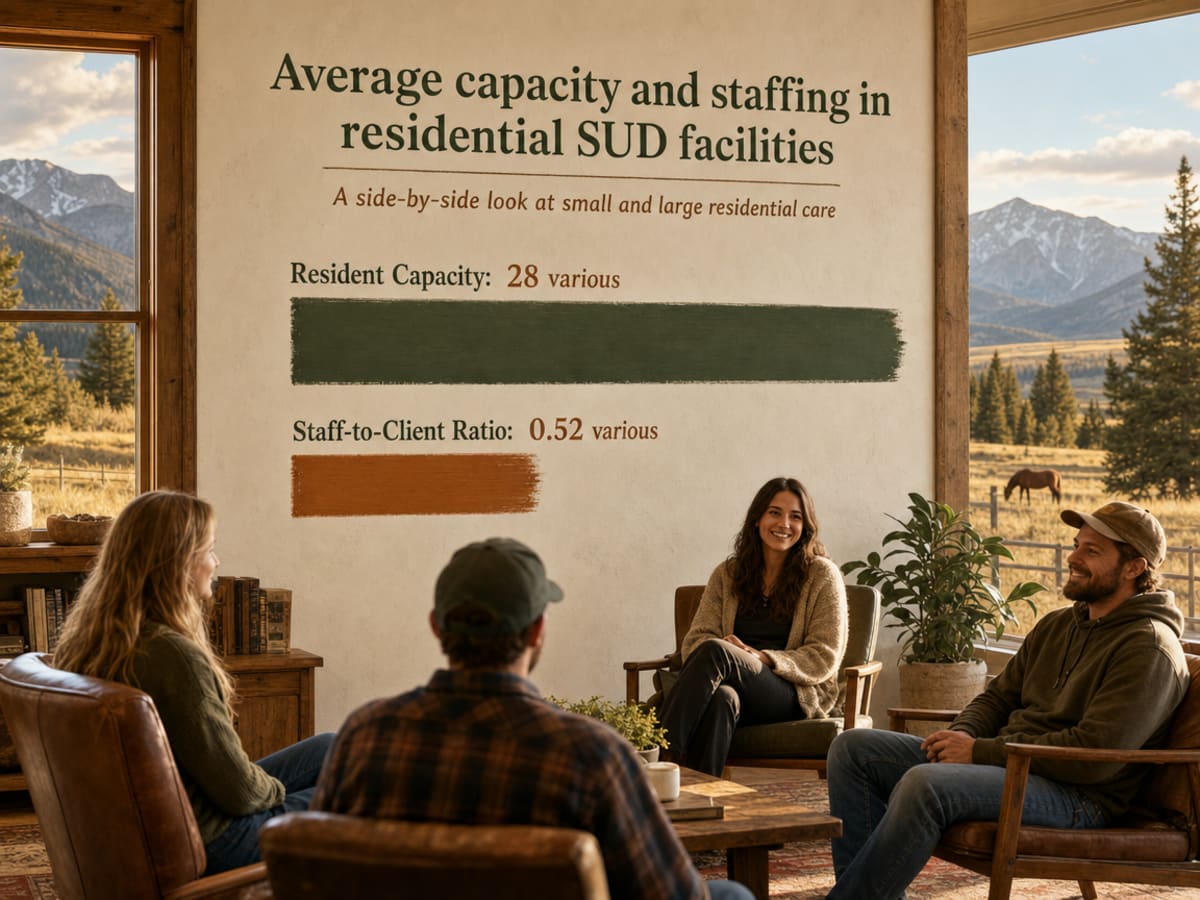
A recent look at U.S. residential substance use disorder facilities pegged the average capacity at 28 residents with a staff-to-client ratio of about 0.52 — roughly one staff member for every two clients 9. That’s the national middle. A 26-bed program sits right there, close enough that every resident can be known by name. In a program running 80, 120, or 200 beds, the math changes fast. Even with the same ratio on paper, you’re now one of many wings, many groups, many charts. The counselor rotation gets bigger. The person leading your check-in on Monday may not be the person leading it Thursday.
Size also shapes the quieter things. Who’s at the front desk when you come back from a walk. Whether the chef knows you don’t eat eggs. Whether the same nurse hands you your morning medication for thirty straight days. Those threads are what your brain latches onto when everything else feels shaky.
None of this makes larger programs bad. It just means the day feels different. And when you’re detoxing, grieving, and rebuilding all at once, different is not a small thing.
What the research links to actually staying in treatment
Here’s the thing about picking a rehab: the features that actually predict whether you’ll finish treatment and stay better a year later aren’t the ones on the brochure. They’re not the pool, the meditation garden, or the number of therapy styles listed on the website. The two factors that show up again and again in the research are less flashy and more human — the quality of your relationship with your counselor, and how satisfied you feel with the care you receive.
Both of those live or die on how known you are inside the program. And how known you are inside a program is shaped, hard, by how many people share the hallway with you.
Therapeutic alliance and the counselor you keep
“Therapeutic alliance” is a clinical term for something you already understand: do you trust the person sitting across from you, and do the two of you feel like you’re working on the same team? When that bond is strong early on, people stay in treatment longer. A study of a twelve-step-based program — the same model Rocky Mountain builds its days around — found that stronger alliance and higher therapist competence were both directly linked to better retention 2. A broader review across substance misuse treatment reached the same conclusion: early alliance is a consistent predictor of whether you engage and stay 3.
Alliance isn’t magic. It’s built in small, repeated moments — the counselor remembering what you said Tuesday, being there again on Thursday, not handing you off to a stand-in. That kind of continuity gets harder as caseloads and staff rotations grow.
Feeling satisfied, not processed
Patient satisfaction sounds soft until you look at what it does. In a year-long study of adults leaving drug abuse treatment, how satisfied people felt at discharge independently predicted better drug use outcomes twelve months later — even after accounting for how long they stayed and how much counseling they got 1. Feeling heard wasn’t a nice extra. It was doing real work on the outcome.
What drives that feeling? Being called by your name. Having a counselor who remembers your kids’ names. Not repeating your trauma story to a fourth new face. Getting a straight answer when you ask a hard question at 9 p.m. Small programs don’t have a monopoly on this — a well-run larger center can absolutely deliver it — but the smaller the community around you, the fewer moving parts have to line up for you to feel like a person instead of a case number.
Where larger programs genuinely have an edge
You deserve an honest picture, not a sales pitch dressed up as a comparison. So here’s the fair side: bigger programs can do some things a small facility simply can’t, and those things matter for certain people.
Larger, more resource-rich programs tend to offer more services on-site. Think psychiatry, dental, medical specialty consults, several therapy tracks running at once, and specialized groups for trauma, grief, or specific substances. Research on inpatient and specialized treatment facilities found that programs with longer planned stays and more educated staff offered a wider range of wraparound services under one roof 4. If you have complex medical needs or want a very specific evidence-based track, that on-site depth is real.
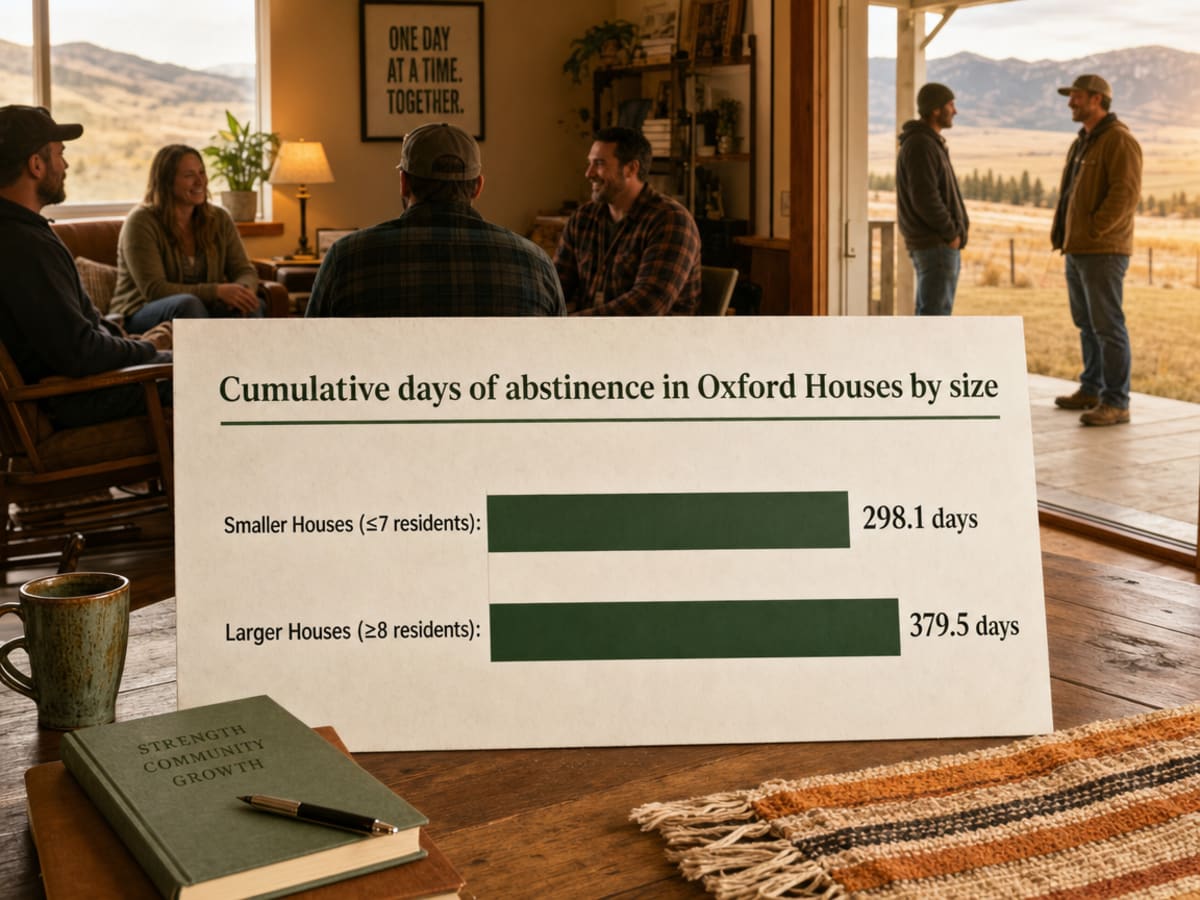
There’s also something to be said for a bigger peer community. A study of peer-run Oxford Houses — sober recovery homes, not clinical treatment centers — found that residents in larger houses (8 or more) had about 379.5 cumulative days of abstinence compared with 298.1 days in smaller houses (7 or fewer), roughly 81 more days 11. More peers meant more shoulders to lean on, more people to catch you when you slipped, and more voices in the room saying “I’ve been there.” That’s a real advantage of scale — in peer housing.
Two honest caveats before you weigh that finding. First, Oxford Houses are peer-run recovery homes, not staffed residential rehabs, so the size effect there doesn’t translate cleanly to a 200-bed treatment center. Second, wraparound service breadth doesn’t automatically become individual attention. A big menu doesn’t help if you never get one-on-one time to use it.
A side-by-side look at small and large residential care
Sometimes it helps to see the structural pieces lined up next to each other. Not to declare a winner — every person’s situation is different — but so you can look at the shape of each setting and picture yourself inside it. The numbers below come from research on residential and outpatient substance use programs, not marketing copy.
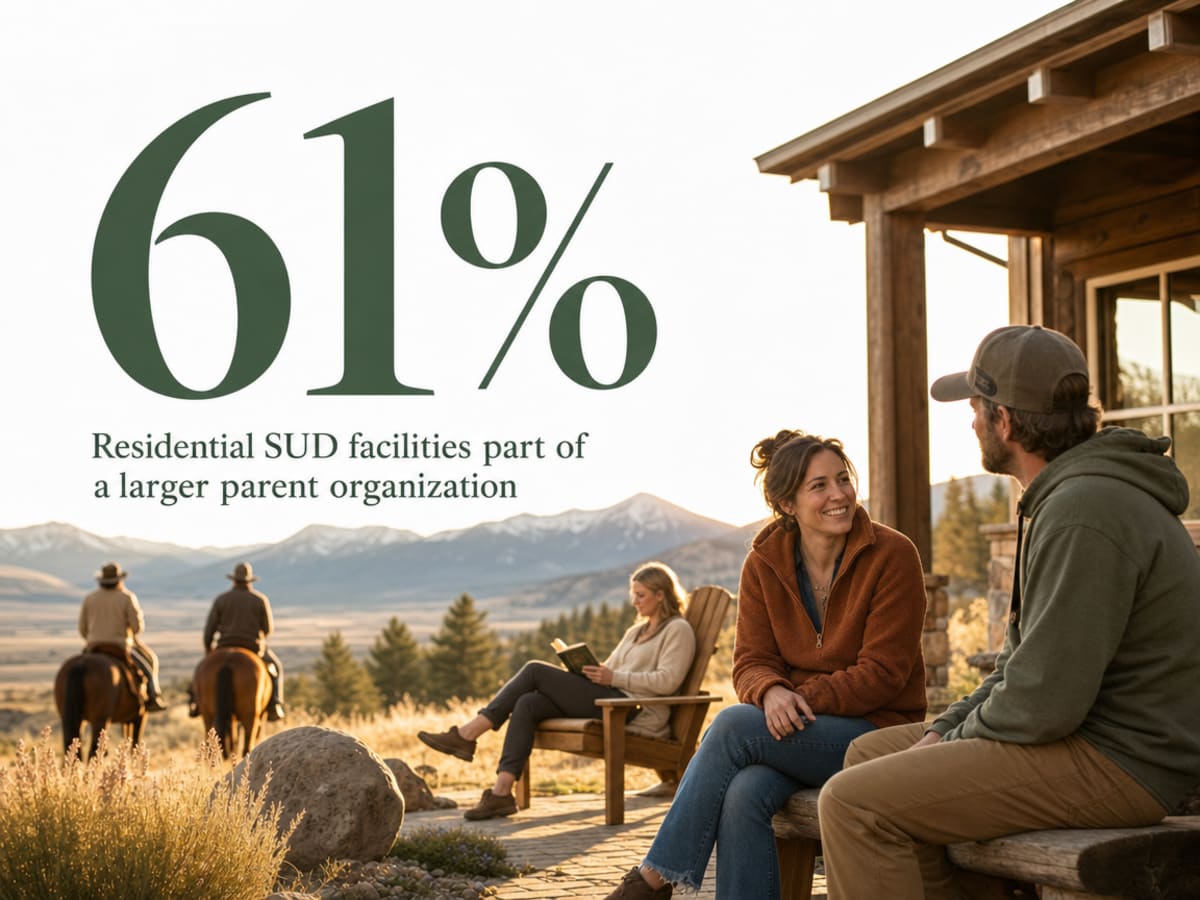
One useful anchor before you scan the table: a 2021 study of residential SUD facilities found the average program held about 28 residents with a staff-to-client ratio of 0.52, and 61% of those facilities were part of a larger parent organization 9. That last number matters. Most residential rehabs in the U.S. today are owned by something bigger. An independent, single-location center is now the exception, not the norm.
| What you’re comparing | Smaller, independent residential setting | Larger, chain-affiliated residential setting |
|---|---|---|
| Typical resident capacity | Roughly at or below the 28-resident national average 9 | Often well above the 28-resident average 9 |
| Staff-to-client ratio | Aims to meet or beat the 0.52 benchmark 9 | Can meet 0.52 on paper, but staff spread across more wings and shifts 9 |
| Counselor caseload | Fewer clients per counselor supports more one-on-one time; outpatient research shows a typical caseload of about 26 clients per counselor, and smaller caseloads correlate with more services delivered on-site 5 | Larger caseloads are common where staffing is stretched, which research links to fewer treatment hours per client 6 |
| Ownership structure | Independent; decisions made locally | 61% belong to a larger parent organization 9 |
| Counselor consistency | Same faces across groups, meals, and hallway moments | More rotation across shifts and units |
| Wraparound services on-site | Focused core services; some specialty needs coordinated through community partners 4 | Broader on-site menu — psychiatry, medical, multiple therapy tracks — especially in longer-stay, well-resourced settings 4 |
| What amplifies quality | Higher staff-per-patient ratios make patient-focused quality practices work better 7 | Same principle applies, but harder to hold as census grows 7 |
Read that table gently. It doesn’t say small is good and large is bad. It says the two settings ask different things of you and offer different things back. If your recovery hinges on being recognized, remembered, and quietly held accountable by the same handful of people every day, the left column is built for that. If you need a wide on-site specialty menu and thrive in a busier community, the right column has real advantages.
Rocky Mountain’s 26 beds sit just under that 28-resident national middle — small enough that the front desk knows your name by Wednesday, close enough to the norm that you’re not in some tiny outlier. That’s the kind of scale the next section walks through in practice.
What a 26-bed, first-name-basis program looks like in practice
Numbers only mean so much. What you really want to know is what a small, staffed residential program feels like once you’re inside it — how the day holds you, who sees you, and what happens when the thirty days are up. Here’s what that looks like when the whole community fits inside a single building with 26 beds.
Being known: staff in recovery, chef by name, Family Week
The first thing you notice at Rocky Mountain Treatment Center is who’s actually working there. Over 80% of the staff are in recovery themselves. That means the person handing you a cup of coffee at 6 a.m. has stood where you’re standing. They know what the third day feels like. They know why you can’t sleep. You don’t have to explain the shame — they’ve already met it.
That kind of lived-experience staffing helps build the exact thing research keeps pointing to: a strong therapeutic alliance, the biggest predictor of whether you stay in treatment long enough to change 2. It’s easier to trust someone who isn’t guessing at your inner weather.
Being known extends past your counselor. The chef learns your name and what you can’t stomach during detox. Nurses recognize you at medication call without checking a wristband. Then there’s Family Week — three days where your people fly, drive, or Zoom in to sit in the same room with you and your counselor, learning how addiction actually works and how to talk to each other again. In a 26-bed setting, Family Week isn’t a slot on a calendar. It’s a whole community stopping to make space for your family.
Aftercare that keeps the thread: 30, 60, 90, 180, 365 days
The hardest part of rehab isn’t inside the building. It’s the Tuesday afternoon three weeks after you leave, when the meeting ends and your car is quiet and your phone is quiet and the old habits start whispering. What size of program you chose starts to matter a lot right there.
At Rocky Mountain, aftercare isn’t a handoff — it’s a thread. Weekly Zoom groups keep you in the same room, digitally, with people who detoxed alongside you. Follow-up check-ins happen at 30, 60, 90, 180, and 365 days after you leave. That structure exists because patient satisfaction and feeling supported at discharge have been linked, on their own, to better substance use outcomes a full year later 1. Staying connected does real work.
The other quiet benefit of a small program: the counselor calling you at day 60 is the same one who sat with you in group at day 10. You don’t re-explain your story to a new voice. You pick up where you left off. That continuity is hard to build at scale, and it’s exactly what keeps the thread of your recovery from snapping in the months when nobody’s watching but you.
How to read a program before you commit
Websites are polished. Brochures are polished. The tour guide has done this a hundred times. What you actually need to know sits underneath all that — in the answers a program gives when you ask something specific, and in how your own gut responds when you walk in the door. Here’s how to read past the marketing and get to the real shape of a place before you sign anything.
Questions that reveal staffing and consistency
You don’t need a clinical vocabulary to ask good questions. You just need to ask the ones that show you how the day actually runs. Try these on any program you’re considering:
- How many clients does one counselor carry at a time? A smaller caseload means more one-on-one time. Outpatient staffing research puts the typical caseload around 26 clients per counselor, and smaller caseloads correlate with more services delivered on-site 5.
- Will I have the same primary counselor from day one through discharge? Continuity is what builds the therapeutic alliance research links to staying in treatment 2.
- What’s your staff-to-client ratio right now — not on paper, today? The national residential average is about 0.52, roughly one staff member for every two clients 9. If a program can’t answer, that’s an answer.
- Are you accredited, and by whom? Joint Commission-accredited units have been shown to offer more treatment hours per client 6.
- Who runs aftercare, and is it the same person I worked with here? A handoff to a stranger tells you where the thread breaks.
Listen for specifics. Vague answers usually mean vague care.
Signals that the size is right for you
Once you tour or call, pay attention to what your body notices. This isn’t fluff — it’s data. The programs that keep people are usually the ones that feel human in the first ten minutes.
Good signals in a smaller setting: the person at the front desk looks up and asks your name. A counselor walking by nods at a resident and calls them by name back. The common room has actual people in it, not empty couches staged for photos. When you ask a hard question, you get a straight answer, not a script. You can picture eating breakfast there tomorrow.
Good signals in a larger setting: you’re introduced to a specific primary counselor, not a team. Someone can name your on-site psychiatrist, your case manager, and your discharge planner. You see the same staff face twice during your tour.
Warning signs anywhere: no one can tell you the current staff-to-client ratio, tours skip the residential wing, or the only measurable outcome offered is a marketing testimonial. Trust that first read. You’ll be living there.
If you’re helping a loved one make this call
If you’re the one making calls, taking notes, and trying to hold it together while someone you love is barely holding on — first, take a breath. You’re doing something hard and important, and the fact that you’ve read this far means you’re already showing up in the way that matters.
A few things to keep in mind as you narrow the list. Your person is going to be scared when they arrive. They may be embarrassed, defensive, or just exhausted. What they need in that first week isn’t a big menu — it’s a small circle of people who learn their name fast and don’t flinch at their story. Ask each program how many clients one counselor carries, and whether that counselor stays with them from admission through discharge. Continuity of that one relationship is what research links to staying in treatment 2.
Ask about family. A real family program — not a Saturday visitor slot — means you get to be part of the healing, not a spectator. At Rocky Mountain, Family Week brings you into the room for three days of learning how addiction actually works and how to talk to each other without the old scripts. That matters for your loved one, and honestly, it matters for you too.
Ask what happens after discharge. The weeks between month one and month six are when most people wobble. Programs that follow up at 30, 60, 90, 180, and 365 days keep a hand on their shoulder through that stretch — and that sustained connection has been linked to better outcomes a year later 1.
Trust your gut on the call. If the voice on the other end sounds rushed, imagine your person on day three feeling the same rush. If the voice sounds warm and unhurried, that’s data too.
Come see what 26 beds feels like
You’ve done a lot of thinking already. You’ve compared. You’ve weighed. Somewhere in that process, your gut probably nudged you toward something quieter and closer than a big campus. Trust that nudge — it’s not weakness. It’s you knowing what you need to actually stay.
Rocky Mountain Treatment Center sits in Great Falls, Montana, with 26 beds, a staff where over 80% have walked the road you’re on, and an aftercare thread that reaches out at 30, 60, 90, 180, and 365 days after you leave. You can read all that on a page. It hits differently when you’re standing in the common room, hearing someone laugh in the kitchen, and watching a counselor greet a resident by name in the hallway.
Pick up the phone and talk to a real person. Ask the hard questions — the ones from earlier in this piece. Or come tour the building. If you’re driving in from somewhere in Montana, a complimentary pickup is on the table. Whatever you decide, know this: even reading this far is a step forward. The next one is smaller than it looks.
Frequently Asked Questions
Does a smaller rehab actually mean better care?
Not automatically. What matters is whether staff know you, whether your counselor stays consistent, and whether you feel satisfied with your care — all things research links to retention and better substance use outcomes a year out 2, 1. A small program makes those things easier to hold together, but a well-run larger one can deliver them too. The real question isn’t bed count. It’s whether the day-to-day relationships are strong enough for you to actually stay.
What staff-to-client ratio should I look for in a residential program?
A 2021 study of U.S. residential SUD facilities found the average staff-to-client ratio was about 0.52 — roughly one staff member for every two clients 9. Use that as your yardstick. If a program can’t tell you their current ratio, or the number sits well below that average, ask why. Staffing density matters because patient-focused quality practices work better when there are more staff per patient 7. It’s the number behind every hallway hello.
Do large facilities offer more services than small ones?
Often, yes. Programs with longer planned stays, more educated staff, and inpatient or specialized settings tend to offer more wraparound services under one roof — think on-site psychiatry, medical care, and multiple therapy tracks 4. A smaller center may coordinate some specialty needs through community partners instead. That trade-off is real. But a bigger service menu only helps if you actually get one-on-one time to use it, which comes back to caseload and counselor consistency, not square footage.
What questions should I ask a rehab before I commit?
Ask how many clients one counselor carries at a time, whether you’ll keep the same primary counselor from admission through discharge, and what the current staff-to-client ratio is. Ask if they’re accredited — Joint Commission-accredited units have been shown to offer more treatment hours per client 6. Ask who runs aftercare and whether it’s the same person you worked with inside. If answers are vague or scripted, treat that as data. Vague answers usually mean vague care.
How does size affect aftercare and staying sober long term?
Size shapes whether the same counselor who knew you inside is the one checking in on you afterward. Patient satisfaction at discharge has been independently linked to better substance use outcomes twelve months later, even accounting for how long you stayed 1. A smaller program can keep that thread intact through structured follow-ups — at Rocky Mountain, that means weekly Zoom groups and check-ins at 30, 60, 90, 180, and 365 days. Continuity is what carries recovery past week one.
I’m choosing for a loved one. How do I know which size is right for them?
Picture them on day three, scared and tired. Do they need a small circle that learns their name fast, or a bigger community with more on-site specialty tracks? If they have complex medical needs, lean toward a larger, more resource-rich setting 4. If they need to feel known to stay, lean smaller. Ask about counselor continuity and family involvement — early therapeutic alliance predicts whether people engage and stay 3. Trust your gut on the call. Rushed voices mean rushed care.
References
- Patient Satisfaction and Sustained Outcomes of Drug Abuse Treatment. https://pmc.ncbi.nlm.nih.gov/articles/PMC2796692/
- The Relationship of Therapeutic Alliance and Treatment Retention in a Cognitive Behavioral Therapy-Based Treatment Program for Substance Use. https://pmc.ncbi.nlm.nih.gov/articles/PMC4739723/
- The Role of the Therapeutic Alliance in the Treatment of Substance Misuse: A Critical Review of the Literature. https://pubmed.ncbi.nlm.nih.gov/15733244/
- Organizational Characteristics of Drug Abuse Treatment Programs. https://pmc.ncbi.nlm.nih.gov/articles/PMC1941644/
- Organizational Correlates of Service Availability in Outpatient Substance Abuse Treatment. https://pmc.ncbi.nlm.nih.gov/articles/PMC4001242/
- Factors that Influence Staffing of Outpatient Substance Abuse Treatment Programs. https://pubmed.ncbi.nlm.nih.gov/16088009/
- Management Systems, Patient Quality Improvement, Resource Availability, and Substance Abuse Treatment Quality. https://pmc.ncbi.nlm.nih.gov/articles/PMC3290740/
- Organizational Characteristics of Drug Abuse Treatment Programs for Offenders. https://pubmed.ncbi.nlm.nih.gov/17383553/
- Association of Facility Characteristics and Substance Use Disorder Treatment Quality in Residential Programs. https://pmc.ncbi.nlm.nih.gov/articles/PMC8940653/
- Improving the Organization, Management, and Outcomes of Substance Abuse Treatment Programs. https://pubmed.ncbi.nlm.nih.gov/12492259/
- Counteracting ‘Not in My Backyard’: The Positive Effects of Greater House Size in Oxford Houses. https://pmc.ncbi.nlm.nih.gov/articles/PMC3205983/