
Key Takeaways
- Client-centered addiction care starts with your story rather than a template, shifting the opening question from what you used to what happened to you.1
- The therapeutic alliance—how safe, respected, and understood you feel with your counselor—predicts whether you finish treatment and stay engaged with aftercare.9
- Time in treatment matters as much as the methods used, with three months or more of care linked to significantly better outcomes at twelve months.17
- Look for programs with small settings, flexible intake, staff with lived recovery experience, and proactive continuing care that reaches out at 30, 60, 90, 180, and 365 days.4
The Question That Changes Everything in the First Session
Picture the first hour of treatment. You’re tired. Maybe you barely slept the night before. Someone across the room has a folder with your name on it, and you’re waiting for the questions you’ve heard before. What did you use? How much? How often? When did you last?
Then a different question lands instead: What happened to you?
That small shift changes the whole room. It says the person sitting with you already assumes there’s a story underneath the substance use, and they want to hear it before they hand you a plan. It signals that you’ll be treated as a whole person, not a chart to be worked through.
This is the core of client centered therapy Montana inside addiction care. It doesn’t mean the clinical work disappears. Detox still happens. Counseling still happens. The 12-step meetings, the group sessions, the family conversations — all of it still happens. But the starting point is you, not a template. Research on patient-centered addiction care keeps pointing to the same thing: when your preferences and voice shape the plan, you’re more likely to actually use the services meant to help you. That first question sets the tone for everything that follows.1
What Client-Centered Therapy Actually Means Inside Addiction Care
Client-centered therapy, originating with Carl Rogers, is built on the idea that you are the expert on your own life. In addiction treatment, this translates into a holistic view of you as an individual, collaborative decision-making, shared power in your treatment plan, and a genuine relationship with your counselor.12
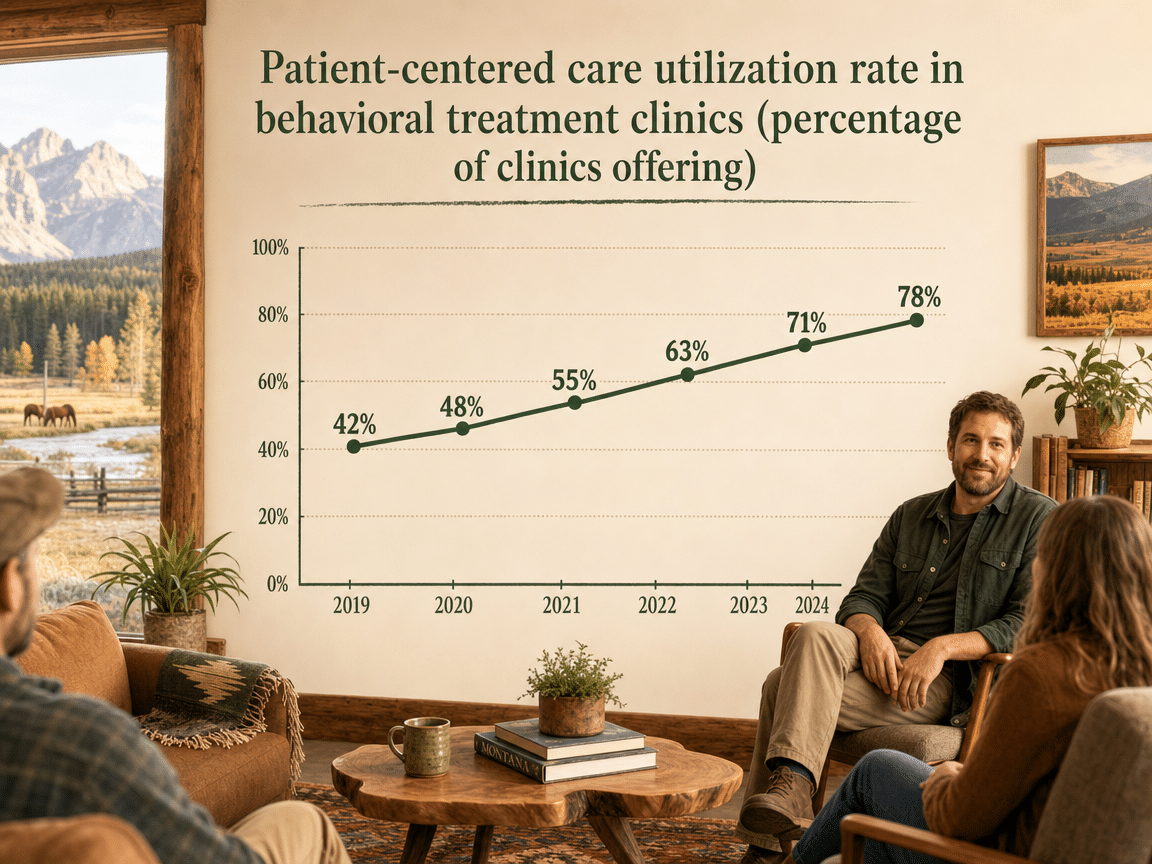
This approach is not merely a soft skill; it’s a fundamental shift in how care is delivered. Patient-centered care in behavioral treatment clinics has seen significant growth, with adoption increasing from approximately 42% in 2019 to about 78% in 2024. This demonstrates a growing recognition that involving you in your treatment plan and respecting your preferences are crucial for engaging with and benefiting from services like counseling and medication support.1In practice, this means your counselor will inquire about your personal goals, not just your history of substance use. If an early morning group session is challenging for you, adjustments can be made. If the 12-step framework resonates, it can be central to your plan; if not, alternative paths like SMART Recovery, individual therapy, family sessions, or experiential therapies like equine therapy are explored. Programs where a high percentage of staff are in recovery themselves often naturally adopt this empathetic stance, understanding the experience of being a client.
Client-centered care doesn’t diminish clinical rigor; instead, it provides a supportive framework that allows effective clinical interventions to be more impactful.
From ‘What’s Wrong With You?’ to ‘What Happened to You?’
Historically, addiction care often posed the question: What’s wrong with you? This framing can feel like a judgment, implying that your struggles are an inherent flaw rather than a response to life experiences. For individuals who have endured trauma—such as an unsafe childhood, unresolved grief, or deeply distressing events—this question can be particularly damaging, suggesting that their substance use is a personal failing rather than a coping mechanism.
Trauma-informed care reframes this by asking, What happened to you? This shift, aligned with SAMHSA’s framework, is central to client-centered addiction treatment. It acknowledges that substance use often has roots in past experiences, moving the focus from blame to understanding the context of your life. This reorientation can transform the entire therapeutic environment, influencing the pace of treatment, the nature of conversations, and the questions your counselor explores with you.15
SAMHSA outlines four key assumptions for trauma-informed programs:
- Realize that trauma is widespread and impacts how individuals cope.
- Recognize the signs of trauma, even subtle ones.
- Respond by integrating trauma awareness into all aspects of care, from detox explanations to counseling and family sessions.
- Resist retraumatization by actively avoiding practices that can be re-traumatizing, such as shame-based confrontations or unexpected consequences.15
Given that trauma is highly prevalent among individuals with substance use disorders, addressing it is crucial for successful treatment outcomes. When you are asked what happened, it communicates that your personal story is valued and that you don’t need to censor your experiences or prove your worthiness for care. This approach fosters an environment where group work feels less like exposure and detox conversations are less like interrogations. While clinical information about substance use is still gathered, it no longer defines you; your past experiences provide context, and your future goals guide the path forward.10
Why Feeling Heard Is the Strongest Predictor of Staying
A significant factor in successful residential treatment is not the specific therapy model or amenities, but the quality of the relationship between you and your care team. The patient-rated therapeutic alliance—how safe, respected, and understood you feel with your counselor—is a powerful predictor of whether you will complete treatment and continue with aftercare.9
This emphasizes that the human connection often outweighs other program elements. This finding aligns with the long-held observations of residential counselors: when you feel seen as an individual rather than just a case, you are more likely to engage in subsequent sessions. When your input shapes the treatment plan, you are more prepared to navigate its challenges. A study on person-centered substance use programs found a direct link between client satisfaction with care and improved treatment outcomes. Here, satisfaction is not just a customer service metric; it’s a clinical indicator of effectiveness.2
Building this alliance involves seemingly small but impactful actions: a counselor remembering details from a previous conversation, flexibility in scheduling during withdrawal, or a group leader privately checking in if you seem withdrawn. In smaller, more intimate settings, where staff know you by name and many have personal experience with recovery, this level of personalized attention becomes an integral part of the daily experience.
If you’ve had negative experiences with past treatment—feeling lectured, rushed, or reduced to paperwork—it’s understandable to approach new care with caution. The research confirms that the feeling of being unheard is not merely an emotional discomfort; it directly impacts the effectiveness of treatment.
How the Days Actually Unfold When Care Starts With You
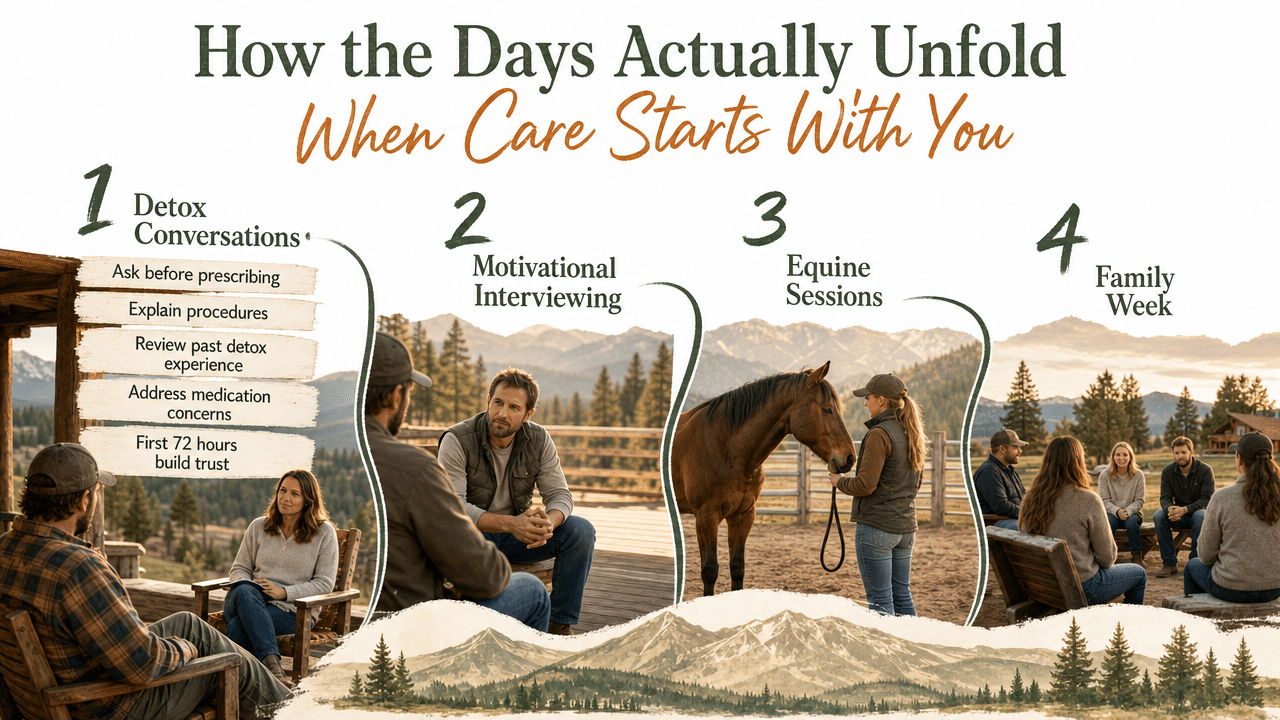
Detox Conversations That Ask Before They Prescribe
The initial days of detox are critical in establishing how you will be treated. While the medical management of withdrawal from alcohol or certain drugs is essential for safety, the manner in which these conversations occur significantly impacts your engagement.
In a client-centered environment, medical staff will explain procedures and medications clearly before administering them. They will inquire about your past detox experiences, what was helpful or unhelpful, and provide transparent information about what to expect. If you have concerns about specific medications due to previous experiences, these concerns are acknowledged and addressed, rather than dismissed.
Building trust during these first 72 hours is vital, as it tends to extend into subsequent counseling and group work. When your preferences, even in small matters like meal times or room lighting, influence early decisions, you are more likely to engage fully with the therapeutic process that follows stabilization.1
Motivational Interviewing: Talking Toward Change, Not At It
During your first couple of weeks, you’ll likely experience one-on-one sessions that differ from stereotypical addiction counseling. There’s no confrontational approach or rigid demands for belief in a specific framework.
Instead, your counselor will engage you with open-ended questions and genuinely listen to your responses. Questions like, “What does a good day look like for you?” or “What would you gain or lose by continuing or stopping substance use?” are designed to help you articulate your own motivations for change. The goal is not to corner you, but to empower you to discover and voice your internal reasons for change, which are more sustainable when challenges arise.
This technique is known as motivational interviewing, a client-centered counseling method founded on empathy, collaboration, and eliciting your intrinsic motivation for change. Research indicates that motivational interviewing yields positive, albeit modest, effects on substance use outcomes across diverse populations and stages of readiness. This approach helps individuals who might otherwise disengage from confrontational therapy to remain in treatment, continue dialogue, and progress at their own pace.6
Equine Sessions and the Language Beneath Words
Some experiences are difficult to articulate verbally, especially if you’ve learned to suppress your feelings or if your story lacks clear language. This is where experiential therapies, such as working with horses, can offer a unique therapeutic avenue that traditional counseling alone might not.
Horses are highly sensitive to non-verbal cues, reacting to your body language, breathing patterns, and emotional state. Their responses provide immediate, honest feedback about your internal state that words cannot easily mask. A counselor present during these sessions can help you interpret these interactions.
Equine therapy complements traditional counseling by enhancing emotional engagement, improving treatment retention, and facilitating profound shifts in self-perception. In a natural setting like Montana, with open pastures and barns, these experiences can lead to deeper insights than verbal discussions alone.7
Family Week When the Whole System Gets a Voice
Addiction impacts not just the individual, but the entire family system. Therefore, a structured Family Week, typically a three-day program, invites your closest family members to participate.
Family Week is not about assigning blame. Within a client-centered framework, every family member, including you, has the opportunity to speak and be heard. Your parents, partner, or adult children gain an understanding of addiction, its realities, and their appropriate roles in your recovery. This setting allows for the expression of long-held feelings in a safe, facilitated environment where a counselor ensures constructive dialogue. This work aligns with the principles of client-centered care: shared power, collaborative decision-making, and a strong therapeutic relationship between clinicians and families.12
The 30, 60, 90-Day Arc and Why Time Matters
The duration of treatment is a critical, often overlooked, factor in recovery. While not as prominently featured as specific therapeutic methods, time spent in treatment is a strong predictor of positive outcomes in residential addiction care. Longer stays, coupled with robust aftercare, are consistently associated with lower relapse rates.8
Research on continuing care indicates that individuals who receive three months or more of treatment show significantly better substance use and functional outcomes at 12 months compared to those with shorter stays. This substantial difference is why many residential programs are structured around 30, 60, and 90-day durations; these are not merely marketing tiers but represent critical thresholds where significant internal changes tend to occur.17
The first thirty days typically focus on stabilization. Your body adjusts, sleep patterns begin to normalize, and you become accustomed to the program’s routine and staff. While therapeutic work is ongoing, a primary goal is simply to remain in treatment, allowing the internal noise to subside enough for self-reflection.
By sixty days, a noticeable shift often occurs. You may have participated in or be preparing for Family Week. The underlying story of your substance use—the “what happened to you”—becomes more accessible as you’re no longer consumed by withdrawal or logistical challenges. Trauma work, if applicable, often progresses more effectively during this period than in the initial weeks.
At ninety days, change begins to feel more integrated into your life. New habits have had time to solidify, you’ve navigated challenging days without relapse, and you’ve identified your triggers. Client-centered care remains vital throughout this arc, particularly in the third month, as the treatment plan must genuinely reflect your evolving needs and goals, rather than being something you follow to please others.
The ideal length of stay is individualized, depending on your history, home environment, and personal needs. However, research consistently demonstrates that shorter treatment durations, while seemingly more cost-effective upfront, can lead to higher rates of relapse and the need for subsequent treatment. Investing adequate time in care is a powerful lever for sustained recovery.
When Trauma and Substance Use Live in the Same Room
For many entering residential care, substance use is often a symptom of deeper, unresolved issues. Beneath the visible struggle, there can be older wounds: an unsafe upbringing, unaddressed grief, or years where substances provided the only relief from overwhelming experiences.
Research clearly shows a high prevalence of trauma among individuals with substance use disorders. When this trauma remains unaddressed, it significantly increases the risk of treatment dropout and relapse. This is not a moral failing but a direct consequence of neglecting the underlying drivers of behavior.10
Client-centered care creates a space where both substance use and trauma can be addressed concurrently. You don’t need to achieve a certain level of stability before your trauma story is considered valid. Integrated approaches that combine trauma-focused work with substance use treatment can lead to substantial improvements in both PTSD symptoms and substance use for those ready to engage at that pace. It’s also important to note that while integrated care is beneficial, strong, well-delivered substance use care alone can also be effective. The key is that the option for trauma-informed care is available, progresses at your speed, and your counselor is attuned to your capacity for processing difficult material, rather than adhering to a rigid protocol.3,16
Continuing Care: The Part That Doesn’t End at Discharge
Leaving residential care marks a significant transition. The familiar structure, community, and environment are replaced by the challenges of reintegrating into daily life. What happens after discharge is not secondary to the work done in residence; it is an essential continuation of it.
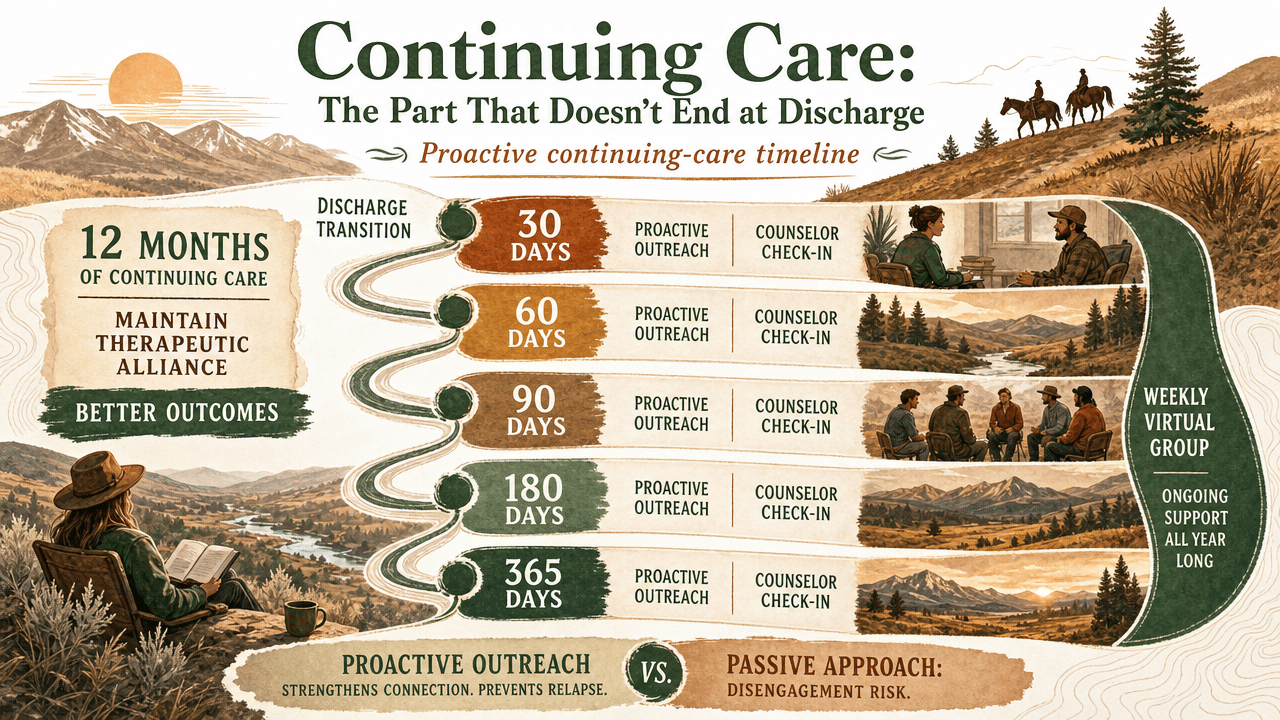
Research unequivocally supports the importance of continuing care. Programs that extend for at least twelve months are linked to better outcomes, and those that proactively reach out to clients after discharge are more effective than programs that wait for clients to initiate contact. A passive approach often leads to disengagement. Proactive engagement—such as a counselor checking in at regular intervals (30, 60, 90, 180, and 365 days) and offering weekly virtual group sessions with familiar faces—helps maintain the therapeutic alliance built during residential treatment, providing crucial support when old triggers re-emerge.4
Client-centered principles shape the nature of this follow-up. It’s not about surveillance but about continued support and remembrance. When the continuing care plan is flexible enough to adapt to your real-life circumstances—your schedule, any setbacks, and your small victories—you are more likely to stay engaged long enough for it to solidify your recovery.
What Good Residential Care Looks Like When You Walk In
To distinguish genuinely client-centered care from mere marketing claims, observe a few key indicators on your first day.
First, pay attention to the intake conversation. Is it a rigid checklist, or are you asked about your immediate needs and how to feel safe? A program that values your voice from the start will likely maintain that approach throughout your stay. Second, consider the physical environment: is it small enough for staff to quickly learn your name, and quiet enough for reflection? A 26-bed facility offers a different experience than a 200-bed one, a difference you’ll feel quickly.11
Third, observe the staff. When many counselors have personal recovery experience, there’s often a palpable shift in tone—less performance, more genuine understanding. Fourth, assess the program’s flexibility. If your body requires an extra day before participating in group work, is that honored, or does the schedule take precedence?
Rocky Mountain Treatment Center in Great Falls, Montana, exemplifies this approach, offering care that is intimate, personalized, and paced to your individual journey.
Frequently Asked Questions
How is client-centered therapy different from traditional addiction treatment?
Traditional models often start with a protocol and fit you into it. Client-centered care starts with your story, your goals, and your voice, then builds the plan around what you actually need. Shared decision-making and respect for your preferences are linked to greater use of the services meant to help you.1
Can client-centered therapy really address trauma underneath addiction?
Yes, when it’s paired with trauma-informed practice. Trauma is common among people with substance use disorders, and leaving it untouched raises the risk of relapse and dropout. A client-centered setting lets trauma work move at your pace, so hard material comes forward when you’re ready, not on a schedule that isn’t yours.10
Will I still get structure and accountability in a client-centered program?
Yes. Client-centered doesn’t mean unstructured. Detox protocols, group schedules, and counseling still happen on a real rhythm. What shifts is the posture: your counselor collaborates with you on the plan instead of handing it down. Shared power and a strong therapeutic alliance are core to how this care is designed.12
How long should residential treatment last for lasting recovery?
Longer stays tend to produce better results. Treatment duration is one of the strongest predictors of positive outcomes in residential care, and stays paired with real aftercare are tied to lower relapse rates. The right length depends on your history and home environment, but shorter isn’t cheaper if you end up back where you started.8
What is motivational interviewing and how does it fit into client-centered care?
Motivational interviewing is a counseling style built on empathy, collaboration, and drawing out your own reasons for change instead of arguing you into them. It grew directly from Carl Rogers’ person-centered work. Research shows small to moderate effects on substance use outcomes, and it fits naturally inside a program that treats you as the expert on your life.6
What happens after residential treatment ends?
Good continuing care doesn’t wait for you to call. Programs that reach out at set intervals — often 30, 60, 90, 180, and 365 days — and offer weekly virtual groups do better than passive models. Continuing care that runs at least twelve months is linked to stronger long-term outcomes, so the relationship you built inside keeps carrying you.4
References
- Patient-centered Care’s Relationship with Substance Use Disorder Treatment Service Utilization. https://pmc.ncbi.nlm.nih.gov/articles/PMC7528396/
- Person-Centered Substance Use Treatment Program and Treatment Outcomes. https://digitalcommons.liu.edu/cgi/viewcontent.cgi?article=1012&context=post_under_theses
- Treatment of Co-Occurring PTSD and Substance Use Disorder in VA. https://www.ptsd.va.gov/professional/treat/cooccurring/tx_sud_va.asp
- Continuing Care Research: What We’ve Learned and Where We’re Going. https://pmc.ncbi.nlm.nih.gov/articles/PMC3670012/
- Integrating Substance Use and Mental Health Services in Primary Care. https://pmc.ncbi.nlm.nih.gov/articles/PMC4334149/
- Motivational Interviewing for Substance Use: A Review. https://pmc.ncbi.nlm.nih.gov/articles/PMC5754100/
- Experiential Therapy in Substance Use Disorder Treatment: A Review. https://pmc.ncbi.nlm.nih.gov/articles/PMC4504014/
- Residential Addiction Treatment: Evidence and Outcomes. https://pmc.ncbi.nlm.nih.gov/articles/PMC3807894/
- Patient Engagement and Retention in Substance Use Treatment. https://pmc.ncbi.nlm.nih.gov/articles/PMC4129530/
- Addressing Trauma in Substance Use Disorder Treatment: Clinical Considerations. https://pmc.ncbi.nlm.nih.gov/articles/PMC6125123/
- Patient-centred care for addiction treatment: a scoping review protocol. https://pmc.ncbi.nlm.nih.gov/articles/PMC6318507/
- Conceptualizing patient-centered care for substance use disorder treatment: Findings from a scoping review. https://pmc.ncbi.nlm.nih.gov/articles/PMC6739978/
- Trauma-Informed Care in Behavioral Health Services (TIP 57). https://www.ncbi.nlm.nih.gov/books/NBK207201/
- Trauma-Informed Approaches and Programs. https://www.samhsa.gov/mental-health/trauma-violence/trauma-informed-approaches-programs
- What is Trauma-Informed Care?. https://www.snhu.edu/about-us/newsroom/health/what-is-trauma-informed-care
- Treatment of Co-occurring Posttraumatic Stress Disorder and Substance Use Disorders: A Review. https://pmc.ncbi.nlm.nih.gov/articles/PMC3466083/
- The Continuing Care Model of Substance Use Treatment. https://pmc.ncbi.nlm.nih.gov/articles/PMC4007701/