
Key Takeaways
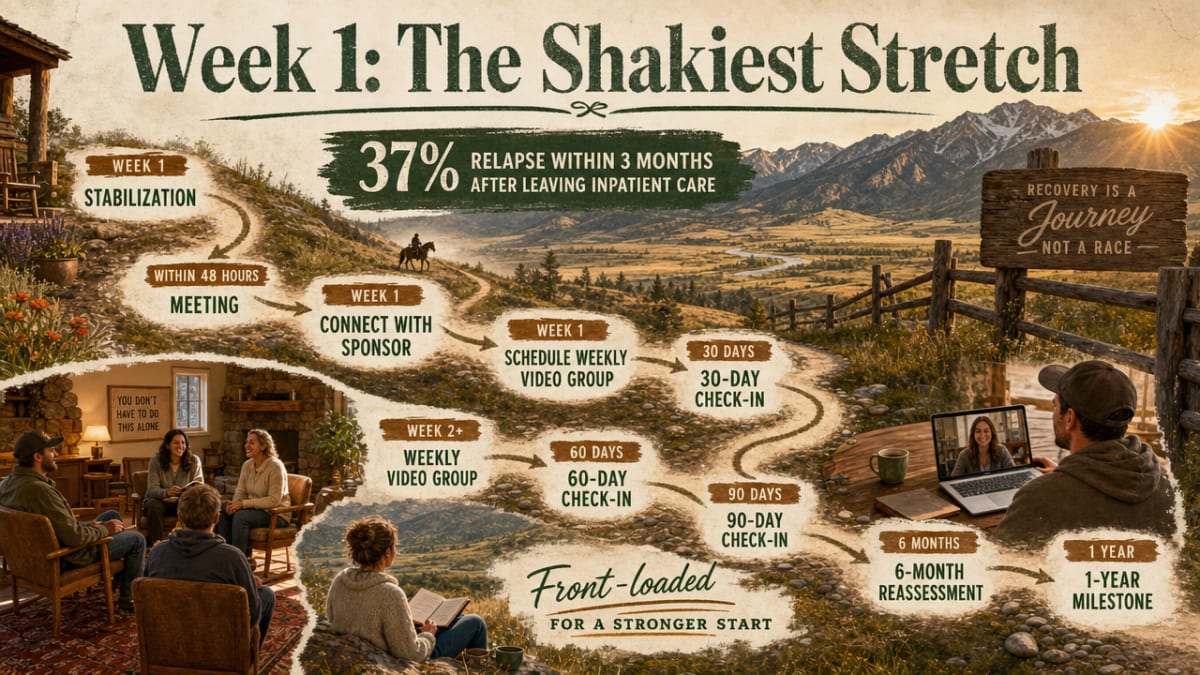
- Continuing care after residential treatment in Great Falls follows a structured year of weekly video groups and scheduled check-ins at 30, 60, 90, 180, and 365 days.
- Studies show continuing care produces measurable benefits over minimal follow-up, with effects growing over time, especially when programs run six months or longer with proactive outreach 1, 4.
- Sustained recovery in Montana depends on layered support: family involvement beyond week one, peer and alumni connections, 12-step meetings, and integrated care for co-occurring mental health conditions 7, 8, 9.
- Before committing, compare what your plan covers for weekly groups, telehealth, and psychiatric visits, and check whether Medicaid’s HEART 1115 waiver applies to outpatient and peer services near you 5, 6.
The First Tuesday After You Come Home
The first Tuesday after you come home from residential treatment is often quieter than expected. The structured schedule of residential care gives way to a new rhythm. The familiar surroundings of Great Falls, like the Missouri River, remain constant, offering both comfort and a sense of disorientation as you navigate this new phase.
This isn’t about starting over; it’s about continuing. The intensive period of residential treatment was the foundational work. What follows is a quieter, yet equally crucial, phase where the real work of recovery takes root. Cravings may resurface in everyday places, reminding you that old cues persist even after significant effort.
This guide outlines the year ahead, detailing elements like weekly video groups, scheduled check-ins, ongoing family conversations, and the supportive community available in Great Falls and across Montana. You don’t have to navigate this journey alone; Rocky Mountain Treatment Center is here to provide the structure and support you need.
Understanding Continuing Care and Its Effectiveness
Aftercare in Plain Words
Aftercare refers to the period following residential treatment when the intensity of care decreases, but support remains essential. The Substance Abuse and Mental Health Services Administration (SAMHSA) defines it as a stage involving periodic outpatient sessions, relapse-prevention groups, 12-step and self-help meetings, or halfway houses, with ongoing contact and monitoring 7. For us at Rocky Mountain Treatment Center, it’s about maintaining a consistent rhythm of support.
This includes weekly video groups you can join from home, regular phone check-ins at key milestones (30, 60, 90 days, six months, and a year), and continued family engagement. It’s a series of commitments you make to yourself and to others who understand your journey, helping you sustain the progress made during residential treatment.
Does It Actually Work? The Honest Answer
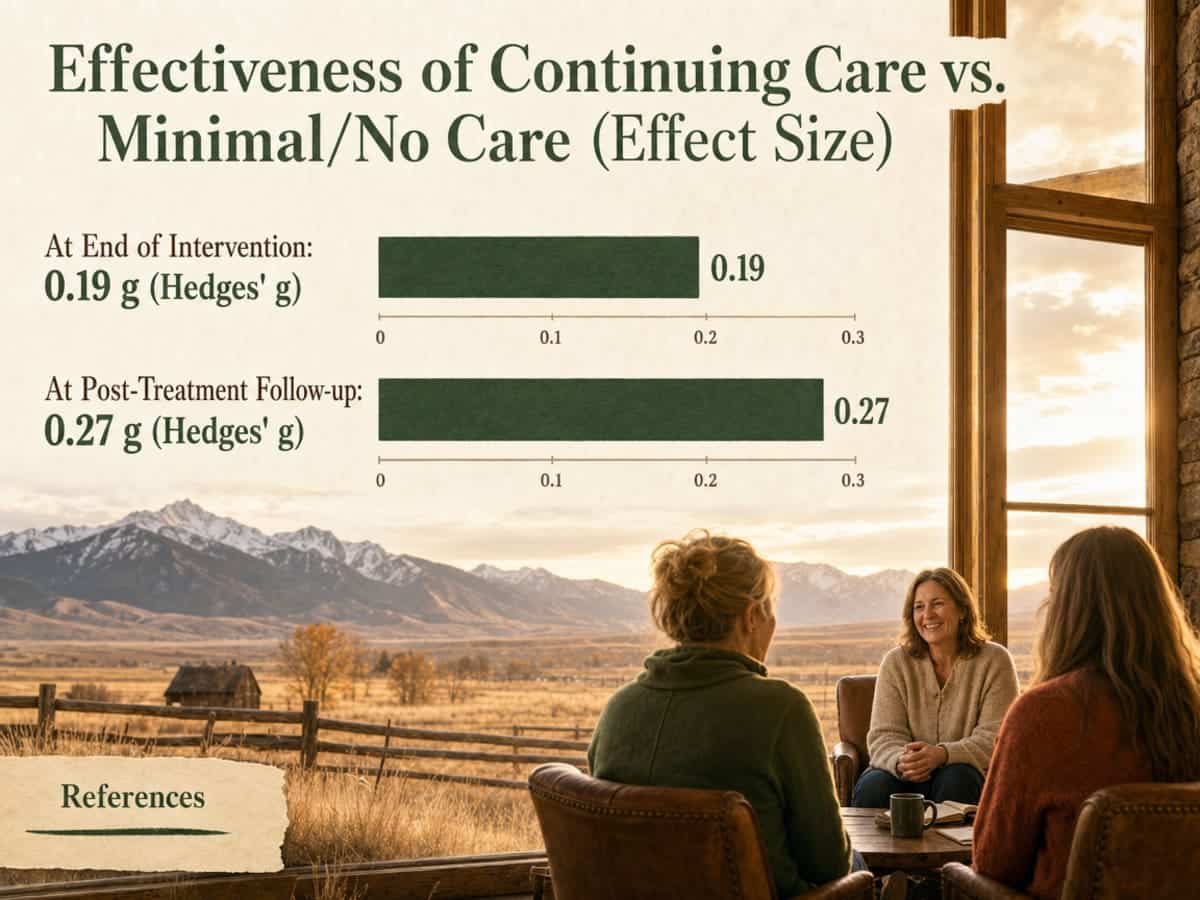
Yes, continuing care is effective. A 2021 review of studies on continuing care revealed a consistent benefit for individuals who participated in some form of aftercare compared to those who received minimal or no follow-up. The effect size, measured by Hedges’ g, was approximately 0.19 at the end of interventions and increased to 0.27 at post-treatment follow-up 1. This indicates a steady, measurable advantage that tends to grow over time.
Factors that enhance the effectiveness of aftercare include longer duration, more frequent contact, and proactive outreach from care providers 1, 2. Aftercare programs that extend for six months or more, with regular check-ins and direct engagement, are more successful than simply providing discharge instructions. This is why Rocky Mountain Treatment Center emphasizes a structured schedule, including weekly groups and milestone follow-ups, to ensure the intensive work done during residential treatment is sustained.
A Great Falls Year, Week by Week
Week 1: The Shakiest Stretch
The first seven days back home are critical for maintaining sobriety. Research consistently highlights this period as high-risk. A 2019 study found that 37% of individuals relapsed within three months of leaving inpatient substance use treatment, with treatment completion and longer-term care significantly reducing this risk 4. Our aftercare plan is designed to provide maximum support during these vulnerable early weeks.
During this initial week, focus on simplicity and connection. Attend a meeting within the first 48 hours and connect with your sponsor. Schedule your weekly video group and set a reminder. It’s normal for sleep and appetite to be irregular, and cravings may emerge. These are signs your brain is adjusting. Acknowledge them, reach out for support, and remember that each craving overcome strengthens your resolve.
Days 30 to 90: The Routine That Saves You
By day 30, establishing a consistent routine becomes vital. Individuals who successfully navigate this period often have a structured week, incorporating regular group meetings, sponsor check-ins, and scheduled appointments. The 30-day check-in with your Rocky Mountain Treatment Center care team is a crucial moment, not just a formality. We proactively reach out to discuss your well-being, sleep patterns, eating habits, and meeting attendance, reinforcing the support system 1, 2.
Between day 30 and day 90, the consistency of your weekly schedule is paramount. This includes attending weekly video groups, actively engaging with your sponsor, and participating in meetings even when motivation wanes. If you’ve returned to work, ensure your schedule allows for continued recovery activities. If not, use this time to build healthy routines. Subsequent follow-up calls at day 60 and day 90 provide opportunities to honestly discuss any challenges, allowing your aftercare plan to adapt to your needs. The predictability of this routine, even if it feels mundane at times, is a cornerstone of sustained sobriety.
Months 6 to 12: The Quieter, Harder Middle
The middle months of recovery can be deceptively challenging. The initial crisis has passed, and external support may lessen. It’s common for thoughts to emerge suggesting that formal support is no longer necessary. However, research indicates that longer duration and higher contact frequency in continuing care are linked to better outcomes, with care extending beyond six months associated with lower relapse risk 1, 4. Staying connected during this period is crucial for long-term sobriety.
The 180-day check-in serves as a reminder that your Rocky Mountain Treatment Center team is still here to support you. This call is an opportunity for an honest conversation about your experiences, whether it’s family dynamics, difficult anniversaries, or moments of temptation. Continue attending your weekly group and engaging with your sponsor and home meeting. Consider setting a meaningful goal for the year, such as a family trip or a personal pursuit, as recovery begins to offer new possibilities during this phase. The arrival of day 365 marks a significant milestone, signifying a year of sustained effort and growth.
The Weekly Video Group: Why People Keep Showing Up
The weekly video group is an often-underestimated but highly effective component of aftercare. These hour-long sessions, guided by a counselor, allow you to connect from anywhere—your kitchen, truck, or couch. You’ll see familiar faces, including individuals who are further along in their recovery journey, offering a sense of shared experience and continuity.
The power of the group lies in accountability and connection. Knowing someone expects you to be there is a significant motivator. Research on continuing care consistently highlights the importance of longer duration, frequent contact, and proactive outreach 2. A weekly group, where attendance is noted, embodies this structure, providing consistent support and a sense of belonging.
You don’t need to be eloquent or have a profound insight every week. Sometimes, simply stating “I’m tired, but I made it” is enough. Other times, hearing someone articulate an experience you couldn’t express can be profoundly validating. The video format makes these groups accessible, overcoming geographical barriers or challenging Montana weather, ensuring that support is always within reach. Consistent attendance is the key to leveraging this valuable resource.
Family, Peers, and the 12-Step Thread
Bringing Family into the Second Year, Not Just the First Week
Family week during residential treatment is a powerful beginning, but family involvement in recovery should extend far beyond that initial period. SAMHSA’s guidance emphasizes family involvement as a core practice in the aftercare phase, recognizing it as an ongoing element of sustained well-being 7. Family members have their own journey of healing and adjustment, and continued engagement supports everyone involved.
This ongoing involvement can take many forms: a monthly phone call with your Rocky Mountain Treatment Center counselor that includes your partner, family members attending Al-Anon or Nar-Anon meetings, or establishing regular family dinners where open and honest communication is encouraged. It’s about setting clear agreements on how to communicate and seek support if challenges arise. The goal is not a perfect year, but one built on honesty and mutual support, fostering a healthier environment for everyone.
Alumni and Peer Support: The Room That Stays Open
Connecting with peers who have navigated similar experiences offers a unique sense of relief and understanding. This peer support is backed by research; SAMHSA’s 2024 brief on peer recovery support services identifies them as an evidence-based practice that can reduce relapse, improve treatment retention, strengthen relationships with providers, and increase overall satisfaction with care 9. The Rocky Mountain Treatment Center alumni network provides this vital connection.
Peer support complements professional counseling and sponsor relationships. It can manifest as a check-in text from an alumnus, a coffee meeting with someone years into their recovery, or a late-night phone call from a peer who understands the struggle. The 12-step framework, or other mutual-help paths, also offers a consistent “home meeting” where you can find belonging and repetition. The key is having a supportive community that remains accessible, regardless of the challenges you face.
Co-occurring Mental Health: The Part People Skip
Addressing co-occurring mental health conditions, such as anxiety, depression, trauma, or ADHD, is a critical but often overlooked aspect of aftercare. When aftercare focuses solely on substance use without addressing underlying mental health challenges, its effectiveness can be compromised. Research consistently highlights the importance of integrated care.
Practically, this means maintaining scheduled psychiatric appointments, adhering to medication regimens, or having honest conversations with prescribers if adjustments are needed. It also involves working with a therapist who understands both your substance use and mental health history. Openly discussing mental health challenges in group settings allows for comprehensive support. Neglecting this aspect can lead to unexpected difficulties in recovery.
Horses, Honestly: What Equine Sessions Can and Can’t Do
If equine-assisted therapy was part of your residential stay at Rocky Mountain Treatment Center, you likely experienced the unique connection with horses. These powerful animals can provide immediate, non-verbal feedback, encouraging presence and emotional regulation. This interaction can offer a different pathway to self-awareness than traditional group settings.
The research on equine-assisted services for substance use disorders shows promising signals regarding treatment retention, mental health, and motivation, though studies often note small sample sizes and methodological limitations 10. For example, a randomized controlled trial comparing complementary horse-assisted therapy with standard care found a higher treatment completion rate in the horse-assisted group (44% vs. 32%), though this difference was not statistically significant in that particular sample 11.
It’s important to view equine sessions as a complementary tool, not a standalone solution. They can be highly beneficial for individuals who may struggle in conventional therapy, offering a unique way to practice presence, patience, and communication. If equine work resonated with you, continue to incorporate it, but always alongside your core aftercare components like weekly groups and check-ins. It enhances, rather than replaces, other forms of support.
Paying for It in Montana: The Landscape Around You
Financial considerations are a practical reality in aftercare planning. Understanding the landscape of coverage in Montana can help you navigate this aspect effectively.
Most private insurance plans typically cover ongoing outpatient counseling, weekly group sessions, and psychiatric follow-up as part of continuing care after a residential stay. If your residential program at Rocky Mountain Treatment Center worked with your insurance, the aftercare components usually fall under the same behavioral health benefits. It’s advisable to specifically inquire about copays for recurring costs like weekly groups, telehealth sessions, and prescriber visits, as these can accumulate over a year.
The Montana Department of Public Health and Human Services oversees substance use services, including outpatient treatment and recovery supports statewide 5. For Montanans on Medicaid, the state’s HEART 1115 waiver has expanded behavioral health coverage for adults aged 18–64 with substance use disorder or serious mental illness, increasing what is covered for outpatient and recovery support services 6. If you have Medicaid, it’s important to confirm which outpatient and peer services near you are covered by HEART. Our team at Rocky Mountain Treatment Center can help you understand your options, ensuring that financial concerns don’t hinder your access to vital support.
One Phone Call, One Tuesday at a Time
Sustained sobriety is built not on a single grand decision, but on a series of small, consistent choices made day after day. It’s the commitment to attend the weekly video group, to answer the 30-day call, to connect with your sponsor, to speak honestly at Sunday dinner, and to participate in every check-in, even the ones you might be tempted to skip.
You’ve already completed the challenging initial phase of residential treatment at Rocky Mountain Treatment Center. The path ahead is not necessarily harder, but it requires endurance. Structured aftercare provides the framework to make that journey manageable and sustainable.
If you’re in Great Falls, looking ahead at the year, and wondering who will be there to support you, the continuing care team at Rocky Mountain Treatment Center is designed for exactly that purpose. Embrace each Tuesday, answer each call, and know that consistent, small actions are how a year of sobriety is truly achieved.
Frequently Asked Questions
How long should aftercare last after a 30, 60, or 90-day residential stay in Great Falls?
For optimal outcomes, plan for at least a year of aftercare, and be prepared for the weekly rhythm to remain important even longer. Research consistently shows that longer duration and more frequent contact in continuing care are linked to better results, with care extending beyond six months significantly reducing relapse risk 1, 4. A full year of structured check-ins and weekly groups is a recommended duration based on evidence.
What actually happens in a weekly video aftercare group?
In a weekly video aftercare group, you connect remotely from your chosen location. A counselor facilitates an hour-long discussion where participants share their experiences from the past week, discuss challenges like cravings, and receive support from peers who understand their journey. Some weeks you may share extensively, while others you may primarily listen. The core purpose is consistent connection and accountability.
What are the 30, 60, 90, 180, and 365-day check-ins for?
These check-ins are structured phone or video calls initiated by your care team at Rocky Mountain Treatment Center. This proactive contact is a key feature identified by continuing care research as protective against relapse 2. During these calls, honest questions are asked about your sleep, cravings, meeting attendance, family dynamics, and mood. If any challenges are identified, the aftercare plan can be adjusted to provide timely support.
Can my family still be part of aftercare, or was family week the only chance?
Family week is just the beginning of family involvement in recovery. SAMHSA’s guidance considers family engagement an ongoing part of the aftercare phase, not a one-time event 7. This can include monthly counseling calls with your partner, family members attending Al-Anon or Nar-Anon, or establishing clear agreements about communication and support if you face difficulties.
How does aftercare work if I live outside Great Falls or don’t have reliable transportation?
The weekly video group is specifically designed to address geographical and transportation barriers. You only need a phone or laptop and a private space for an hour to participate. For in-person 12-step meetings, your counselor can help you locate available options in rural Montana towns, ensuring you can find a home meeting that fits your schedule and location.
What if I relapse during aftercare — do I lose my spot in the group?
No, a lapse is viewed as information, not a failure. It’s crucial to communicate honestly with your counselor, sponsor, or group about what happened. Aftercare is designed to adapt to your needs. Depending on the situation, the plan might involve more frequent contact, a medical assessment, or a temporary return to a higher level of care. The support system remains open and available to you.
References
- Impact of Continuing Care on Recovery From Substance Use Disorder. https://pmc.ncbi.nlm.nih.gov/articles/PMC7813220/
- Continuing Care Research: What We’ve Learned and Where We’re Going. https://www.ncbi.nlm.nih.gov/pmc/articles/PMC2789918/
- Lapse and relapse following inpatient treatment of opiate dependence. https://pubmed.ncbi.nlm.nih.gov/20669601/
- Relapse after inpatient substance use treatment. https://pubmed.ncbi.nlm.nih.gov/30447514/
- Substance Use Disorder Services and Resources (Montana DPHHS). https://dphhs.mt.gov/bhdd/SubstanceAbuse/
- Section 1115 HEART demonstration waiver legislative summary (Montana). https://archive.legmt.gov/content/Publications/services/2024-agency-reports/MCA_53-2-215_HEART_Waiver.pdf
- TIP 27: Comprehensive Case Management for Substance Abuse Treatment. https://library.samhsa.gov/sites/default/files/sma15-4215.pdf
- Substance Use Disorder Treatment for People With Co-Occurring Disorders. https://library.samhsa.gov/sites/default/files/SAMHSA_Digital_Download/PEP20-02-01_004.pdf
- Issue Brief: Supporting and Financing Peer Services. https://library.samhsa.gov/sites/default/files/supporting-financing-peer-services-pep24-02-012.pdf
- Equine-assisted services for individuals with substance use disorders and their families: a scoping review. https://pmc.ncbi.nlm.nih.gov/articles/PMC9749232/
- Complementary horse-assisted therapy for substance use disorders: a randomized controlled trial. https://pmc.ncbi.nlm.nih.gov/articles/PMC7001193/