
Key Takeaways
- Addiction behaves more like a chronic condition than an infection, so lasting recovery comes from ongoing management rather than a one-time cure.1
- Sustained outcomes depend on a layered stack: medically supervised withdrawal, residential care, counseling, peer community, family healing, and continuing care.9
- Length of stay and continued engagement matter more than willpower, with longer residential time and aftercare linked to better abstinence rates.3
- The first year after discharge is the real test, and structured continuing care is what turns short-term sobriety into stable, long-term recovery.5
Why “Cure” Is the Wrong Word—And What’s Actually Possible
If you typed “how to cure addiction” into a search bar, you were probably hoping for a clean answer. A pill. A program. A switch you could flip and finally be done with this. Take a breath. The honest answer is harder than that, and also better than that.
Addiction isn’t cured the way strep throat is cured. Leading addiction researchers describe substance use disorders as chronic, treatable conditions of the brain and behavior—closer to diabetes or heart disease than to an infection you knock out with antibiotics. That word, “chronic,” can land like a sentence. It isn’t. It just means the work doesn’t end the moment withdrawal does.1
Here is the part most articles bury: a lot of people do get well and stay well. Long-term studies show that many people reach stable, lasting recovery—not white-knuckle abstinence, but a real life they actually want to be in. This understanding should change how you view promises about addiction treatment.2
So if “cure” is the wrong word, what is the right one? Recovery. Built on purpose. Built in layers—medical care when the body needs it, time away from the chaos, real conversations with people who get it, family healing, and steady support for the long stretch after you walk out the door. That’s what this article walks you through. Not a miracle. Something sturdier.
What the Research Actually Says About Long-Term Recovery
Addiction Is Chronic, But the Story Doesn’t End at Relapse
The National Institute on Drug Abuse states that substance use disorders are chronic, treatable conditions that change the brain and behavior, and people can and do recover from them. The term “chronic” means it requires ongoing attention, similar to managing high blood pressure or asthma. It does not imply that recovery is impossible or that relapse is inevitable.2
The “relapsing” aspect of the condition often causes people to lose hope. However, relapse is a description of how the condition tends to behave when untreated or undertreated, especially in the first year. Researchers argue that the “chronic relapsing” label can be overly pessimistic and may discourage individuals seeking help. Relapse is a known risk, but it is not a final verdict on an individual’s ability to recover.2
Remission Is Real: The Evidence Most People Never Hear
Many individuals achieve stable remission and maintain it over time. Long-term studies tracking individuals with substance use disorders over many years confirm this. This isn’t just wishful thinking; it’s supported by data.2
What predicts successful recovery? Not willpower alone. The DATOS research, which tracked outcomes after addiction treatment, found a consistent pattern: individuals who remained engaged longer—in residential care, aftercare, and recovery communities—had better abstinence rates over time. This suggests that sustained connection and support are more crucial than simply “trying harder.”3
Stable, lasting recovery is common enough that planning your life around it is a realistic goal. The path to recovery involves building a strong support system, as research has shown to be effective, and allowing sufficient time for these changes to take root. At Rocky Mountain Treatment Center, we focus on providing this comprehensive support.
The Recovery Stack: How Lasting Freedom Actually Gets Built
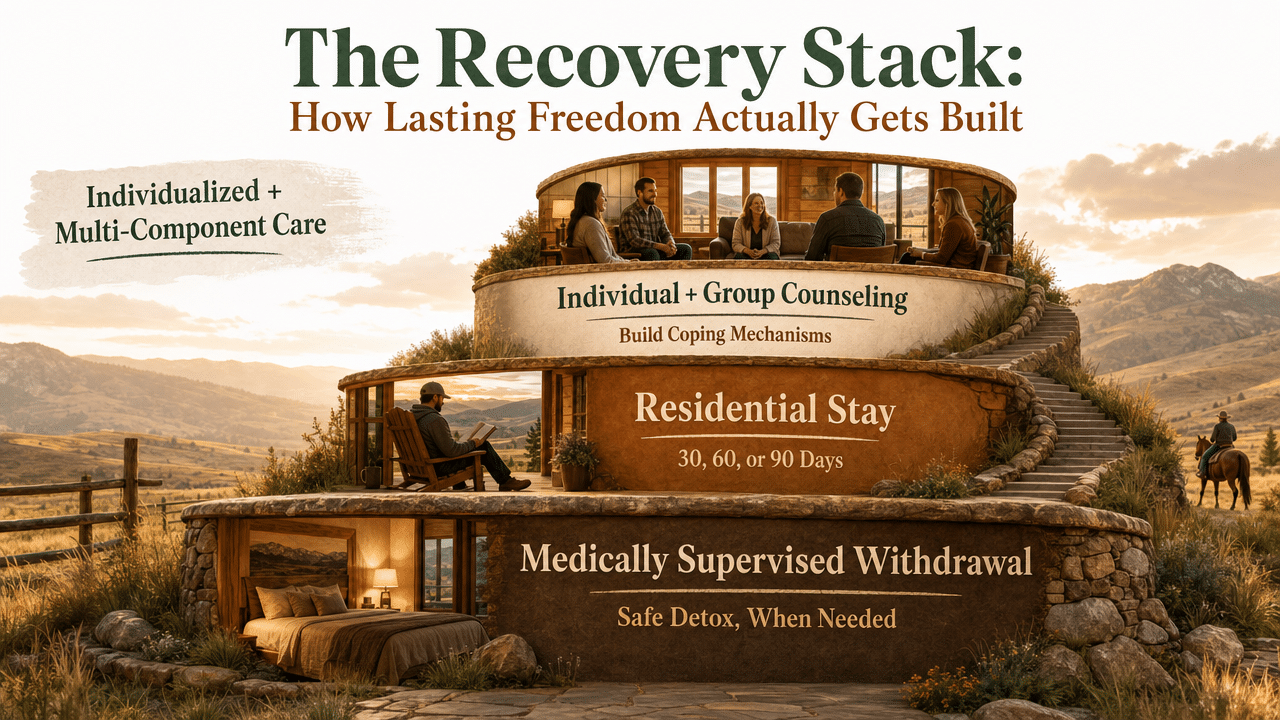
Think of lasting recovery less like a single treatment and more like a stack—layers of care, each doing a different job, each holding the one above it. No single layer is the answer. Together, they’re how people actually get free.
Public health guidance consistently supports this approach. SAMHSA describes effective treatment for substance use disorders as individualized and multi-component—a combination of services tailored to the person, not a one-size product. This framework is essential when considering the components of effective recovery.9
Here’s the stack, bottom to top:
- Medically supervised withdrawal, when necessary, to ensure detox is safe.
- A residential stay long enough to facilitate significant life changes—30, 60, or 90 days, depending on individual needs.
- Individual and group counseling to develop coping mechanisms and address underlying pain.
- A peer community, often 12-step or similar, to combat isolation.
- Family healing, recognizing the crucial role loved ones play in recovery.
- Continuing care for at least the first year out—a layer often overlooked but vital for sustaining recovery.
The next sections will explore each layer in detail. You don’t have to absorb it all at once. You just have to know the shape of what works.
Starting With Medically Supervised Withdrawal
For certain substances—alcohol, benzodiazepines, opioids—stopping abruptly without medical supervision can be dangerous, leading to seizures, blood pressure spikes, or severe dehydration. If you’ve been using heavily or daily for an extended period, your body has adapted, and medical oversight during withdrawal is a critical safety measure.
Medically supervised withdrawal is the initial layer of the recovery stack, not a complete solution. SAMHSA emphasizes that detoxification is a starting point that must connect directly to ongoing treatment, as simply removing the substance doesn’t address the root causes of use. Detox stabilizes your physical condition, preparing you for the deeper work of recovery.9
At Rocky Mountain Treatment Center in Montana, residential withdrawal management is a licensed level of care with specific staffing and safety requirements. This means trained professionals monitor you during the initial difficult days, ensuring your safety and comfort. Vital signs are checked, and medications can alleviate the worst symptoms. Once your body stabilizes, you are in a safe environment to begin the comprehensive recovery process.11
Why Length of Stay Changes Everything: 30, 60, and 90 Days
The idea of a long residential stay can feel daunting due to personal and professional commitments. However, research consistently highlights the importance of treatment duration.
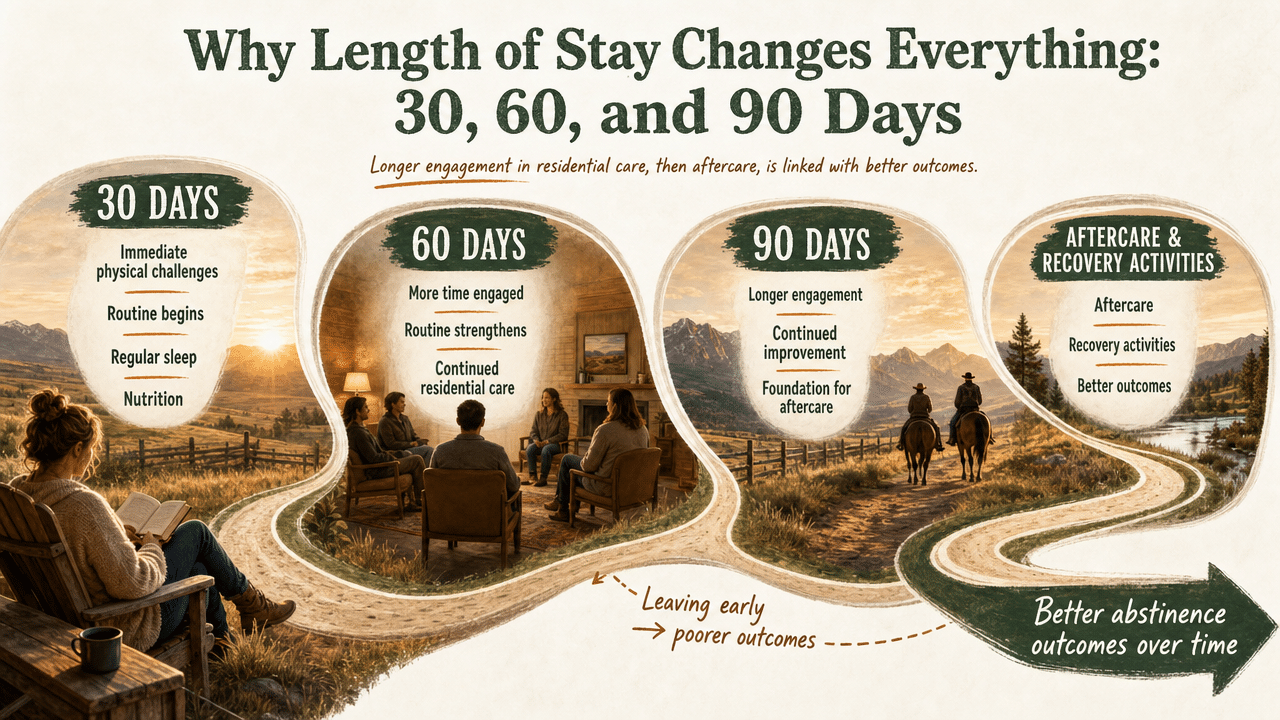
The DATOS findings, which tracked thousands of individuals post-treatment, revealed a clear correlation: the longer someone remained engaged—first in residential care, then in aftercare and recovery activities—the better their abstinence outcomes over time. Individuals who left early had poorer outcomes, while those who stayed longer and continued with aftercare showed significant improvement. This pattern was consistent across various substances and populations.3
Here’s why time matters. Thirty days helps you overcome the immediate physical challenges and establish a routine, including regular sleep and nutrition. For some, especially those with a first treatment episode, strong home support, or milder substance use, thirty days can be a sufficient launchpad for the next phase of care.
Sixty days offers more time for your nervous system to stabilize and for deeper engagement in counseling, allowing you to address more complex issues beyond initial identification. By this point, trust with counselors is often established, leading to more profound therapeutic conversations.
Ninety days is particularly beneficial for long-standing patterns, such as multiple prior attempts, underlying trauma, or a challenging home environment. It provides enough distance from old habits to build new coping mechanisms and reinforces aftercare engagement, which the DATOS data directly links to better long-term outcomes.3
The appropriate length of stay is determined by individual needs, focusing on what is required to effectively address the specific patterns of substance use.
Talk Therapy That Rewires Daily Life
CBT: Spotting Triggers Before They Win
If you’ve ever wondered why you relapsed, even when you didn’t want to, you’re experiencing the power of triggers. Cognitive Behavioral Therapy (CBT) is a practical approach to recognizing these triggers before they lead to substance use.
In CBT, you work with a counselor to identify the thoughts, feelings, places, and people that precede substance use. Then, you develop and practice alternative responses until they become natural. Meta-analytic evidence indicates that CBT has a positive impact on substance use outcomes, with benefits extending beyond treatment, especially when integrated into a broader recovery plan.6
CBT is a skill that strengthens with practice. A residential stay at Rocky Mountain Treatment Center provides the structured environment needed for these skills to take root and become effective.
Trauma-Informed Work for the Pain Underneath
Many individuals struggling with addiction also carry the weight of past trauma—loss, violence, neglect, or difficult childhood experiences. The feeling that sobriety means confronting painful memories highlights the importance of addressing trauma in recovery.
Trauma-informed care at Rocky Mountain Treatment Center means that our team understands the pervasive impact of trauma and integrates this understanding into all aspects of treatment. This approach prioritizes safety, trustworthiness, peer support, collaboration, empowerment, and cultural sensitivity. A systematic review of trauma-informed care in substance use settings suggests it is a promising approach that enhances engagement and well-being for those receiving care.7
Practically, this means counselors are sensitive and patient, group sessions foster a safe environment, and tools are provided to manage difficult emotions when they arise. The goal is to help you learn to process feelings rather than using substances to escape them.
Peer Community and the 12-Step Question
Your past experiences with 12-step programs might lead you to dismiss them, but the research offers a compelling reason for a second look. The data on peer support is often more surprising than people expect.
A significant meta-analysis comparing Alcoholics Anonymous (AA) and 12-step facilitation with other established treatments for alcohol use disorder found that AA/TSF frequently leads to higher rates of continuous abstinence than clinical alternatives, and at a lower cost. The authors concluded that AA/TSF was more effective than other well-established treatments in promoting continuous abstinence and remission.4
The effectiveness likely stems from addressing the isolation inherent in addiction. Being in a room with others who share similar experiences, and who can listen without judgment, provides a unique form of support that individual counseling cannot fully replicate. It fosters a sense of belonging and hope, as you hear stories of successful recovery.
While the spiritual language of 12-step programs may not resonate with everyone, the core benefit lies in finding a supportive community. The research acknowledges that alternative peer pathways exist for those who prefer them. The essential element is connecting with others who are committed to their recovery journey.4
Family Healing: The Part Most Programs Skip
Addiction impacts not just the individual, but everyone who cares about them. If you are struggling with substance use, your family has likely endured significant challenges alongside you. If you are a family member, you understand the emotional toll—the late-night calls, the broken trust, and the struggle to maintain boundaries.
Research clearly demonstrates that when families are appropriately involved in the recovery process, they become a powerful predictor of sustained recovery. A review of family involvement in substance use treatment highlights families as valuable resources for enhancing treatment and recovery success, provided they are engaged thoughtfully and with respect for everyone’s autonomy. This isn’t about assigning blame; it’s about recognizing a structural component of effective recovery.12
Effective family work involves more than a single conversation. It includes structured education about addiction, a safe space for all family members to express their feelings honestly, and tools to communicate without falling back into old, unhelpful patterns. At Rocky Mountain Treatment Center, a dedicated family week within our residential program provides the necessary environment for this healing to begin, fostering recovery for everyone involved.
Equine Therapy and Other Adjuncts: Helpful, Not Magic
Engaging with a thousand-pound animal in a pasture, an animal that responds to your authentic presence rather than your past, offers a unique therapeutic experience. Equine therapy is not a gimmick or a standalone cure; it’s a subtle yet powerful form of work. It teaches you to regulate your breathing as the horse mirrors your state, and to assert your needs without pretense.
A scoping review of equine-assisted services for substance use disorders suggests preliminary evidence that this type of therapy can support treatment engagement, emotional regulation, and strengthen the therapeutic alliance, which in turn enhances the effectiveness of talk therapy. It’s important to note that the studies in this review are often small and not randomized, meaning equine therapy should complement, not replace, the core layers of the recovery stack.8
The same principle applies to other complementary therapies you might encounter, such as recreation, hiking, meditation, music, or art. These activities are not the primary drivers of recovery but serve as valuable supports that make the overall process more manageable and enriching.
The First Year After Treatment Is the Real Test
Discharge day often feels like the end of the journey, but it’s actually the beginning of a critical phase—the continuing care layer. This phase is frequently underestimated, yet research consistently identifies it as the key differentiator between short-term sobriety and lasting recovery.
A review of continuing care after substance use treatment clearly states that ongoing support post-program significantly improves outcomes, with individuals at higher risk of relapse benefiting most from extended connection. Modern delivery models, such as telephone check-ins and video-based groups, are crucial for extending care into the period when old triggers resurface. A weekly virtual group session, for example, can be the intervention that prevents a slip from becoming a full relapse.5
Effective continuing care might seem routine: scheduled check-ins at 30, 60, 90, 180 days, and a year out; a recovery group where you are known; and access to a counselor when challenges arise. This consistent, predictable support is what provides stability.
If You’ve Tried Before and Are Afraid to Try Again
If this isn’t your first time seeking information about recovery, your past experiences matter. Perhaps you completed a 30-day program, or maintained sobriety for months before a relapse you can’t fully explain. The shame associated with trying again is a powerful barrier that keeps many individuals stuck.
However, the evidence suggests that this shame is misplaced. Relapse trajectories are a known characteristic of addiction, not a reflection of your worth or effort. Many individuals who achieve stable, long-term recovery do so after multiple attempts. What often changes between attempts is not willpower, but the structure of support—longer engagement, more intensive counseling, and robust continuing care that extends beyond discharge. If a previous attempt didn’t hold, the question isn’t about your capability, but about which layer of support was missing. Trying again with enhanced support isn’t repeating the past; it’s completing the work.2,3
Your First Step, Whenever You’re Ready
You don’t need to have all the answers or a detailed plan for the future. The most important thing is to take the next small step.
If you’re not yet ready to contact a treatment center, that’s perfectly fine. SAMHSA offers a free, confidential helpline available 24/7, providing a no-pressure environment to ask questions and explore available options. When you are ready for residential treatment, consider programs like Rocky Mountain Treatment Center in Great Falls. We offer a smaller, personalized environment where counselors know you by name, family work is integrated, and continuing care extends beyond discharge. Our staff often have personal experience with recovery, providing a unique level of understanding and empathy.10
Simply reading this far is a significant step. The next one is yours to take, at your own pace. The path to recovery is real, and many individuals are successfully navigating it.
Frequently Asked Questions
Can addiction actually be cured?
Addiction is not “cured” like an infection. Leading research describes substance use disorders as chronic, treatable conditions that can be managed with sustained, multi-component care. The goal is lasting recovery—a stable state built in layers over time. Many individuals achieve and maintain this recovery.1,2
How long does someone need to stay in residential treatment?
The ideal length of stay depends on individual factors such as the substance used, personal history, and home support. The DATOS research indicates that longer engagement in treatment and aftercare correlates with better abstinence outcomes over time. While 30 days can initiate recovery for milder cases, 60 or 90 days allows for deeper counseling, especially for those with trauma, multiple prior attempts, or high-risk home environments. A longer stay provides a more substantial foundation for lasting change.3
Does relapse mean treatment failed?
No. Relapse is a known risk inherent in the nature of addiction, not an indication of personal failure or ineffective treatment. Research on continuing care shows that support systems are designed to manage relapse risk, and individuals at higher risk benefit most from sustained connection. If a slip occurs, the process involves reaching out, re-engaging with support, and continuing the recovery journey. This demonstrates the system’s intended function, not its failure.2,5
Do I have to do 12-step meetings to stay sober?
While not mandatory, the evidence supporting 12-step programs is significant. A major meta-analysis found that AA and 12-step facilitation often resulted in higher rates of continuous abstinence for alcohol use disorder compared to other established treatments, and at a lower cost. If the spiritual language is a concern, the research acknowledges this, and alternative peer support pathways are available.4
What if I’ve tried rehab before and it didn’t work?
You are not alone in this experience, and recovery is still possible. Many individuals who achieve stable, long-term recovery do so after more than one attempt. Often, the difference between attempts is not willpower, but the structure of support. Longer engagement, more in-depth counseling, and consistent continuing care after discharge are linked to improved outcomes. Trying again with increased support is not a repetition, but a continuation of the recovery process.2,3
How do I help a family member who isn’t ready to get help?
Begin by seeking support for yourself, as you’ve likely carried a significant burden. Research on family involvement in substance use treatment indicates that families are powerful resources for recovery when engaged thoughtfully and with respect for everyone’s autonomy. You can contact SAMHSA’s free, confidential 24/7 helpline for information and options without pressure. Maintain connection, establish healthy boundaries, and be prepared to offer support when your family member is ready.10,12
References
- Treatment | National Institute on Drug Abuse (NIDA) – NIH. https://nida.nih.gov/research-topics/treatment
- Is Addiction Really a Chronic Relapsing Disorder?. https://pmc.ncbi.nlm.nih.gov/articles/PMC7739524/
- NIDA-Drug Addiction Treatment Outcome Study (DATOS) Relapse. https://pmc.ncbi.nlm.nih.gov/articles/PMC4455957/
- Alcoholics Anonymous and 12-Step Facilitation Treatments for Alcohol Use Disorder: A Meta-Analysis. https://pmc.ncbi.nlm.nih.gov/articles/PMC8060988/
- Impact of Continuing Care on Recovery From Substance Use Disorder. https://pmc.ncbi.nlm.nih.gov/articles/PMC7813220/
- An Evaluation of Cognitive Behavioral Therapy for Substance Use Disorders. https://pmc.ncbi.nlm.nih.gov/articles/PMC10572095/
- A Systematic Review of Trauma Informed Care in Substance Use Settings. https://pubmed.ncbi.nlm.nih.gov/39641885/
- Equine-assisted services for individuals with substance use disorders: a scoping review. https://pmc.ncbi.nlm.nih.gov/articles/PMC9749232/
- Treatment Options for Substance Use Disorder. https://www.samhsa.gov/substance-use/treatment/options
- National Helpline for Mental Health, Drug, Alcohol Issues – SAMHSA. https://www.samhsa.gov/find-help/helplines/national-helpline
- WITHDRAWAL MANAGEMENT PROGRAM REQUIREMENTS (Montana Administrative Rules). https://rules.mt.gov/browse/collections/aec52c46-128e-4279-9068-8af5d5432d74/policies/00772422-0ddc-4ffe-8846-1b23b1dad727
- Family Involvement in Treatment and Recovery for Substance Use Disorders. https://pmc.ncbi.nlm.nih.gov/articles/PMC8380649/