Key Takeaways
- Montana licenses residential programs like Rocky Mountain Treatment Center through DPHHS, so Bible study sits inside clinically required detox, counseling, group work, and 12-step care rather than replacing it 4, 5.
- Roughly 79,000 Montanans age 12 and up have a substance use disorder and about 92% aren’t in treatment, which is part of why families here are asking whether rehab can include faith 11.
- At RMTC, Bible study is opt-in day by day with no attendance tracking, matching focus-group findings that people in recovery strongly prefer voluntary spiritual groups over mandatory ones 9.
- Before calling, decide on stay length, talk with family about how faith fits, and ask directly whether Bible study is truly optional and how it slots into the 30-, 60-, or 90-day schedule.
What optional Bible study actually looks like inside a Montana rehab
If you’re picturing a rehab where someone hands you a Bible on day one and expects you to lead a prayer by dinner, take a breath. That’s not what’s happening at Rocky Mountain Treatment Center in Great Falls, and it’s not what optional Bible study means in a licensed Montana residential program.
Here’s the honest version. At Rocky Mountain, your core treatment is clinical: medically monitored detox, individual counseling, group work, 12-step meetings, equine therapy, and family programming. Bible study is offered daily as one more thing you can choose, the way you might choose to hit the gym, sit in on a meditation, or step outside for fresh air between sessions. If you go, welcome. If you skip it, no one flags your chart, nudges you at breakfast, or asks why.
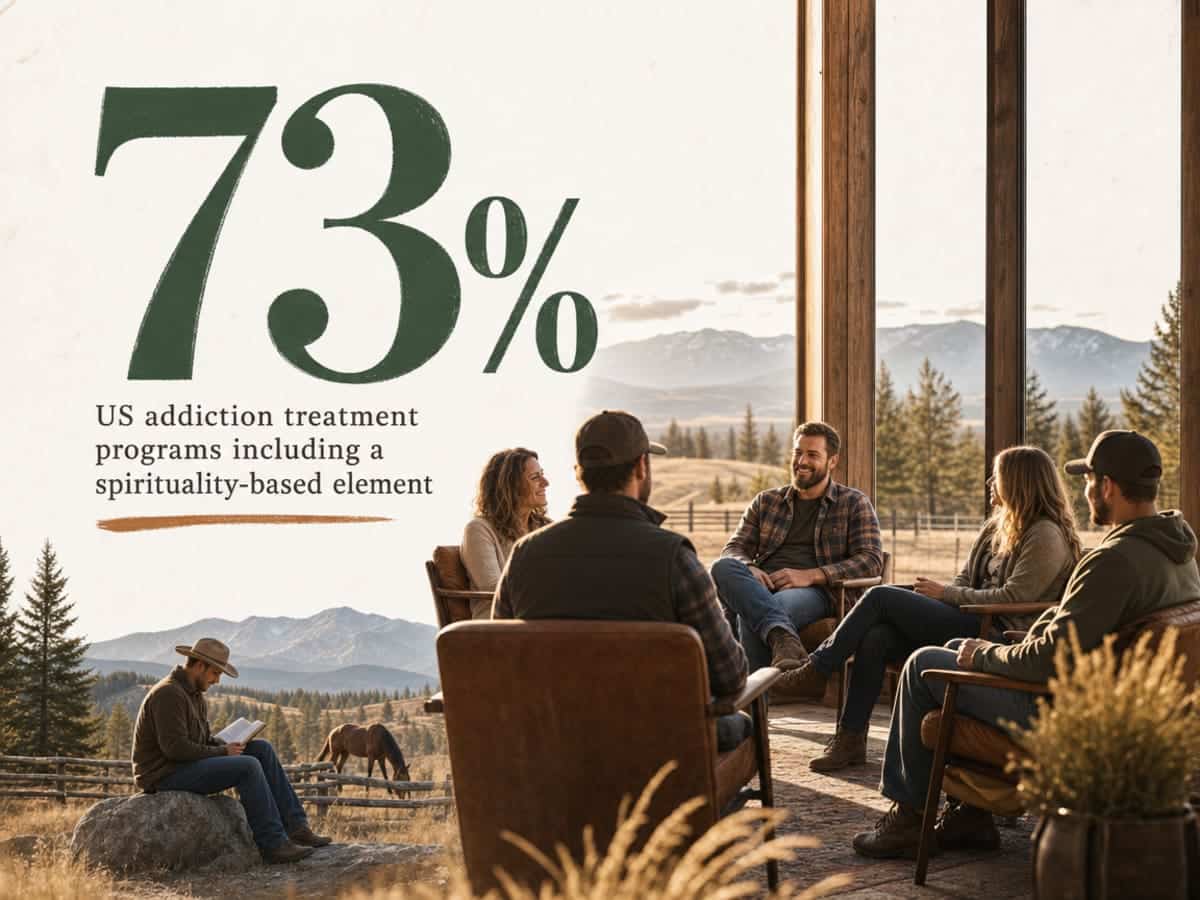
That opt-in shape is actually pretty typical of American addiction care. Research finds that roughly 73% of U.S. addiction treatment programs already include a spirituality-based element of some kind, often woven in through 12-step principles 6. So a Montana rehab offering optional Bible study isn’t a fringe outlier — it’s sitting inside the mainstream, just with the choice left clearly in your hands.
What it looks like day to day is small and low-pressure. A short passage. A conversation. People who are also detoxing, also tired, also trying. You don’t need a church background. You don’t need the right words. You just need to want to be there that day — and you’re allowed to change your mind tomorrow.
Why Montana readers are asking about faith and recovery right now
You’re not the only person in Montana typing “Bible study” and “rehab” into the same search bar. There’s a reason those two words are showing up together for so many families here, and it’s worth naming plainly.
Montana drinks. A lot. According to the 2023 state report on alcohol use, about 61.4% of adults age 21 and up reported past-month drinking, and 28.1% reported past-month binge drinking 10. That’s a significant slice of your neighbors, coworkers, and family members — people quietly wondering whether the next drink is the one they can’t walk back from.
Behind those numbers is a treatment gap that hits Montana especially hard. The state’s Substance Use Disorders Task Force estimates roughly 79,000 Montanans age 12 and older are living with a substance use disorder, and about 92% of them aren’t in treatment 11. That means most people in this state who need real help aren’t getting it — often because rehab feels far away, expensive, unfamiliar, or spiritually off.
For a lot of Montanans, faith has always been part of how you get through hard things. Sitting at the kitchen table with a Bible. A pastor who prayed with your grandmother. A small church in a small town. So when you or someone you love finally starts asking about residential care, it makes sense that you’d want to know: Will this program let me bring that with me?
That’s the question Rocky Mountain Treatment Center hears, and it’s why the optional daily Bible study exists in Great Falls — not to convert anyone, not to replace clinical care, but to make sure people who draw strength from Scripture don’t have to leave that piece of themselves at the front door.
How Rocky Mountain Treatment Center layers Bible study onto clinical care
Detox and counseling are the spine — everything else is a thread
If you’re going to picture how Rocky Mountain Treatment Center actually works, start with the spine. Detox comes first — medically monitored, in a real bed, with staff watching your vitals and helping you through the worst of the withdrawal. From there, your days build around individual counseling, group counseling, 12-step meetings, family work, and equine therapy out at the barn. That’s the load-bearing structure. That’s what keeps you upright.
Bible study is not one of those load-bearing pieces. It’s a thread woven through the day for people who want it — the same way meditation, gym time, or a walk outside is a thread. You can pull it in or leave it out, and your treatment plan doesn’t change either way.
That order matters because RMTC operates as a state-licensed residential treatment center under Montana law, with DPHHS licensure and annual inspection requirements sitting behind every program on the schedule 4, 5. Translation: a Joint Commission accredited facility can’t build recovery on Bible study alone, and RMTC doesn’t try to. The clinical care has to be real, measurable, and up to code. The optional Bible study sits inside that structure, not on top of it.
So if you show up scared that a Montana rehab is going to trade counseling for a devotional, you can let that fear go. The counseling is the point. The Bible study is a choice for people who want one more source of steadiness in a hard week.
Where a Bible study session actually fits in a day at RMTC
Here’s what a day at Rocky Mountain can look like, roughly. Morning starts with vitals and medication checks if you’re early in detox, then breakfast with the other residents. Individual counseling might land midmorning. Group counseling — the kind where people talk honestly about what got them here — usually takes a chunk of the day. Somewhere in there is a 12-step meeting. Some days you’re heading out to the barn for equine therapy, learning what a 1,200-pound animal can teach you about boundaries and calm. Meals, free time, phone calls home if you’re at that stage. Optional Bible study slots in as one gathering among many.
It’s not the anchor of your day. It’s a half-hour or so where a small group sits down together, reads a short passage, and talks. If you go, great. If you’re wiped out from a hard counseling session and want to sit outside instead, that’s also fine.
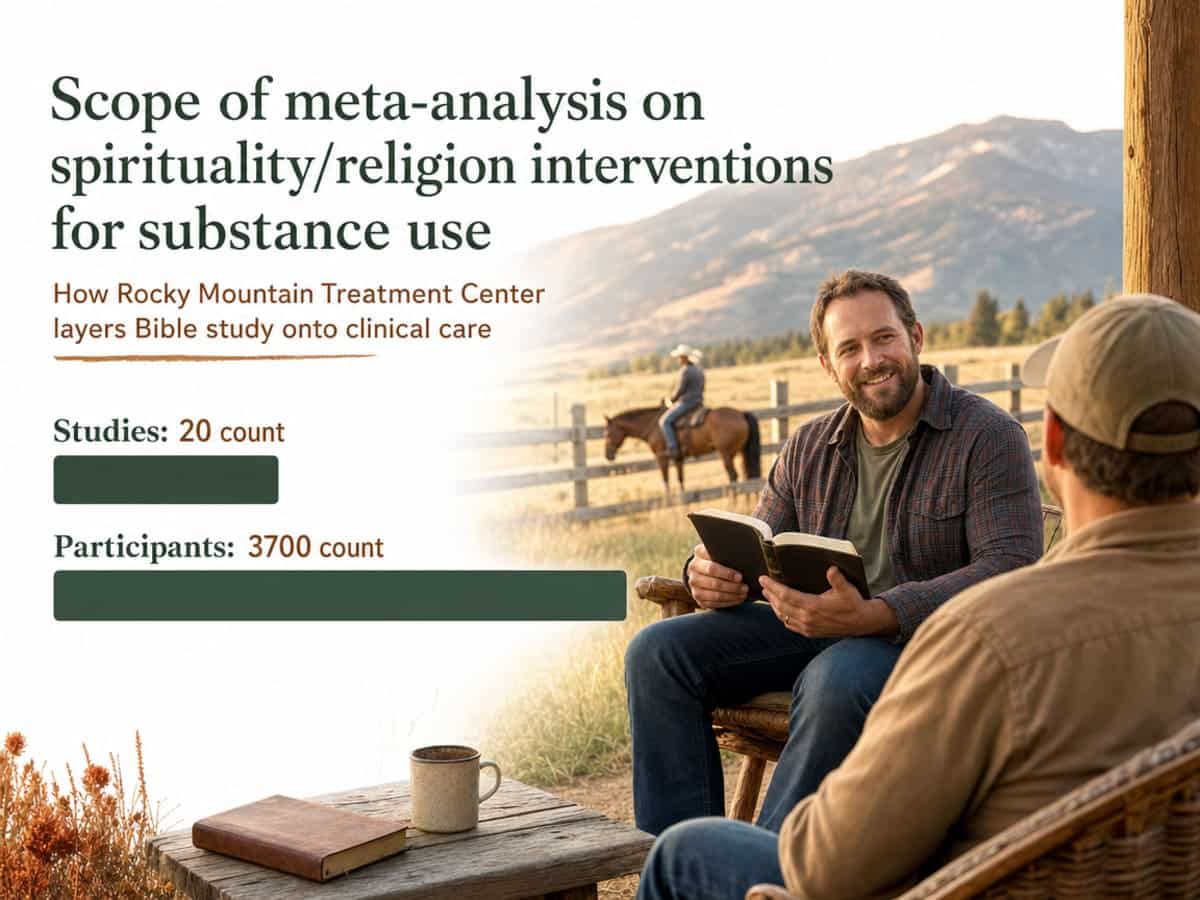
The research supports this layered approach. A systematic review and meta-analysis of 20 randomized controlled trials, covering roughly 3,700 participants, found that spirituality and religion interventions produced a small but statistically significant added effect when compared with other treatments 7. Small but real. That’s the honest read. It means Bible study isn’t a miracle bolt-on, but for people who engage with it, it can add something on top of the counseling, detox, and 12-step work that’s already doing the heavy lifting.
Picture the day as a vertical timeline: detox check-ins near the top, then counseling, then group, then equine or recreation, then meals and rest — with an optional Bible study block tucked in like any other elective. One thread, running alongside the others.
Opt-in, opt-out, opt-in again: how the choice actually works
The word to hold onto is optional. Not “strongly encouraged.” Not “available if you ask three times.” Optional, the way a menu item is optional.
On any given day at Rocky Mountain, you can walk into the Bible study, sit quietly, and never say a word. You can go once, decide it’s not for you, and skip the rest of your stay. You can skip the first three weeks and drop in on week four because something in a counseling session cracked open and you want to sit with it. You can go every day and then take a break when you need one. Nobody keeps score.
That flexibility isn’t a marketing line — it’s what people in recovery actually prefer. In a focus-group study on spirituality and substance-abuse treatment, nearly all participants agreed that a voluntary spiritual discussion group would be preferable to the more rigid alternatives they’d encountered 9. People want to choose. When they choose, they show up differently.
So if you’re worried about being pulled into something you’re not ready for, that worry is fair — and it doesn’t apply here. And if you’re worried about the opposite, that a rehab might make you feel weird for wanting a Bible on your nightstand, that’s not the environment at RMTC either. The door swings both ways, and you’re allowed to walk through it however many times feels right that week.
What the research says — and what it doesn’t
The honest read on spirituality and recovery outcomes
If you’re weighing whether the Bible study part of a program actually matters, you deserve a straight answer instead of a sales pitch. So here’s the straight version.
A review pulling together research on spirituality, religion, and substance use disorder recovery found that most studies show at least some beneficial link between spiritual or religious engagement and outcomes like abstinence and staying in treatment 14. That’s real. It’s also careful language — “at least some” is not “a cure.” The researchers didn’t oversell it, and you shouldn’t hear it as an oversell either.
A more recent narrative review that examined 70 papers published between 1999 and 2021 landed on a balanced take: spirituality can support recovery, but the size and shape of that support depends on context and personal preference 8. In plain terms, if it fits who you are, it can help. If it doesn’t fit, forcing it won’t manufacture the benefit.
What does that mean for you, sitting at your kitchen table trying to decide? It means Bible study at Rocky Mountain Treatment Center isn’t being sold to you as the thing that will fix your drinking. Detox, counseling, group work, and the 12-step foundation are doing that work. Bible study is one honest option among several — a real support for the people it fits, and easy to leave alone for the people it doesn’t. That’s what the research actually says. No more, no less.
Why voluntary beats mandatory in group spiritual work
There’s a specific piece of the research that’s worth sitting with, because it maps almost exactly onto how Rocky Mountain runs its Bible study.
In a focus-group study on spirituality in substance-abuse treatment, participants were nearly unanimous that a voluntary spiritual discussion group would be preferable to the more rigid, mandatory alternatives they had run into elsewhere 9. Read that again. It wasn’t a split vote. People in recovery, talking honestly about what helps and what doesn’t, said the same thing: give me the choice.
That tracks with something you probably already know from your own life. When someone hands you a book and tells you to read it, you resist. When you pick it up on a Tuesday because something in you wants to, you actually read it. Recovery works the same way. Showing up because you chose to is different from showing up because a schedule made you.
So when RMTC keeps the daily Bible study opt-in — no attendance sheet, no consequence for skipping, no side-eye at breakfast — it’s not being casual about it. It’s matching how people in recovery say this kind of group actually helps them. The choice isn’t a technicality. It’s the thing that makes the room feel safe enough to be honest in.
The emotional benefits people actually report
Numbers on abstinence rates are one thing. What might matter more to you right now is how you’ll feel during the hardest stretch of your stay — those middle days when detox is behind you, the shine of “I’m finally getting help” has faded, and you’re staring at a group room wondering if you can keep doing this.
A study of 236 people in substance abuse recovery looked at exactly that emotional layer. Higher levels of religious faith and spirituality were linked to a more optimistic outlook, stronger perceived social support, better resilience under stress, and lower anxiety 13. Optimism. Feeling less alone. Handling a rough day without spiraling. Anxiety that turns down a notch. Those aren’t small things when you’re in a residential program.
None of this means opening a Bible fixes a rough Wednesday. It means that for people who already draw something from Scripture, keeping that thread running through the week seems to steady them. If that’s you, the daily Bible study at RMTC is one place to keep pulling that thread.
And if it’s not you — if faith isn’t where your steadiness comes from — you’ll find that same emotional support in the counseling room, in the group circle, and out at the barn with a horse who doesn’t care what you believe. The support is there either way. The Bible study is just one door into it.
If you’re unsure whether Bible study is for you
Maybe you grew up in church and drifted. Maybe you never went. Maybe you believed once, hard, and then something happened and belief got complicated. Maybe you’re angry at God about the drinking itself. All of those are real, and none of them disqualify you from anything at Rocky Mountain Treatment Center.
Here’s a small filter that might help. Ask yourself three quiet questions, and answer honestly — no one’s watching.
- Am I curious?
- If a short passage and a small conversation sound like something you’d want to sit in on, even once, that’s enough. Curiosity is a good enough reason to walk in. You can leave whenever.
- Am I uncertain?
- Maybe the pull toward faith is there, but so is the doubt. Maybe you’d feel like a fraud opening a Bible after all these years. That’s okay. The room isn’t a test. People in early recovery are rarely certain about anything, and the group doesn’t expect you to be.
- Am I not interested?
- Also fine. You’ll still get the detox, the individual counseling, the group work, the 12-step meetings, the equine therapy, the Family Week, and the aftercare Zoom groups that make up your treatment. Skipping Bible study takes nothing away from your care.
Whichever answer you land on today, you belong at RMTC. The optional part isn’t a technicality — it’s the whole point. Your recovery doesn’t hinge on your relationship with a Bible. It hinges on you showing up, again and again, to the work that’s already waiting for you.
How faith fits into 30-, 60-, and 90-day stays at RMTC
The length of your stay changes a lot of things — how deep the counseling goes, how much your family gets pulled in, how much of you the staff actually gets to know. What it doesn’t change is the optional part of Bible study. It’s there every day, whether you’re in for a month or three.
In a 30-day stay, the first stretch is usually about getting your body through detox and finding your footing in the daily rhythm at Rocky Mountain Treatment Center. Bible study is available from the start, but plenty of people don’t touch it in the first week — they’re sleeping, eating, sitting through their first counseling sessions. If you drop in at all, it might be once or twice near the end, when the fog has lifted enough to think.
A 60-day stay gives you more room. By the second month, you’ve usually settled into a pattern with your counselor, your group, the horses, and the 12-step meetings. Some people find that’s when Bible study starts to click — not as a program requirement, but as one of the steadying threads they mentioned wanting on intake. A study of people in recovery found that higher spirituality tracked with more optimism, stronger social support, and lower anxiety 13. Those are the exact things a second month is trying to build.
A 90-day stay is where structured spiritual engagement, for the people who want it, has time to actually take root. Research on faith-integrated treatment found that greater religious development during the program helped mediate better post-treatment abstinence for participants who chose that path 15. Chose being the key word. In a 90-day window at RMTC, that might look like showing up to Bible study most mornings, connecting it to your 12-step work, and folding it into the aftercare plan you build with your case manager — including the weekly Zoom groups that keep the community going after you go home.
Whatever length you pick, the shape is the same: clinical care carries the weight, and Bible study is there when you want it, quiet when you don’t.
Talking with family before you call
Before you pick up the phone, there’s often one more conversation to have — the one at your own kitchen table. Family reactions to “rehab” and “Bible study” in the same sentence can be all over the map. Your mom might cry with relief. Your spouse might worry the program is too religious. Your adult kid might wonder if it’s religious enough. All of that is normal.
A few things worth saying out loud with them before you call Rocky Mountain Treatment Center:
- The clinical care is the plan. Detox, counseling, group work, 12-step meetings, and equine therapy are what your days are built on. Bible study is one optional half-hour, not the treatment.
- You get to choose. You can attend every day, skip every day, or change your mind in week three. Nobody at RMTC keeps score.
- Family is part of this. The three-day Family Week and aftercare Zoom groups mean the people at your table now will have a place in what comes next — whether or not any of you open a Bible during the stay.
What to ask when you call RMTC
When you’re ready to call Rocky Mountain Treatment Center, you don’t need a script. But a few honest questions can make the conversation feel less overwhelming — for you, and for whoever’s helping you make the call.
Here’s what’s worth asking:
- Is Bible study really optional, or is there pressure to attend? Ask it straight. The answer you’re looking for is that it’s opt-in, day by day.
- What does a typical day look like? Get a feel for how detox, counseling, group work, 12-step meetings, and equine therapy fill the schedule — and where the optional Bible study sits inside that.
- How does the 30-, 60-, or 90-day option work for someone in my situation? Length affects how much room you have for the counseling and family work to actually land.
- What does Family Week involve, and how do the aftercare Zoom groups work? These are the pieces that carry you past discharge.
- Do you work with my insurance? RMTC works with most major insurance providers, and it’s worth confirming yours on the call.
Then ask the one this whole article is about: Can you tell me more about the optional faith-based programming? No pressure. Just a question.
Frequently Asked Questions
Is Bible study required at Rocky Mountain Treatment Center?
No. Bible study at Rocky Mountain Treatment Center is fully optional and offered daily as one choice among several. Your treatment plan is built on detox, counseling, group work, 12-step meetings, and equine therapy. Attending or skipping Bible study doesn’t change your care, your chart, or how staff work with you.
Can I still go to RMTC if I’m not religious or I’m unsure about faith?
Yes. You’re welcome at RMTC whether you’re a lifelong believer, drifted years ago, or have never opened a Bible. The clinical program stands on its own, and staff don’t push participation. Many residents never attend Bible study and still get the full benefit of counseling, 12-step work, equine therapy, and family programming.
How does Bible study fit alongside detox, counseling, and 12-step work?
Detox and counseling carry the weight of your recovery — that’s the spine. Bible study sits alongside as a short daily gathering for people who want it, similar to how meditation or gym time fits the schedule. Research finds spirituality-based elements appear in most U.S. addiction programs, usually as one thread among many 6.
Does faith-based programming actually help with long-term recovery?
For people who engage with it, yes — modestly. A study of faith-based versus secular programs found that greater religious development during treatment helped mediate better post-treatment abstinence for participants who chose that path 15. The key word is chose. Effects depend on personal fit, which is why RMTC keeps Bible study opt-in rather than mandatory.
Can I join Bible study partway through my stay, or drop out if it’s not for me?
Yes to both. You can skip the first month and drop in during week five. You can go daily, then take a week off. You can try one session and never return. Nobody tracks attendance or asks why. That flexibility matches what people in recovery say they actually prefer — voluntary over rigid 9.
What should I ask when I call RMTC about optional faith-based programming?
Keep it simple. Ask whether Bible study is truly opt-in day by day, how it fits inside the daily schedule around detox and counseling, and how the 30-, 60-, or 90-day options work for your situation. Then ask the direct question: Can you tell me more about the optional faith-based programming? No pressure — just a question.
References
- Substance Use Disorder Services and Resources. https://dphhs.mt.gov/bhdd/SubstanceAbuse/
- Get in Front of It. https://dphhs.mt.gov/opioid/getinfrontoit
- Montana Recovery Residence Registry. https://dphhs.mt.gov/BHDD/MontanaRecoveryResidenceRegistry
- MONTANA | State Residential Treatment for Behavioral Health Conditions: Licensure and Certification Requirements. https://aspe.hhs.gov/sites/default/files/2021-08/StateBHCond-Montana.pdf
- 50-5-248. Licensing of residential treatment centers. https://mca.legmt.gov/bills/mca/title_0500/chapter_0050/part_0020/section_0480/0500-0050-0020-0480.html
- Belief, Behavior, and Belonging: How Faith is Indispensable in Preventing and Recovering from Substance Abuse. https://pmc.ncbi.nlm.nih.gov/articles/PMC6759672/
- A systematic review and meta-analysis of randomized controlled trials of spirituality/religion (S/R) interventions for substance use problems. https://pubmed.ncbi.nlm.nih.gov/31349206/
- Spirituality in Addiction Recovery: A Narrative Review. https://pubmed.ncbi.nlm.nih.gov/37486580/
- A focus-group study on spirituality and substance-abuse treatment. https://pmc.ncbi.nlm.nih.gov/articles/PMC2943841/
- 2023 Montana State Report: Underage Drinking Prevention and Enforcement. https://library.samhsa.gov/sites/default/files/montana-iccpud-state-report-2023.pdf
- Montana Substance Use Disorders Task Force Strategic Plan. https://dphhs.mt.gov/assets/publichealth/EMSTS/opioids/MontanaSubstanceUseDisordersTaskForceStrategicPlan.pdf
- U.S. Department of Health & Human Services – Montana (MT) NSDUH dataset. https://catalog.data.gov/dataset/montana-mt
- Religious faith and spirituality in substance abuse recovery. https://pubmed.ncbi.nlm.nih.gov/11166499/
- Relationship of spirituality or religion to recovery from substance use disorders. https://pure.johnshopkins.edu/en/publications/relationship-of-spirituality-or-religion-to-recovery-from-substan-3/
- Faith-based intervention, change of religiosity, and abstinence of substance addicts. https://pubmed.ncbi.nlm.nih.gov/34190824/