
Key Takeaways
- Supervised detox in Great Falls provides 24/7 monitoring, symptom-based medication, and staff oversight, turning a dangerous first week into a manageable medical process rather than a solo ordeal.
- The substance matters: alcohol and benzodiazepine withdrawal can be fatal without supervision 1, 6, opioids demand medication like buprenorphine 3, and stimulant crashes need calm mental health support 5.
- Montana’s HEART 1115 waiver expanded Medicaid coverage for ASAM 3.2-WM residential withdrawal management and higher-intensity residential treatment, making local detox financially reachable for many Cascade County residents 11.
- Before choosing a program, compare bed availability, what your insurance or Medicaid actually covers out-of-pocket, admission timing, and whether aftercare like residential treatment, counseling, and family programming is built in.
If You’re Reading This at 2 A.M.
If you’re reading this at 2 a.m., you’re already doing something brave. Maybe your hands are shaking. Maybe someone you love is passed out in the next room and you’re searching for the right words to type into a browser. Either way, you found this page, and that counts.
Here’s what you need to know first: the physical part of quitting is survivable. It’s uncomfortable, sometimes frightening, and for a few substances it can be genuinely dangerous without medical help 1. But people walk through it every day in Great Falls and across Montana. With 24/7 supervision, medications that ease the worst of it, and staff who’ve often lived this themselves, the first stretch becomes something you get through instead of something you white-knuckle alone.
This guide walks you from what your body will feel like in the coming hours, through what supervised detox actually looks like, to what happens after. No judgment. No sales pitch. Just the information you need to take the next small step.
What Withdrawal Actually Feels Like, Hour by Hour
The First 24 Hours: Shakes, Sweat, and the Body’s Alarm
The first day is your body sounding an alarm. If you’ve been drinking heavily or using regularly, your nervous system has been running with the volume turned down. Take the substance away and the volume snaps back up, sometimes higher than baseline.
You might feel it start six to twelve hours in. Hands trembling when you reach for a glass of water. Sweat pooling at your lower back even though the room is cool. A pulse that feels loud in your ears. Your stomach may reject anything you try to eat. Sleep, if it comes at all, comes in shredded pieces.
With alcohol especially, the first 24 hours are when the risk curve steepens. Withdrawal can move from shaky and anxious to seizures or something called delirium tremens, which is why medical guidance calls alcohol withdrawal potentially fatal without supervision 1. In a supervised setting, staff check your vitals and adjust medication before things escalate. You don’t have to guess whether what you’re feeling is normal. Someone with training is watching for you.
If you’re the family member reading this: your job right now is not to tough it out together. It’s to get help in the room.
Days 2 Through 5: The Hard Middle
Days two through five are usually the ones people remember. The first shock has passed, but your body is still recalibrating, and the fatigue sits deeper than any tired you’ve felt before.
For alcohol, this window is when symptoms often peak. Blood pressure and pulse can swing. Anxiety runs hot. In a monitored program, benzodiazepines are the standard medication used to quiet the nervous system and prevent seizures, dosed and tapered based on how you’re actually doing hour by hour 2. You are not white-knuckling this. You are being medicated through it.
For opioids, days two and three tend to be the worst. Muscle aches, restless legs, gooseflesh, diarrhea, a runny nose that won’t quit, and a bone-deep sense that you would do almost anything to make it stop. Buprenorphine is described in international guidance as the best medication for moderate-to-severe opioid withdrawal, and staff can start it once you’re far enough into withdrawal for it to work safely 3.
Eat what you can. Drink water when it’s offered. Let the nurses count your pills. Small tasks. Small wins. That’s the whole assignment.
Week Two and the Fog Lifting
By the end of week one, most of the loud symptoms have quieted. You’ll probably still feel tired in a way that surprises you. Sleep may be strange for a while. Appetite comes back in fits and starts. Mood can dip, especially if stimulants like meth or cocaine were part of the picture, since that crash tends to look like heavy depression and low energy before it lifts 5.
What changes in week two is that your head starts to clear. You can follow a conversation. You remember what you ate for lunch. You laugh at something and it startles you a little.
This is when the real recovery work becomes possible. Detox got your body across the bridge. What comes next is learning to live on the other side of it, and that’s where counseling, groups, and structured days start doing the heavy lifting.
Why the Substance You’re Using Changes Everything
Alcohol: When Quitting Cold Can Kill You
Alcohol is the one people underestimate the most. It’s legal, it’s everywhere in Montana, and lots of folks assume that because they bought it at a gas station, quitting it can’t really be that dangerous. That assumption sends people to the emergency room.
In a supervised setting, benzodiazepines are the medication of choice, dosed based on how you’re actually presenting and adjusted while staff track your blood pressure, pulse, and breathing 2. That’s not overkill. That’s the standard of care. If you can only remember one thing from this page, let it be this: alcohol is not the substance to quit alone in a spare bedroom.
Opioids: Miserable, Rarely Deadly, Often Relapse-Prone Without Medication
Opioid withdrawal is famously awful, but on its own it usually won’t kill you. What it will do is convince you, around hour 48, that using again is the only option left. That’s the real danger. People who detox from opioids without medication support relapse at very high rates, and a relapse after a few clean days is when overdose risk spikes hard, because tolerance has dropped.
This is why buprenorphine is described in international guidance as the best medication for moderate-to-severe opioid withdrawal 3. In a program, staff wait until you’re far enough into withdrawal that the medication can be started safely, then use it to take the edge off the muscle aches, the crawling skin, the sleeplessness. For methadone induction, the principle is start low, go slow, adjusting to symptoms and sedation rather than a fixed schedule 4.
You get to decide what comes after. Some people transition to longer-term medication for opioid use disorder. Others taper off and move into abstinence-based residential care. SAMHSA’s guidance is clear that no one should be forced off medication in the hospital 4. Your pace, your plan.
Benzodiazepines: The Slow Taper That Has to Happen Inside
If you’ve been taking Xanax, Klonopin, Ativan, or Valium regularly for months or years, please read this part twice. Benzodiazepines are the other class where stopping suddenly can seriously hurt you.
The 2025 joint clinical guideline on benzodiazepine tapering is direct: clinicians should avoid abruptly discontinuing these medications in physically dependent patients, and severe or complicated withdrawal belongs in an inpatient or medically managed residential setting with regular vital-sign checks and seizure-risk assessment 6. Cold turkey off a daily benzo can cause seizures, dangerous confusion, and prolonged, punishing anxiety.
A safe taper is slow on purpose. It’s measured in weeks, sometimes longer, with small dose reductions your body has time to adjust to. Newer guidance also warns against shortcuts like flumazenil reversal or anesthesia-based rapid detox because of seizure and cardiac risk 6. There’s no clever hack here. There’s only a careful plan, done in a place where someone is watching you.
If you’re using benzos alongside alcohol or opioids, that combination raises the stakes further and makes residential detox even more important.
Meth and Cocaine: The Crash That Looks Like Depression
Stimulant withdrawal doesn’t look like the movies. There are no dramatic shakes or hospital-drama seizures. What there is, instead, is a crash that can feel bottomless.
After you stop using meth or cocaine, expect exhaustion that sleep doesn’t fix, a heavy flat mood, sharp cravings, and sometimes thoughts that scare you. Clinical guidance emphasizes that during abrupt stimulant discontinuation, staff should stay attentive to both physical and mental health, and that current standard care focuses on easing symptoms and reducing risks rather than pushing a specific medication 5.
A calm, low-stimulation environment matters more than most people expect. Dim lights. Real food when you can eat. Long sleep when it finally comes. People to check in with when the thoughts get loud. In a residential setting, that structure is built in, so the crash has somewhere soft to land instead of finding you alone with your phone at 3 a.m.
What 24/7 Supervised Detox Looks Like in a Great Falls Program
Picture a small residential facility, not a hospital. Bedrooms instead of gurneys. A kitchen where someone is warming up broth because you couldn’t keep breakfast down. Nurses on shift around the clock, and a doctor overseeing the plan for your specific body and your specific history.
Here’s what the day actually looks like. Someone checks in on you three to four times a day at minimum, taking your blood pressure, pulse, temperature, and asking how you’re rating your symptoms on a simple scale 3. If your numbers climb, medication gets adjusted. If you’re pale and clammy at 3 a.m., a nurse is already awake and coming to your room. International withdrawal management guidance is explicit about this: patients in withdrawal should be monitored regularly, with 24-hour nursing availability and doctor oversight built into the setting 3. That standard doesn’t change because you’re in a 26-bed program in Great Falls instead of a big-city hospital.
Meals are simple and steady. Fluids get pushed. The lights stay low when you need them low. If you’re withdrawing from alcohol, you’re getting benzodiazepines dosed to what your body is actually doing, not a fixed script 2. If you’re withdrawing from opioids, staff time the start of buprenorphine to the window where it will help instead of hurt 3.
What you won’t find: a stopwatch on your recovery. What you will find: people who’ve usually been where you are, sitting near you while your body remembers how to run without the substance. That’s the whole shape of the first week. Vitals. Medication. Rest. Repeat. Until the fog starts to lift and the next chapter can begin.
Montana’s Substance Use Reality, and Why Local Detox Access Matters
Montana is not spared. The state’s own Substance Use Disorder Task Force lays out the baseline in plain numbers: in 2019, there were 78.9 opioid prescriptions written for every 100 Montanans, one of the higher rates in the country and a driver of the dependence still working its way through families here 10. That’s the backdrop for every detox conversation happening in Great Falls right now.
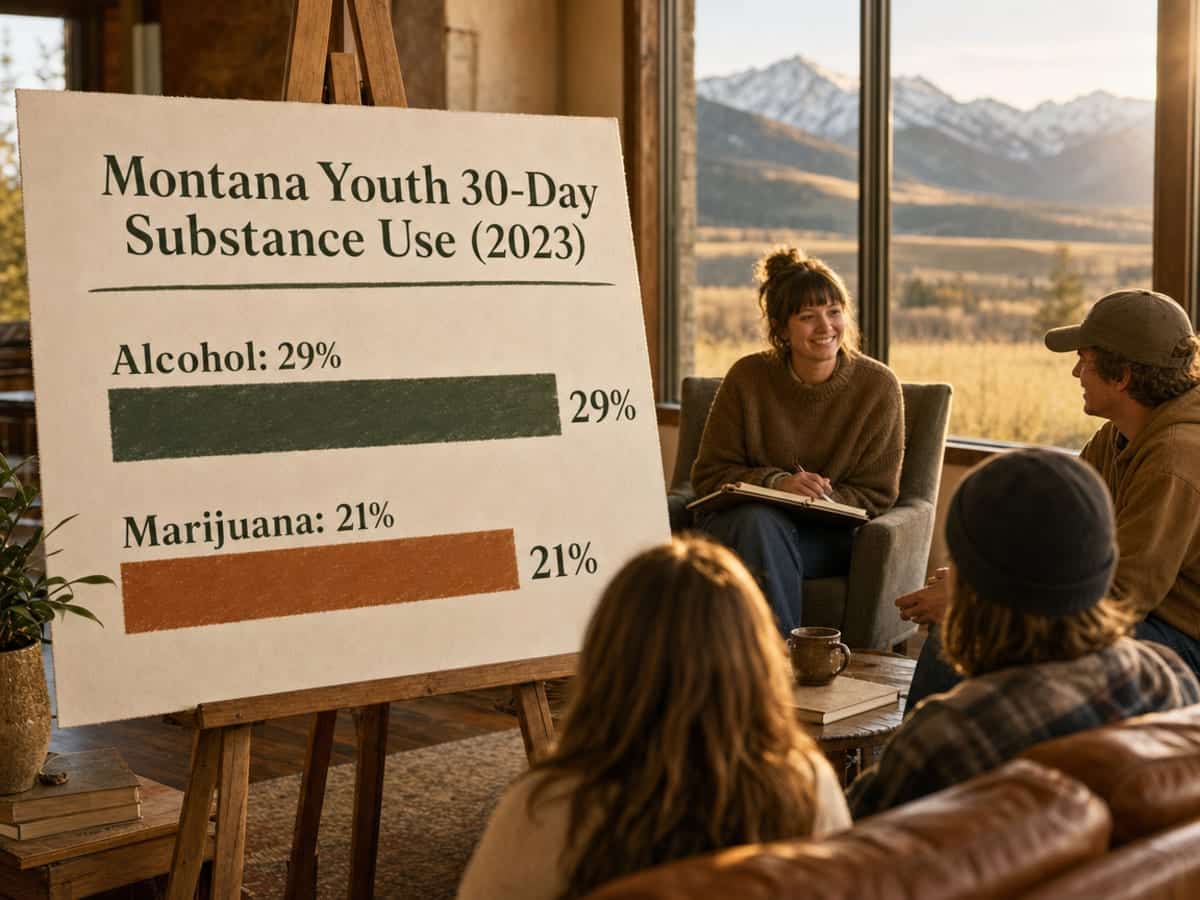
The younger generation is watching all of this. A 2023 survey of Montana youth found that 29% had used alcohol in the past 30 days and 21% had used marijuana in the same window 10. Almost a third of Montana teenagers drank in the last month. When you grow up in a place where alcohol is folded into ranch work, hunting weekends, and Friday night football, the line between social use and dependence can blur before anyone names it.
What this means for you, at 2 a.m., is simple. You are not an outlier. You are not the only person in Cascade County googling this tonight. The state has recognized substance use as a major public health issue and is putting real money and policy behind expanding treatment access, including detox capacity 10. Local matters here. A detox bed 90 minutes from your house is a bed you might actually get to. A residential program where staff know Montana winters, Montana distances, and Montana pride is a program you’re more likely to stay in past day three. Great Falls sits at the geographic center of a lot of long drives, and having supervised withdrawal management within reach of Cascade, Chouteau, Judith Basin, and Teton counties is not a luxury. It’s what keeps the first week from becoming a hospital story or something worse.
Paying for Detox: Medicaid, HEART, and Commercial Coverage in Montana
Money is usually the second question, right after “is this safe.” It’s a fair one, and the news in Montana is better than it was a few years ago.
Through the state’s HEART 1115 waiver, Montana Medicaid now covers a full ladder of addiction care, including ASAM 3.2-WM residential withdrawal management, along with higher-intensity residential treatment at ASAM levels 3.1, 3.3, and 3.5 11. In plain English: if you qualify for Medicaid in Montana, medically monitored detox in a residential setting is a covered pathway, not a private-pay-only luxury. In state fiscal year 2025, 1,499 Montanans were served in ASAM 3.5 high-intensity residential SUD treatment through this expansion 11. You would not be the first person in your zip code to use this door.
Coverage details vary by program. Not every Great Falls facility takes every payer. Some accredited residential programs work primarily with commercial insurance plans, and some accept Medicaid through the HEART pathway. A few, honestly, do neither and are private-pay. The fastest way to sort this out is a single phone call to the admissions line: give them your insurance card information, or tell them you’re on Medicaid, and ask what your out-of-pocket cost would actually be before you pack a bag. That’s a five-minute conversation, and it’s one worth having tonight rather than at the pharmacy counter next week.
What Happens After Detox: The Bridge to Real Recovery
Residential Care, Counseling, and Why Detox Alone Isn’t Enough
Detox clears the substance from your body. It does not, on its own, teach you how to live without it. That’s the part that surprises a lot of people on day eight, when they feel physically okay for the first time in years and assume the hard part is over.
The hard part is different now, not gone. Cravings show up in specific places, tied to specific people and songs and times of day. Old coping habits are still your first instinct. This is where 30, 60, or 90-day residential care earns its keep. You get structured days, individual counseling, group work, and 12-step meetings inside a setting where you can practice being sober before you have to do it around your favorite bar or your uncle’s ranch. SAMHSA guidance on opioid treatment specifically warns against detox-only approaches and recommends ongoing psychosocial support after any medication decision 4. Same logic applies across substances. The bridge from detox to residential care is where the odds actually shift.
Equine-Assisted Therapy: An Honest Look at a Promising Adjunct
You may have seen photos of people brushing horses at treatment centers and wondered if that’s a gimmick or something real. Honest answer: it’s somewhere in between, and the research says so plainly.
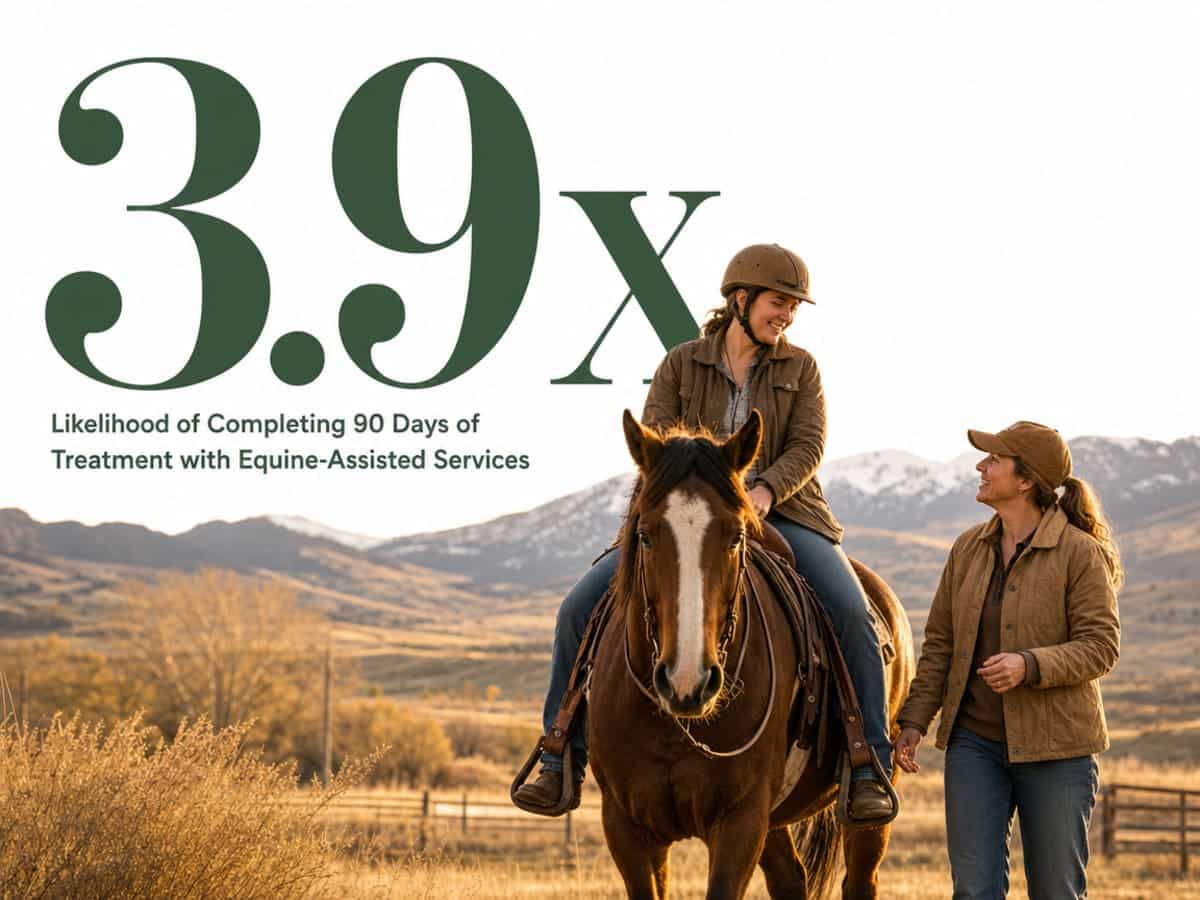
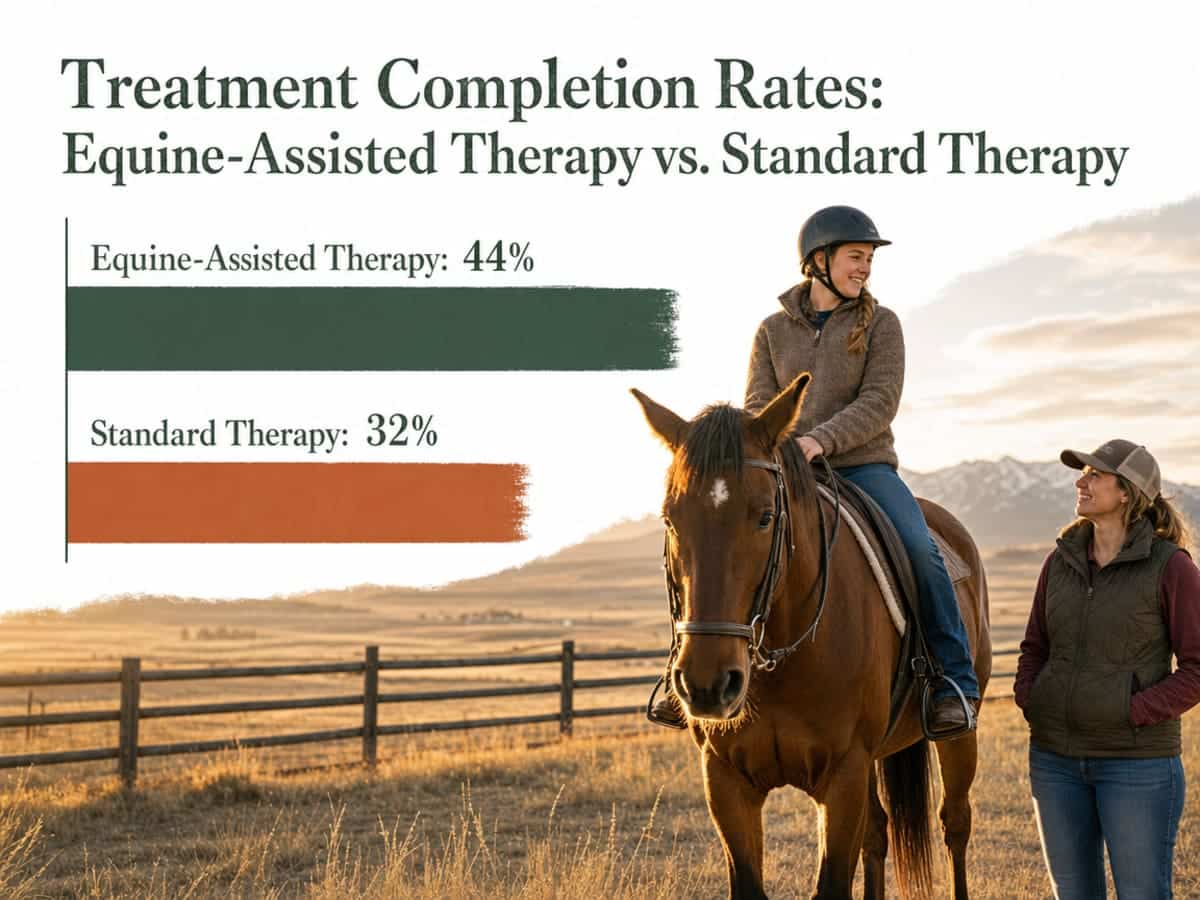
A 2022 systematic review of equine-assisted services for substance use disorders found that in one program, participants were 3.9 times more likely to complete 90 days of treatment than controls, but the same review concluded overall evidence remains inconclusive and calls for more rigorous studies 7. That 3.9 figure comes from a single program with methodological limits, not a broad guarantee. A separate randomized controlled trial found a 44% completion rate for horse-assisted therapy versus 32% for standard therapy, though the difference was not statistically significant in a small sample 8. Where the evidence is stronger is in the softer stuff: a 2023 study found equine-assisted therapy significantly improved emotion regulation, self-efficacy, and self-esteem in people with substance use disorders 12. That matters when you’re rebuilding a life. Just don’t mistake it for medical detox. Horses help you feel human again. They don’t manage benzodiazepine withdrawal.
Family Involvement and Aftercare Planning
Addiction rarely happens to one person. The spouse who counted bottles, the teenage kid who learned to read the room, the parent who kept lending money and hating themselves for it, they’re all in this too. Recovery works better when they get their own seat at the table.
Good programs build in structured family education, therapy sessions, and week-long family programming so everyone learns the same language for what happened and what comes next. Aftercare planning starts before you leave, not after: a weekly group to attend, follow-up calls at 30, 60, 90, 180, and 365 days, a sponsor’s number in your phone, a plan for the first Friday night you’re back in your kitchen. Detox is chapter one. This is how the book keeps going.
How to Take the Next Step Today
The next step is smaller than you think. It is not packing a bag. It is not telling your whole family. It is one phone call to a Great Falls admissions line, in whatever voice you can manage, even if that voice is shaky.
Here is what to have near the phone if you can: the name of what you’ve been using and roughly how much per day, when your last drink or dose was, any medications you take, and your insurance card or Medicaid ID. If you don’t have all of that, call anyway. Admissions staff have heard every version of this call and will walk you through the questions.
Ask three things. Do you have a bed open. What will this cost me with my coverage. How soon can I come in. A good program will give you real answers, not a runaround.
If you’re the family member: you can make the first call for someone you love. You can hand them the phone once someone picks up. Rocky Mountain Treatment Center’s admissions line in Great Falls is one number worth having tonight. Making the call is the win. Everything else follows from there.
Frequently Asked Questions
How long does drug and alcohol detox take in Great Falls?
For most people, the acute phase runs about 5 to 7 days, sometimes stretching to 10 or 14 depending on the substance and your history. Alcohol usually peaks between days 2 and 5. Opioid symptoms often ease within a week. Benzodiazepine tapers take longer on purpose, sometimes weeks, because a slow taper is what keeps you safe 6.
Is it safe to detox from alcohol or benzodiazepines at home?
No, not if you’ve been using daily or heavily. Alcohol withdrawal can cause seizures and, in severe cases, be fatal without medical supervision 1. Benzodiazepine withdrawal carries the same risks, which is why current guidance says clinicians should avoid abruptly discontinuing them and manage complicated cases in a residential or inpatient setting 6. Please make the call before you try to stop.
Does Montana Medicaid cover residential detox?
Yes, in many cases. Through the HEART 1115 waiver, Montana Medicaid covers residential withdrawal management at ASAM level 3.2-WM along with higher-intensity residential treatment at levels 3.1, 3.3, and 3.5 11. Coverage still depends on which specific program you call, since not every Great Falls facility accepts every payer. Ask the admissions line directly what your Medicaid or commercial plan will cover.
What should I bring to a supervised detox program?
Keep it simple. Comfortable clothes for a week, basic toiletries, a list of any medications you take and their doses, your insurance card or Medicaid ID, and a photo ID. Leave phones, laptops, and outside food to the program’s rules once you check in. If you forget something, staff will help you get it. Making the call matters more than the packing list.
What happens after detox ends?
Detox stabilizes your body. What comes next is the actual recovery work: residential treatment, individual and group counseling, 12-step meetings, family sessions, and an aftercare plan for the weeks and months after you go home. National guidance is clear that detox alone isn’t enough and that ongoing psychosocial support belongs in every treatment plan 4. Most people step directly from detox into a 30, 60, or 90-day program.
How do I help a family member who won’t admit they need detox?
Start by dropping the argument about labels. You don’t need them to say the word “alcoholic” tonight. Ask if they’d talk to someone on the phone with you sitting next to them. Offer a ride. Handle the insurance question yourself. If withdrawal has already started and they’re shaking, sweating, or confused, that’s a medical situation. Call the admissions line, or 911 if symptoms look severe.
References
- Medication for the Treatment of Alcohol Use Disorder: A Brief Guide. https://library.samhsa.gov/sites/default/files/sma15-4907.pdf
- Quick Guide for Clinicians Based on TIP 45—Detoxification and Substance Abuse Treatment. https://nida.nih.gov/sites/default/files/samhsa_detoxification_and_substance_abuse_treatment.pdf
- Clinical Guidelines for Withdrawal Management and Treatment of Drug Dependence in Closed Settings. https://www.ncbi.nlm.nih.gov/books/NBK310652/
- TIP 63: Medications for Opioid Use Disorder. https://library.samhsa.gov/product/tip-63-medications-opioid-use-disorder/pep21-02-01-002
- The ASAM/AAAP Clinical Practice Guideline on the Management of Stimulant Use Disorder. https://stacks.cdc.gov/view/cdc/156927/cdc_156927_DS1.pdf
- Joint Clinical Practice Guideline on Benzodiazepine Tapering. https://pmc.ncbi.nlm.nih.gov/articles/PMC12463801/
- Equine-assisted services for individuals with substance use disorders: A systematic review. https://pmc.ncbi.nlm.nih.gov/articles/PMC9749232/
- Complementary horse-assisted therapy for substance use disorders: A randomized controlled trial. https://pmc.ncbi.nlm.nih.gov/articles/PMC7001193/
- More Than Just a Break from Treatment: How Substance Use Patients Experience Horse-Assisted Therapy. https://pmc.ncbi.nlm.nih.gov/articles/PMC5054942/
- Montana Substance Use Disorder Task Force Strategic Plan 2024. https://dphhs.mt.gov/assets/publichealth/EMSTS/opioids/SUDsStrategicPlan2024.pdf
- Healing and Ending Addiction through Recovery and Treatment (HEART) Report. https://dphhs.mt.gov/assets/StatutorilyRequiredReports/MCA16-12-122HEARTReport9-1-25.pdf
- Equine-assisted therapy effectiveness in improving emotion regulation, self-efficacy, and self-esteem in patients with substance use disorders. https://pubmed.ncbi.nlm.nih.gov/37833688/