
Key Takeaways
- Truly free rehab is rare, but treatment paid for by Medicaid, block grants, scholarships, or charity care is widely available once you know which door fits your situation.
- Private-pay episodes run roughly $1,132–$2,099 outpatient and $2,907–$11,260 residential 16, which is why bridging that gap through public or charitable funding matters so much.
- Medicaid is the largest pathway into low-cost care, and nearly 47% of uninsured adults with a substance use disorder qualify under expansion but often don’t realize it 11.
- State block grants fund treatment for uninsured, low-income adults through state-approved providers 12, so ask directly about state-funded slots when you call.
- Sliding-fee scales at HRSA community health centers 18and scholarship beds at treatment centers 1fill the gap for people who fall between Medicaid and private-pay affordability.
- Private insurance carries parity protections, meaning denied SUD stays can be appealed for free when coverage falls short of medical-surgical standards 17.
- In Montana, the DPHHS state-approved provider list 6plus Medicaid’s coverage of outpatient through residential care 4give you a concrete starting point tonight.
- Make one call today to SAMHSA’s helpline 2, gather ID and coverage details, then call three providers back-to-back tomorrow to build real momentum.
The truth about “free” rehab (and why it matters where you start)
If you’re reading this, you’ve already done something hard. Looking up how to pay for rehab means you’re taking the problem seriously, even when the money side feels impossible. So here’s the honest answer up front: truly free drug rehab, in the sense of a program that costs nobody anything, is rare. What’s much more common, and much more available than most people realize, is treatment that’s free to you because someone else is paying for it.
That “someone else” is usually Medicaid, a federal or state block grant, a scholarship bed funded by donations, or a health center’s charity care fund 1. Knowing which of those actually applies to your situation changes everything about where you look, who you call, and what you ask for. A person with Montana Medicaid should not be calling the same numbers as a person with no insurance and no diagnosis yet. Both can get help. They just start in different places.
The rest of this guide walks you through the real pathways, one by one, so you can figure out which door is yours. You don’t have to have it all mapped out today. You just have to know that the door exists, and that asking about cost is a normal, expected part of getting into treatment, not a sign that you’re asking for less.
What rehab actually costs when nobody else is paying
Before you can figure out who might help pay, it helps to know what you’d be paying for. When someone walks in with no insurance and no financial aid, treatment is priced as a full episode of care, and the numbers are a big part of why the question of “free rehab” comes up in the first place.
One economic analysis of substance use treatment costs put a non-methadone outpatient episode in the range of about $1,132 to $2,099, while an adult residential episode came in between roughly $2,907 and $11,260 16. That’s a wide spread, and it reflects real differences in length of stay, level of medical oversight, and what’s included (detox, counseling, room and board, medication).
So when you see “free drug rehab” in a search bar, the honest translation is: someone needs to bridge that gap for you. The next sections walk through who that someone can be, and how to reach them.
The five ways rehab actually gets paid for
Medicaid: the largest door into low-cost care
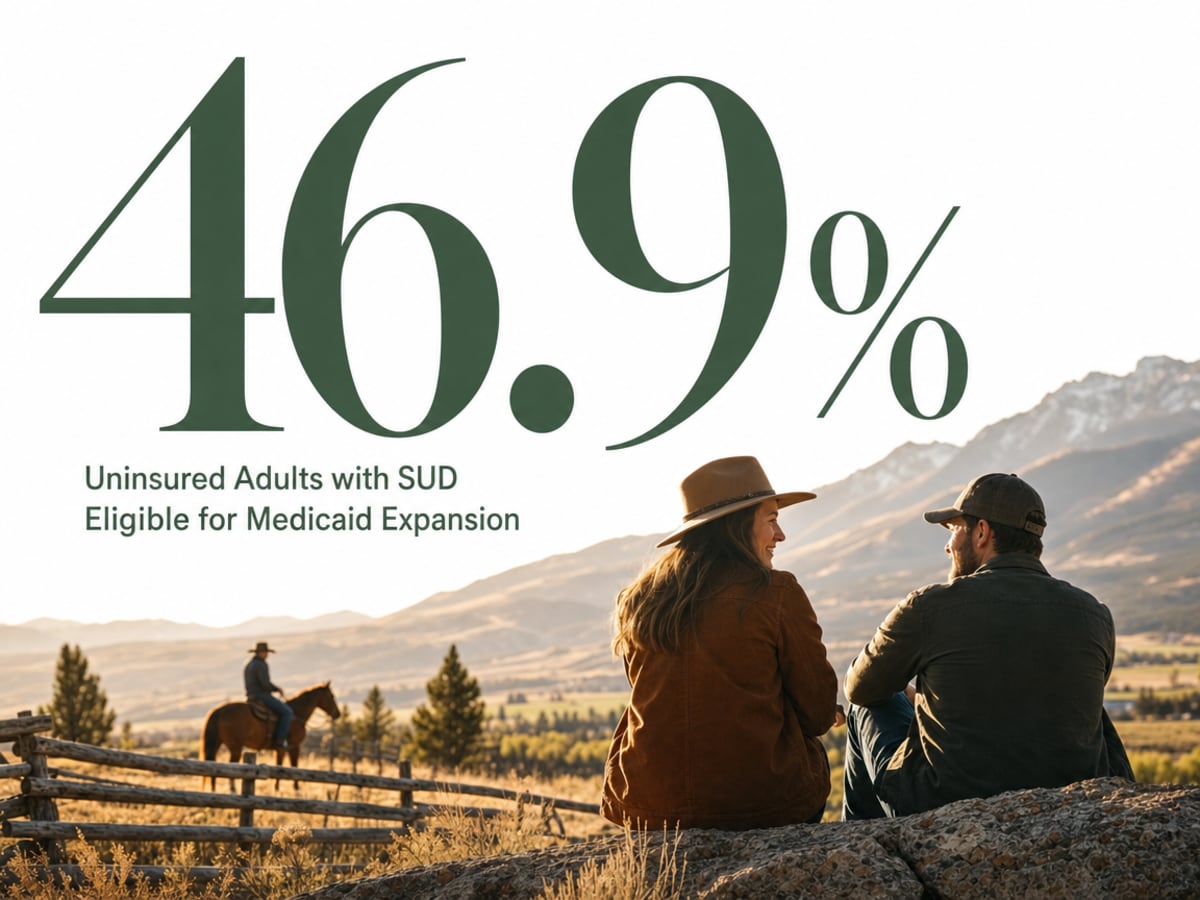
If you take one thing from this article, take this: Medicaid pays for more addiction treatment in this country than any other program, and a lot of people who could qualify have no idea they can. One SAMHSA analysis estimated that of about 5.1 million uninsured adults living with a substance use disorder, 46.9% were eligible for coverage through Medicaid expansion 11. Almost half. That’s not a niche group. That’s your neighbor, your coworker, your cousin.
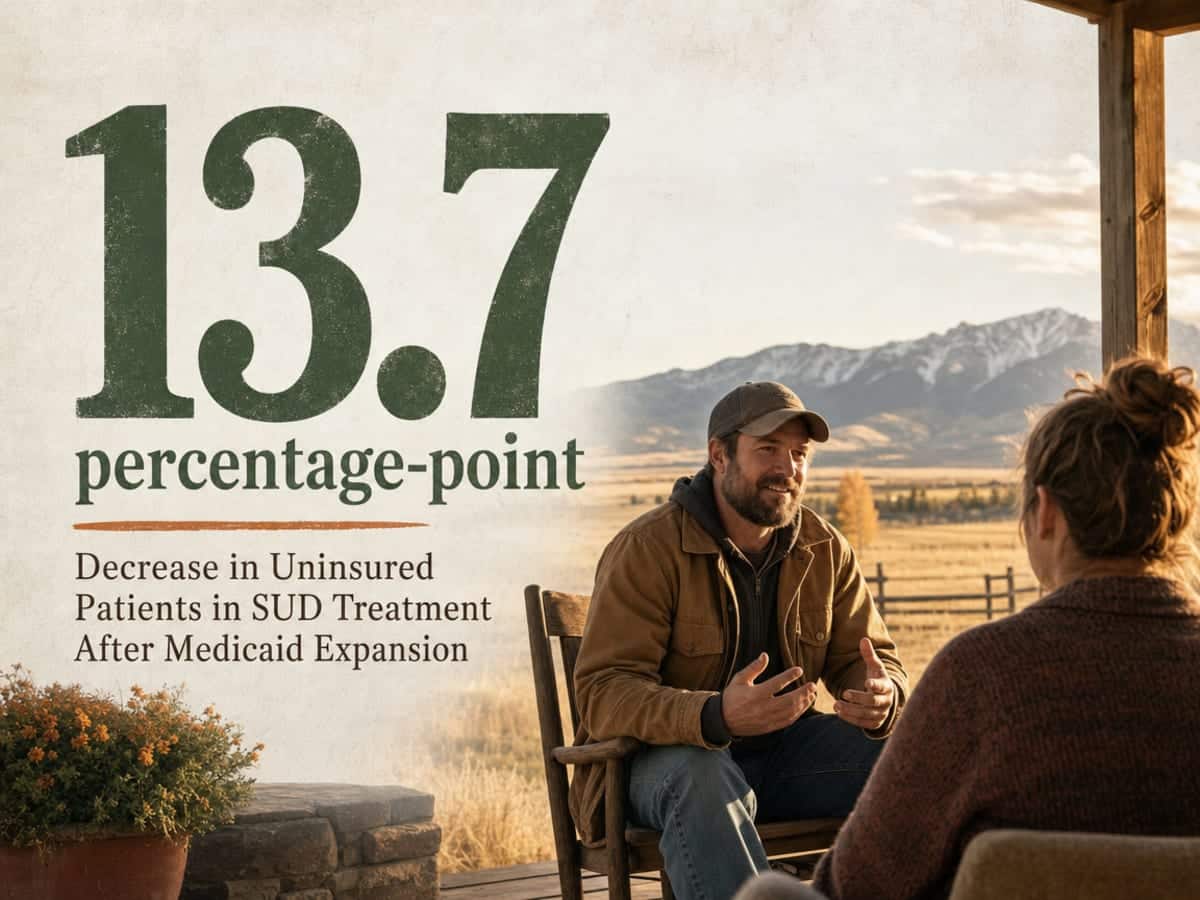
Here’s why that matters for the wait between you and a bed. When Medicaid expansion took effect, one peer-reviewed study of specialty treatment programs found a 13.7 percentage-point drop in the share of patients who were uninsured 13. People who thought treatment wasn’t for them turned out to be covered. If you’ve been out of work, if your hours got cut, if you’re between jobs, if you’re a young adult who was on a parent’s plan and aged out, you may already qualify and not know it.
In Montana, if you’re enrolled in Medicaid, you can get services for mental health, drug, or alcohol issues through the state’s provider directory 3. Coverage runs across outpatient counseling, intensive outpatient, and residential care, and for certain outpatient and intensive outpatient services, prior authorization is not required 5. That means less paperwork standing between you and your first appointment.
The first move is applying, or checking whether you’re already enrolled. You can apply through your state Medicaid office at any point in the year. There’s no open enrollment window, no waiting for January. If you get approved, coverage can be backdated in some situations, which occasionally helps with bills you’ve already started to rack up.
State block grants and state-approved providers
If Medicaid isn’t your route, either because you don’t qualify or because you’re still waiting on a decision, there’s a safety net beneath it that most people have never heard of: the Substance Abuse Prevention and Treatment Block Grant. It’s federal money sent to each state to pay for treatment for uninsured, low-income adults, and SAMHSA has said plainly that this funding remains important for exactly the people Medicaid doesn’t reach 12.
You don’t apply to the block grant directly. Instead, you find a state-approved provider that already receives block-grant dollars, and they use that funding to reduce or cover your bill. In Montana, the Department of Public Health and Human Services keeps an official list of state-approved substance use treatment providers with each agency’s services, telehealth availability, insurance accepted, and phone number 6. That list is one of the most useful tools you can print out or bookmark tonight.
When you call a provider from that list, the phrase you’re looking for is:“Do you have block-grant or state-funded slots available, and what’s your intake process for someone without insurance?”That question opens a different conversation than a private-pay quote.
Sliding-fee scales, HRSA health centers, and charity care
Not everyone lands in Medicaid or a block-grant bed. Some people fall in the middle: too much income to qualify for public coverage, not enough to write a check for residential care. That’s where sliding-fee scales come in. Many treatment programs quietly offer a fee tied to your income and household size, and some also run grants, scholarships, or charity care funds 1. You usually won’t see this on a website. You have to ask.
If you don’t have insurance and don’t have a formal diagnosis yet, HRSA-funded community health centers are one of the best starting points. HHS notes that these health centers provide care on a sliding fee scale 18, and while they aren’t addiction specialty clinics, many of them can do an assessment, prescribe medications for opioid or alcohol use disorder, and refer you into a specialty program that also uses sliding fees.
When you call, ask three things: What’s your sliding-scale minimum? Do you have a charity care application? And can you refer me to a specialty SUD program that uses the same scale? Those questions cut a lot of the guessing out.
Scholarship beds and grant-funded programs
Some treatment centers set aside a small number of beds each year, funded by donations, foundations, or the center’s own budget, for people who can’t pay and don’t fit any public coverage. These are usually called scholarship beds, and SAMHSA lists scholarships as one of the real ways to lower treatment costs 1.
They’re competitive. There aren’t many, and they go fast. But they exist, and asking for one is not out of line. When you call a program, say directly:“I can’t pay privately, and I’m not on Medicaid. Do you have any scholarship beds or grant-funded slots, and how do I apply?”A good admissions team will either tell you yes, tell you no, or refer you to a program that does.
A denial from one center doesn’t mean a denial everywhere. Keep a short list, make the calls in a single sitting if you can, and take notes. Persistence matters more than eloquence here.
Private insurance and the parity rule most people don’t use
If you have any private insurance, through a job, a spouse, a parent’s plan, or the Marketplace, you have more leverage than you think. Under federal parity law, plans have to cover mental health and substance use benefits comparably to medical and surgical benefits. The most recent federal report to Congress found that plans are making progress, but many still fall short of what parity actually requires 17.
Practically, that means if your plan says it covers rehab but the deductible is impossible, the copays are stacked, or a residential stay was denied for a reason that wouldn’t fly for a medical hospitalization, you may have grounds to appeal. Insurers count on people not appealing. Appeals aren’t fast, but they’re free, and they sometimes flip a no into a yes.
Before you write anything off as unaffordable, call the member services number on your card and ask for a full breakdown of your substance use benefits: in-network detox, in-network residential, outpatient, and medication coverage. Get the answer in writing if you can. That single call can move you from the private-pay ranges above into a plan-covered stay with a manageable copay.
A funding-source comparison you can use tonight
You’ve just read five different ways rehab gets paid for. Here’s the whole picture in one place, so you can figure out which line applies to you before you make a single call. The private-pay ranges in the last column are the baseline that every other pathway discounts against — non-methadone outpatient runs about $1,132 to $2,099 per episode, and adult residential runs about $2,907 to $11,260 16.
| Pathway | Who it fits | Typical out-of-pocket | Where to start tonight |
|---|---|---|---|
| Medicaid | Low-income adults; many who aged off a parent’s plan or lost job coverage | Little to none for covered services | Apply through your state Medicaid office; in Montana, use the state provider directory 3 |
| State block grant / state-approved provider | Uninsured, low-income adults who don’t qualify for Medicaid 12 | Free or heavily reduced at participating agencies | Montana’s state-approved provider list 6 |
| Sliding-fee health center | Uninsured or underinsured, income above Medicaid limits | Fee tied to income and household size 18 | HRSA-funded community health center near you |
| Scholarship or charity bed | People who can’t pay and don’t fit public coverage | $0 for the awarded stay; limited slots 1 | Call admissions directly and ask |
| Private insurance | Anyone with employer, Marketplace, or family plan coverage | Deductible and copay; parity protections apply 17 | Member services number on your card |
Read across the row that fits your situation, and that’s your first call. You don’t need to know which level of care you need yet. You just need to reach the right door.
The Montana pathway: named resources and what they cover
What Montana Medicaid covers for substance use
If you live in Montana and you’re on Medicaid, or you think you might qualify, here’s what actually opens up for you. Montana’s Medicaid State Plan covers substance use services across outpatient, residential, and inpatient settings, and the state has been expanding residential withdrawal management and residential treatment options through its CMS-approved amendment 4. That means the same continuum a private-pay client would use, detox, residential care, counseling, and follow-up, is on the table.
On the lower-intensity end, Montana Medicaid covers outpatient therapy, intensive outpatient (a step up from weekly counseling, usually three to five days a week for a few hours), and early intervention screenings like SBIRT. For certain covered outpatient and intensive outpatient services, prior authorization is not required 5. In plain English: your counselor can start seeing you without waiting on the state to sign off first.
On the higher-intensity end, the state’s SUD Medicaid fee schedule includes a daily rate for medically monitored intensive inpatient care and weekly rates for medication-assisted treatment 9. Providers get paid for that care, which is why residential inpatient is a real, covered level of care for Montana Medicaid members, not just a theoretical one.
If you’re already enrolled, SAMHSA’s Montana page is straightforward: as a Medicaid member, you can get services for mental health, drug, or alcohol issues through the state’s provider directory, and you can ask about transportation help getting there 3. That last part matters. If a ride to your first appointment is what’s stopping you, that’s a solvable problem, not a dead end.
The state-approved provider list and how to read it
The single most useful document you can pull up tonight is the Montana Department of Public Health and Human Services list of state-approved substance use treatment providers 6. It’s a PDF, it’s free, and it’s updated. Save it to your phone.
Here’s how to read it without getting lost. Each provider row shows the agency name, treatment levels offered (outpatient, intensive outpatient, residential, detox), telehealth availability, insurance accepted, and a phone number. Scan four columns in this order:
- location near Great Falls or your town,
- treatment level you need,
- insurance accepted (look for Medicaid if that’s your route), and
- telehealth if travel is hard.
Circle three providers, not one. Then call in a single sitting. Ask the same three questions each time:
- Do you accept my coverage, or do you have state-funded slots?
- What’s your current wait for an intake?
- And can you help with transportation?
Taking notes side by side makes the differences obvious, and gives you a real shortlist instead of hoping the first call works out.
What to do in the next 48 hours
You don’t have to solve everything this week. You just have to make two days of progress. Here’s what that actually looks like, in order.
Today, make one phone call. If you don’t know where to start, start with SAMHSA’s National Helpline at 1-800-662-HELP (4357). It’s free, confidential, 24 hours a day, 365 days a year, and it does referrals to local treatment 2. You don’t need insurance to call. You don’t need a diagnosis. You can call from your car. Tell them your state, whether you have any insurance, and what you’re using. They’ll point you at real programs, not sales lines.
Before you call anywhere else, gather four things.
- A photo ID.
- Your insurance card if you have one (or a note that says you don’t).
- A short list of what you’ve been using and how often, even a rough one.
- And a phone number for an emergency contact.
That’s it. Intake staff ask about these first, and having them ready shortens the call by half.
Tomorrow, make three calls in one sitting. Pull up Montana’s state-approved provider list 6and circle three programs. Call all three back-to-back. Ask each one the same questions: Do you accept my coverage, or do you have state-funded or scholarship slots? What’s the current wait for an intake? Can you help with transportation?
Take notes on a single page. If one program says no, the next call is already lined up. Momentum matters more than the perfect first choice.
When cost isn’t the only barrier: shame, paperwork, and denials
Money is usually the loudest reason people don’t call. It’s rarely the only one. If you’ve been putting this off, it might also be because asking for financial help feels like admitting something. Something about your work, your family, your worth. That feeling is common, and it’s worth naming out loud so it stops steering the car.
Asking about state-funded or sliding-fee care isn’t a lesser tier of treatment. It’s the same detox, the same counseling, the same aftercare that private-pay clients get. The funding source changes. The care doesn’t. Roughly 17.31% of low-income adults with a substance use disorder have no insurance coverage in a given year 15, so if that’s where you are, you’re not on the outside of the system. You’re one of the people the system was built to reach.
Paperwork is real, and it’s tiring. Medicaid applications ask for income, ID, and household details. A provider may need to verify your Medicaid enrollment before your first session 8. If you have a caseworker, a family member, or a friend who can sit with you while you fill things out, use them. Doing it alone is harder, not braver.
If your insurance denies a stay, don’t take the first no as the final answer. Parity law requires plans to cover substance use benefits comparably to medical care, and federal regulators have said plans still fall short of that standard 17. Ask for the denial reason in writing, then file an appeal. It’s free, and it sometimes works.
If insurance is your route: one option in Great Falls
If your path forward runs through private insurance rather than Medicaid, you have more choices than the state-approved list alone. Rocky Mountain Treatment Center in Great Falls is one of them. It’s a residential program that works with most major insurance plans and can help you check your benefits before you commit to anything.
Be honest with yourself about coverage first. Rocky Mountain does not currently accept Medicaid or Medicare, so if that’s how you’d pay, one of the state-approved providers on the DPHHS list is a better starting point 6. If you have employer, Marketplace, or family plan coverage, calling their admissions team to run a benefits check costs you nothing and gives you a real number to work with.
Frequently Asked Questions
Is drug rehab ever actually free?
Yes, but “free” almost always means someone else is paying. Medicaid, state block grants, scholarship beds, and charity care funds cover the bill so you don’t have to 1. A donated scholarship bed or a Medicaid-covered stay costs you nothing directly. The care itself, the counseling, the detox, the follow-up, is the same.
How do I know if I qualify for Montana Medicaid to cover treatment?
Apply through your state Medicaid office. There’s no enrollment window; you can start any time. If you’re already enrolled, you can get services for mental health, drug, or alcohol issues through the state’s provider directory 3. A lot of people who assume they don’t qualify actually do, especially after a job change or drop in income.
What if I don’t have insurance and don’t qualify for Medicaid?
You still have real options. Federal block grant funding pays for specialty treatment for uninsured, low-income adults through state-approved providers 12. HRSA-funded community health centers offer care on a sliding fee scale 18. Some treatment centers hold scholarship beds. Start with Montana’s state-approved provider list and ask about state-funded slots 6.
Can I get into residential rehab without paying up front, or only outpatient?
Residential is on the table too. Montana’s Medicaid State Plan covers services across outpatient, residential, and inpatient settings 4, and the state’s SUD fee schedule pays providers a daily rate for medically monitored intensive inpatient care 9. Scholarship beds and private insurance can also cover residential stays. Outpatient is not your only option.
What should I have ready when I call for help?
Four things: a photo ID, your insurance card or a note saying you don’t have one, a rough list of what you’ve been using and how often, and an emergency contact’s phone number. That’s it. Intake staff ask these first. Having them nearby cuts your call time in half and reduces the back-and-forth.
My insurance denied SUD treatment. Do I have any options?
Yes, appeal it. Federal parity law requires plans to cover substance use benefits comparably to medical care, and regulators have said plans still fall short of that standard 17. Ask for the denial reason in writing, then file a formal appeal through your plan. Appeals are free, and they sometimes flip the decision.
References
- Free & Low Cost Treatment Options for Mental Health and Substance Use. https://www.samhsa.gov/find-support/how-to-pay-for-treatment/free-or-low-cost-treatment
- National Helpline for Mental Health, Drug, Alcohol Issues. https://www.samhsa.gov/find-help/helplines/national-helpline
- Help for mental health, drugs, alcohol – MT Medicaid, CHIP. https://www.samhsa.gov/find-support/health-care-or-support/professional-or-program/medicaid-or-chip/montana
- mt-heart-cms-amendment-approval-20240226.pdf. https://www.medicaid.gov/medicaid/section-1115-demonstrations/downloads/mt-heart-cms-amendment-approval-20240226.pdf
- State of Montana. https://www.medicaid.gov/medicaid/section-1115-demonstrations/downloads/mt-heart-demo-pa.pdf
- Montana State Approved Substance Use Treatment Providers. https://dphhs.mt.gov/assets/BHDD/SubstanceAbuse/StateApprovedSubstanceUseTreatmentProviders.pdf
- Adult Behavioral Health and Substance Use Disorder Provider Manuals and Program Resources. https://dphhs.mt.gov/BHDD/SubstanceAbuse/ProviderManualsandProgramResources
- Addictive and Mental Disorders Division Medicaid Manual. https://dphhs.mt.gov/assets/BHDD/MedicaidManual/AMDDMedicaidPolicyManual7.1.2020.pdf
- Substance Use Disorder Medicaid Provider Fee Schedule Effective July 1, 2025. https://medicaidprovider.mt.gov/docs/feeschedules/2025/SUD_Medicaid7.1.25.pdf
- States’ Changes to Payment Rates for Substance Use Disorder Services. https://www.gao.gov/products/gao-20-260
- State Participation in the Medicaid Expansion Provision of the Affordable Care Act and Behavioral Health Disorders. https://www.samhsa.gov/data/sites/default/files/report_2073/ShortReport-2073.html
- The Substance Abuse Prevention and Treatment Block Grant is still Important even with the Expansion of Medicaid. https://www.samhsa.gov/data/sites/default/files/report_2080/ShortReport-2080.html
- Medicaid Coverage in Substance Use Disorder Treatment After the Affordable Care Act. https://pmc.ncbi.nlm.nih.gov/articles/PMC6578872/
- Insurance barriers to substance use disorder treatment after passage of the Affordable Care Act. https://pmc.ncbi.nlm.nih.gov/articles/PMC9948907/
- Healthcare coverage and service access for low-income adults with substance use disorders. https://pmc.ncbi.nlm.nih.gov/articles/PMC9086121/
- The Economic Costs of Substance Abuse Treatment. https://pmc.ncbi.nlm.nih.gov/articles/PMC2614666/
- US Departments of Labor, Health and Human Services, and the Treasury Issue 2024 Report to Congress on the Mental Health Parity and Addiction Equity Act. https://www.dol.gov/newsroom/releases/ebsa/ebsa20250117
- Where can I find free or low-cost health care?. https://www.hhs.gov/answers/health-insurance-reform/where-can-i-find-free-or-low-cost-health-care/index.html