Key Takeaways
- Montana rules require daily recreational activity inside higher-intensity residential treatment, alongside 24-hour awake staff, making play part of the clinical schedule rather than optional filler.3
- A Great Falls stay blends outdoor time along the Missouri River, gym sessions, equine work, evening card games, and karaoke — structured to keep empty hours from becoming craving hours.
- Before choosing a program, compare the daily schedule, what’s included in the recreation block, fee and insurance details, visitation policies, and how confidentiality is handled under 42 CFR Part 2.2,4
- Recreation habits built in treatment feed what NIAAA calls recovery capital — routines, peer networks, and mutual-support groups like AA, SMART Recovery, or LifeRing that hold you steady after discharge.11,12
What “Recreation” Actually Means Inside a Great Falls Recovery Stay
If you’re picturing a folding chair in a fluorescent hallway, a clipboard, and someone telling you to “share your feelings” with strangers — that’s not what recreation looks like inside a recreational programs Great Falls stay. And it’s not what you’re being asked to sign up for.
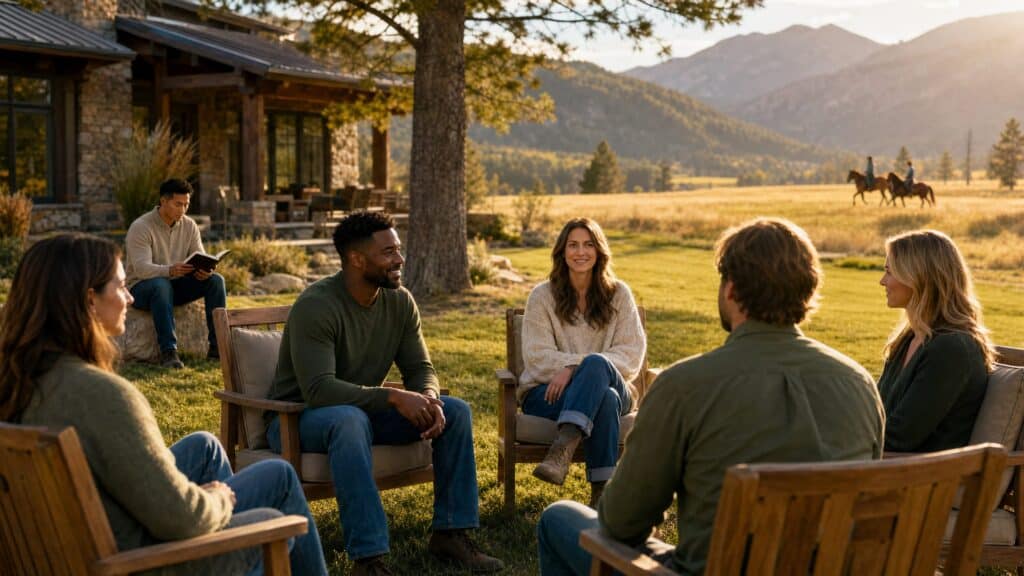
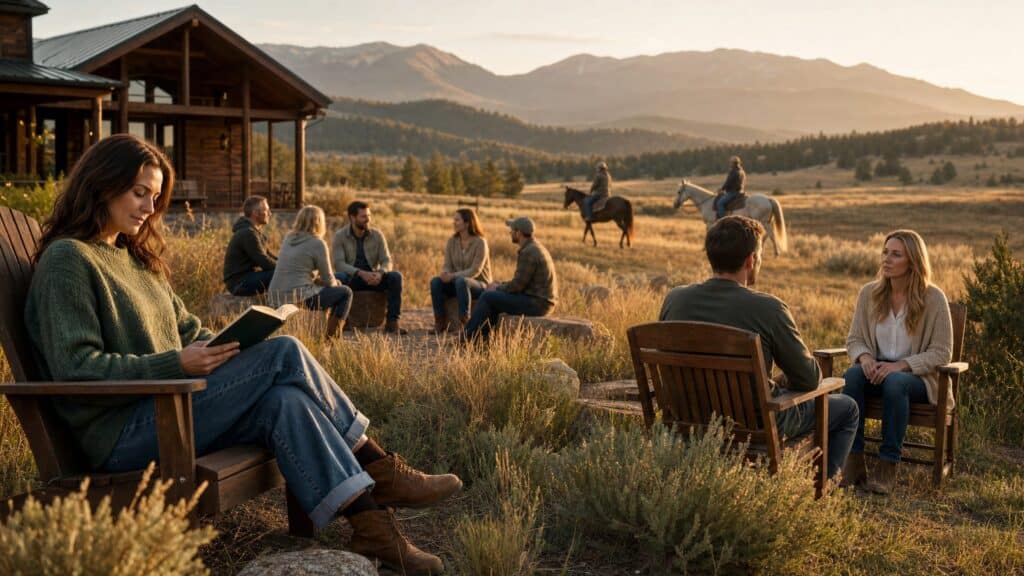
Recreation, in a residential program here, means the parts of your day where you move your body, use your hands, laugh at something dumb, or stand in a paddock next to a horse that doesn’t care what you’ve done. It’s a hike along the Missouri River when the air still bites. It’s an hour in the gym. It’s a card game in the common room at 8 p.m. It’s karaoke that starts terrible and ends with people you didn’t know a week ago cheering for you.
It’s also not optional filler. Montana’s rules for higher-intensity residential substance use treatment require recreational activity every single day, alongside 24-hour awake staff and structured clinical contact. That means the people who wrote the regulations decided play was part of the medicine, not a break from it.3
For a young adult walking into treatment for the first time, that distinction matters. You’re not being sent somewhere to be fixed in a chair. You’re going somewhere that expects you to walk, stretch, cook, laugh, and be around other humans on purpose. The clinical work — counseling, group, the harder conversations — happens too. But recreation is how a lot of the healing actually lands, on the days your brain isn’t ready to talk yet.
Why Daily Play Is Written Into the Rules
Montana Requires It, and Here’s the Clinical Reason
Here’s something most people don’t know when they walk in the door: Montana doesn’t leave recreation up to whoever’s running the place. For higher-intensity residential substance use treatment — the kind of stay you’re probably looking at for a first inpatient program — the state rule spells it out. Facilities have to keep awake staff on-site 24 hours a day, and recreational activities have to be offered every single day.3
Read that again. Every day. Not “when we get around to it.” Not “if the weather’s nice.” Every day.
The clinical reason is straightforward, even if nobody explains it in plain English. When you’ve been using — alcohol, opioids, stimulants, whatever your thing was — your body forgets how to feel okay without the substance doing the work. Sleep is off. Appetite is off. Your nervous system is jumpy at rest and dead at the moments it should be alert. Movement, sunlight, food you actually chew, and time around other humans start putting those systems back online. Not overnight. But daily reps matter.
There’s also the boredom problem. Cravings love empty hours. A structured day where something is happening — a walk, a group, a card game, a session with a horse — gives your brain fewer chances to spiral. The regulation is basically the state saying: idle time is not treatment. Fill it, on purpose, with things a person can actually enjoy.
So when you see “recreational programs” on a Great Falls treatment page, it’s not marketing. It’s the schedule the law requires them to build.
The Cascade County Backdrop You Didn’t Come Here For
You didn’t open this page for a public health lecture. Fair. But there’s one number worth knowing, because it explains why Great Falls has the recovery infrastructure it does.
In 2024, Cascade County was named among the top Montana counties for overdose deaths, with eight cases reported by the state medical examiner. Eight people. In a county this size, that’s not a statistic — that’s someone’s brother, someone’s coworker, someone’s kid.1
That number is the reason local residential care, counseling, family programs, and recovery-focused recreation exist here in the shape they do. It’s not the reason you’re going into treatment. Your reason is your own. But if you were wondering whether the community around a Great Falls program actually takes recovery seriously, the answer is yes — because it’s had to.
You’re not walking into a place that’s confused about why you’re there. And you’re not the first person from Cascade County to make the call. Not even close.
A Typical Day: From 7 a.m. Coffee to Evening Card Games
You probably want to know what the hours actually look like. Not the brochure version — the real one, with wake-up times and what happens between meals. Here’s a rough shape of a weekday inside a Great Falls residential program.
- Around 7 a.m.
- Someone knocks or the hallway starts moving. Coffee is on. Breakfast is real food, not a granola bar shoved at you. You’ll be tired the first week. That’s normal. Nobody’s going to yell at you for moving slow.
- Mid-morning.
- This is usually a group session or individual counseling. Group is not what TV made it look like. Six or eight people, a counselor, chairs in a rough circle. You can pass. You can listen. The first few days you’ll mostly listen, and that’s fine.
- Late morning to early afternoon.
- Recreation block. This is the piece Montana’s rules build the day around — daily recreational activity is required inside higher-intensity residential care, alongside 24-hour awake staff and structured clinical services. Some days it’s the gym. Some days it’s a walk outside. Some days it’s a session in the paddock with the horses. You won’t do the same thing every afternoon, which is the point.3
- Lunch, then a second clinical block.
- More group, or a focused session — family topics, coping skills, whatever the week’s theme is. This is where the harder work tends to land, because your body’s warmed up and your brain’s a little more available than it was at 8 a.m.
- Late afternoon.
- A 12-step meeting or a peer support group. Attending 12-step meetings during treatment is standard practice for building a recovery support network. You don’t have to talk. Coffee is usually involved.7
- Evening.
- Dinner, then something lighter. Card games at a table. A movie. Karaoke on the nights someone brave enough starts it. Art supplies out. This is not “free time to sit in your room and spiral.” It’s structured, on purpose, because empty evenings are where cravings live.
- Lights out is earlier than you think.
- You’ll want it to be. Sleep is part of the medicine your body’s been missing.
That’s the rhythm. It repeats. And after about a week, the shape of the day starts feeling less like a schedule handed to you and more like something you’re actually inside of.
The Outdoor Stuff: River Trails, Big Sky, and Cold Morning Air
Great Falls has a landscape that does a lot of the work for you. You just have to show up in it.
The Missouri River runs right through town, and the walking paths along it are flat enough for a first-week body that isn’t used to moving. Early sobriety is hard on your legs, your lungs, and your patience with yourself. A slow mile on the River’s Edge Trail is a real thing. It counts. Nobody’s timing you.
Cold morning air matters more than people expect. When you’ve spent months or years dulling your senses on purpose, stepping outside into thirty-degree Montana wind is a small shock that reminds your nervous system it’s still online. You’ll feel your face. You’ll feel your hands in your pockets. You might feel annoyed. That’s fine. Annoyed is a feeling, and feelings are the point.
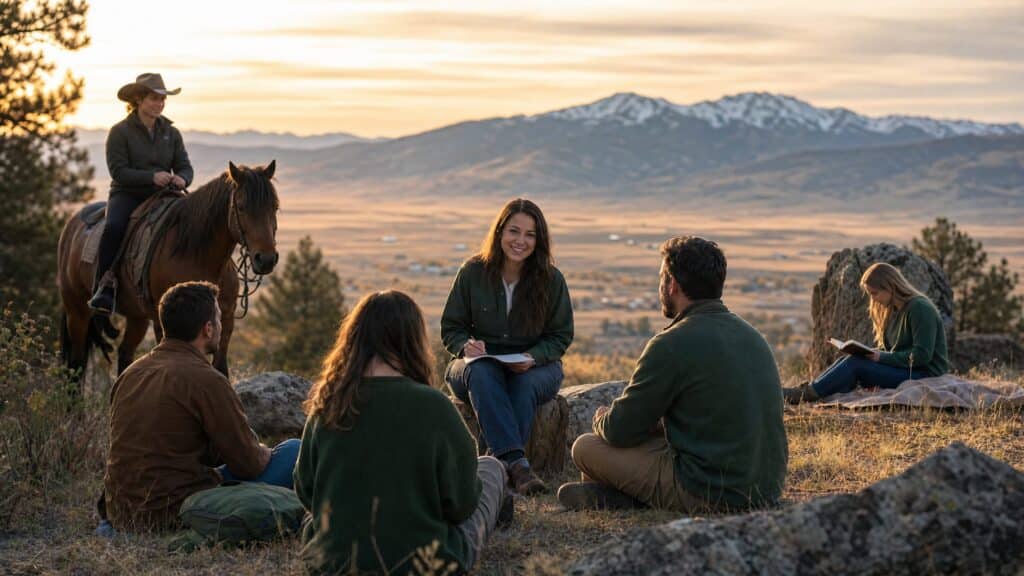
On the days the group heads farther out — into the Rocky Mountain foothills, up to a state park, along a trail with actual elevation — the change of scenery does something a group room can’t. There’s less to say. More to look at. The big sky doesn’t ask you questions. You walk with people who are in roughly the same week of the same fight, and sometimes nobody talks for twenty minutes and that’s the healthiest twenty minutes you’ve had in a while.
You don’t have to be an outdoor person for this to work. Nobody’s expecting you to summit anything. If your version of “outside” up to now has been a smoke break behind a bar, that’s okay. You start where you start. A short walk. A bench by the river. A day when you notice the cottonwoods are yellow and you didn’t think about drinking for a whole ten minutes.
Montana rules build daily activity into the schedule for a reason, and outdoor time is one of the ways facilities meet that expectation 3. But the reason it works isn’t the regulation. It’s that your body has been waiting a long time to feel something clean, and this place happens to be built for it.The Animal Stuff: What an Equine Session Really Feels Like
First thing to know: nobody’s putting you on a horse on day one. That’s not what this is.
An equine session in residential treatment usually starts with you standing on the ground, on the other side of a fence, watching. A staff person walks you through what’s about to happen. There’s a horse in the paddock. It’s big. It’s paying attention to you in a way you probably weren’t expecting.
Then you go in. Slowly. You might be asked to walk toward the horse and stop when you feel like stopping. You might be asked to put a hand on its shoulder if it lets you. You might just stand there for ten minutes doing nothing, which sounds like nothing but isn’t.
Here’s what nobody warns you about: horses read you. They react to what your body’s actually doing, not what you’re telling everyone you feel. If you walk in tight-jawed and pretending you’re fine, the horse moves away. If you take a breath and let your shoulders drop, it stays. That feedback loop — instant, honest, not personal — is the whole clinical point. You can’t argue with a horse. You can’t charm one. You just have to be present, and it either works or it doesn’t, and then you try again.
People cry in these sessions sometimes. People also laugh. Some people feel nothing the first time and everything the third time. All of that is fine. A counselor is there. You talk about what came up afterward, or you don’t. Nobody makes you perform an insight you haven’t had yet.
You don’t need to know anything about horses. You don’t need to like them ahead of time. You just need to show up in the paddock in the boots they hand you, and let something that weighs a thousand pounds teach you what your own nervous system is actually doing.
The Indoor Stuff: Gym Time, Bowling Nights, Karaoke, Art Tables
Montana weather doesn’t always cooperate. That’s fine. A lot of what you’ll do happens inside, and it matters just as much.
Gym time is a real part of the week. Not CrossFit. Not anyone yelling at you. A treadmill, some weights, room to move. If you haven’t worked out in years — or ever — that’s the starting line. Ten minutes on the bike counts. Your sleep gets better when your body gets tired for the right reasons.
Bowling nights happen. You’ll load into a van, drive to a local alley, and rent shoes that don’t fit anyone properly. The scores are terrible. That’s the point. You’re doing a normal-people thing on a normal-people evening, sober, with people who know what week you’re in.
Karaoke is optional and undignified in the best way. Someone always starts it. Someone always kills a country song. You’ll laugh harder than you have in months, and later you’ll remember that laughing without a drink in your hand is a thing you’re allowed to do.
Art tables sound like elementary school until you sit down at one at 8 p.m. with nothing else to hold. Watercolors. Sketchbooks. A puzzle someone started three days ago. Your hands need something to do while your brain sorts through the day’s group session. That’s the whole clinical reason it’s there — even though nobody’s calling it that.
The People Stuff: Peer Meetings, Small Groups, and Not Being the Only One
Here’s the part nobody warns you about: the biggest thing that shifts in residential treatment isn’t the therapy or the schedule. It’s who’s sitting next to you at breakfast.
When you walk in, you probably think you’re the only person in the room who’s ever done what you’ve done. You’re not. Six days in, you’ll be eating scrambled eggs across from someone whose story is close enough to yours that you’ll stop chewing for a second. That’s the shift. You stop being the exception.
Small groups do a lot of that work. Six or eight people, a counselor, and a topic that keeps circling back to the same honest place. Nobody’s performing. If you cry, someone hands you a tissue and doesn’t make a scene. If you say something you’ve never said out loud before, the room doesn’t flinch. That’s rarer than it sounds, and it’s a real reason the clinical piece works.
The 12-step meetings are their own thing. SAMHSA’s counselor guidance recommends attending 12-step meetings during treatment specifically because they help you start building a support network you can carry out the door. You don’t have to buy into every word of it. Plenty of people don’t. You just have to sit in the chair, drink the coffee, and hear other people say out loud what you’ve been carrying alone.7
By week two, you’ll know people’s coffee orders. By week three, someone will laugh at a joke you made and you’ll realize you haven’t been funny sober in a long time. That’s not small. That’s the part that carries.
What About Privacy, Rights, and Not Being Treated Like a Kid
Fair question. You’re an adult. You didn’t come here to lose your name or your dignity.
Montana rules are clear on this. In a licensed residential facility, you have the right to be treated in the least restrictive environment that works for your care, to know upfront what the fees are and how payment works, and to be informed about visitation, exercise, and how to file a complaint if something feels off. Those aren’t fine-print items. Staff are supposed to walk you through them when you arrive, in language you can actually follow.4
Privacy has its own separate layer. Every substance use disorder facility in Montana is required to have a written client confidentiality policy that follows the federal rule known as 42 CFR Part 2. In plain English: your treatment records get stronger protection than most medical records. Your employer doesn’t get a call. Your family doesn’t get details you didn’t sign off on. What happens in group stays in group, and staff take that seriously because their license depends on it.2
You’re not being locked in. You’re not being talked down to. You’re an adult in a program you agreed to, with rights on paper, and staff whose job is to remind you of them — not to erase them.
Carrying Recreation Home: Recovery Capital After Discharge
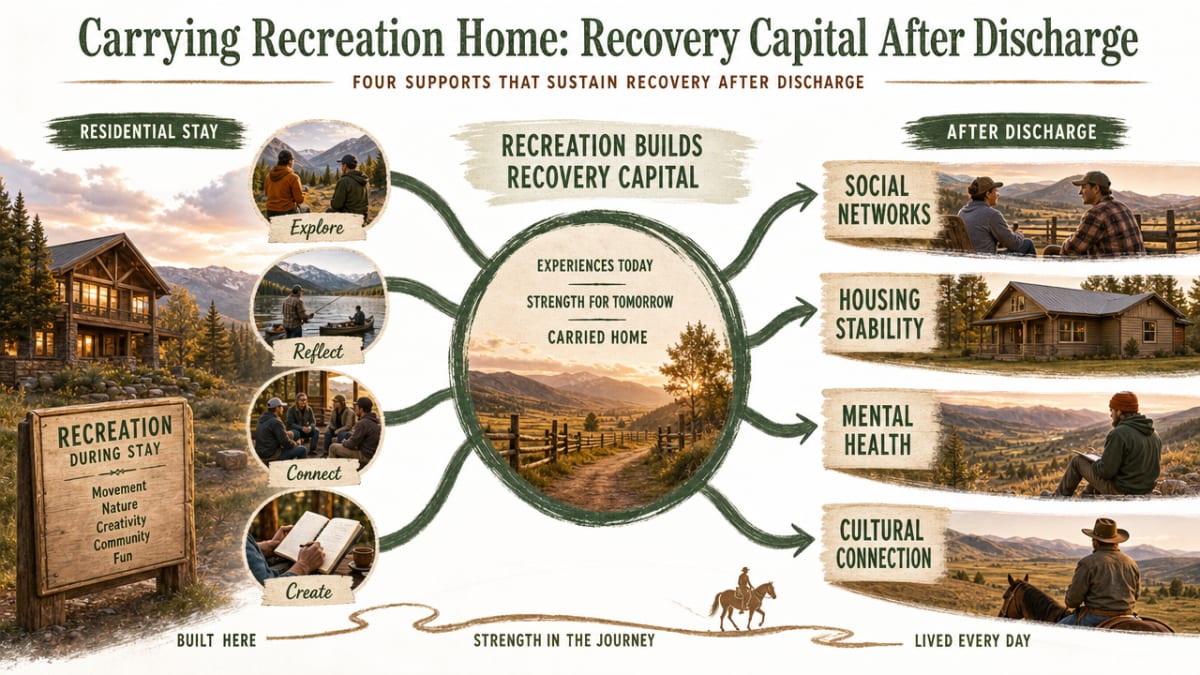
Here’s the thing nobody tells you until you’re a week from discharge: the point of all those walks and gym sessions and equine hours wasn’t the walks and gym sessions and equine hours. It was building something you can take with you.
There’s a term for it. NIAAA calls it recovery capital — the mix of things that keep a person steady after treatment ends. Social networks. Housing stability. Mental health. Cultural connection. Every one of those pieces gets built, at least a little, during a residential stay. And recreation is one of the main ways it gets built.12
Think about what you actually pick up in a 30, 60, or 90-day program. You learn that a morning walk changes your whole day. You find out you sleep better when you moved your body earlier. You have people whose numbers you didn’t have before — people who know exactly what week three felt like. You have a Saturday night that doesn’t automatically mean a bar. Those are not small things. Those are the building blocks.
Mutual-support groups do a lot of the heavy lifting after you leave. NIAAA is direct about this: participating in a mutual-support group reinforces and extends what you got out of professional treatment, and gives you social support over the long term. AA meetings in Great Falls. SMART Recovery if 12-step isn’t your language. Women for Sobriety. LifeRing. Something that puts you in a room with other sober people on a regular schedule, so your calendar has a shape to it.11
The recreation habits you built in treatment are what fill the rest of that calendar. The River’s Edge Trail is still there when you get home. The gym membership is a real option. A weekly bowling night with people from your alumni group is a real option. Continuing care groups — the ones that meet on Zoom, so a bad-weather Tuesday doesn’t take you out — are a real option too.
You’re not walking out empty-handed. You’re walking out with a schedule that already knows how to hold you.
Getting There, Getting In, and What to Ask on the First Call
The first call is the hardest thing on this whole list. After that, most of the logistics have already been figured out for you.
If you don’t have a car, Great Falls has public transit through the Great Falls Transit District, which is useful for family visits and getting to appointments before or after your stay. Some programs also offer a ride from other parts of Montana if you’re coming in from a smaller town. Ask about that on the first call — it’s a real thing people use.15
When you call, you don’t have to have a script. A few questions worth asking:
- What does a typical day look like?
- What’s included in the recreation piece — outdoor, gym, equine, evening activities?
- How do fees and insurance work?
- What are my rights around visitation and privacy?
Montana rule requires facilities to walk you through fees, payment methods, and client rights up front, so a good program will answer those clearly without making you feel small for asking.4
If you’d rather start with a neutral outside line, SAMHSA’s national helpline is 1-800-662-HELP (4357), free and confidential, twenty-four hours. Rocky Mountain Treatment Center in Great Falls is one option in the area when you’re ready to make that first call.8
Frequently Asked Questions
Is recreation in a Great Falls residential program optional or required?
What does a typical day of recreation look like during inpatient treatment?
What actually happens in an equine therapy session if I’ve never been around horses?
Will my privacy be protected during group activities and peer meetings?
How do the recreation habits I build in treatment help after I go home?
How do I get to a Great Falls program if I don’t have a car?
References
- 2024 MONTANA MEDICAL EXAMINER’S REPORT. https://dojmt.gov/wp-content/uploads/2025/07/2024-ME-Annual-Report.pdf
- Rules for Substance use Disorder Facility. https://dphhs.mt.gov/assets/oig/Rules_for_Substance_use_Disorder_Facility.pdf
- Mont. Admin. r. 37.106.1473 – ASAM 3.5 CLINICALLY MANAGED HIGH INTENSITY RESIDENTIAL (ADULT)/MEDIUM INTENSITY RESIDENTIAL (ADOLESCENT) SUBSTANCE USE DISORDER FACILITY REQUIREMENTS. https://www.law.cornell.edu/regulations/montana/Mont-Admin-r-37.106.1473
- Mont. Admin. r. 37.106.1450 – CLIENT RIGHTS. https://www.law.cornell.edu/regulations/montana/Mont-Admin-r-37.106.1450
- Montana’s Recovery Residences. https://archive.legmt.gov/content/Committees/Interim/2025-2026/CJOC/Sept-2025/CJOC-SB94-Summary-2023.pdf
- Treatment and Recovery | National Institute on Drug Abuse – NIH. https://nida.nih.gov/publications/drugs-brains-behavior-science-addiction/treatment-recovery
- Counselor’s Treatment Manual – SAMHSA Library. https://library.samhsa.gov/sites/default/files/sma13-4152.pdf
- National Helpline for Mental Health, Drug, Alcohol Issues. https://www.samhsa.gov/find-help/helplines/national-helpline
- Understanding Alcohol Use Disorder. https://www.niaaa.nih.gov/publications/brochures-and-fact-sheets/understanding-alcohol-use-disorder
- Treatment for Alcohol Problems: Finding and Getting Help. https://www.niaaa.nih.gov/publications/brochures-and-fact-sheets/treatment-alcohol-problems-finding-and-getting-help
- Long-Term Recovery Support | Alcohol Treatment Navigator | NIAAA. https://alcoholtreatment.niaaa.nih.gov/support-through-the-process/long-term-recovery-support
- Support Recovery: It’s a Marathon, Not a Sprint. https://www.niaaa.nih.gov/health-professionals-communities/core-resource-on-alcohol/support-recovery-its-marathon-not-sprint
- Best Practices for Recovery Housing. https://library.samhsa.gov/product/best-practices-recovery-housing/pep23-10-00-002
- Housing Supports Recovery and Well-Being: Definitions and Shared Values. https://library.samhsa.gov/product/housing-supports-recovery-and-well-being-definitions-and-shared-values/pep24-08-007
- Great Falls District Public Transit | Montana Department of Transportation. https://www.mdt.mt.gov/publictransit/greatfalls.aspx