
Key Takeaways
- Begin with an honest clinical picture of drinking history, co-occurring conditions, and home life, because those details decide which programs can actually treat you.
- Match the program to the person by asking about on-site medical detox, dual-diagnosis staffing, and whether treatment plans are individualized rather than templated 2, 1, 10.
- Press admissions to name specific behavioral therapies and to confirm every resident is evaluated for FDA-approved AUD medications like naltrexone, acamprosate, or disulfiram 1, 3, 8.
- Let clinical need drive length of stay, since completing a program and finding belonging and meaning predict outcomes more than choosing 30, 60, or 90 days 15.
- Verify state licensure for the exact level of care, check Joint Commission or CARF accreditation, and distinguish residential treatment from a recovery residence 9, 10, 11.
- Use parity protections and essential health benefit rules when calling insurers and billing teams about network status, prior authorization, daily rates, and what happens if coverage ends early 12, 13.
- Understand that 42 CFR Part 2 keeps your treatment records private, and that looping in family or doctors requires specific releases you control 14, 10.
- Treat aftercare as part of the decision by asking about scheduled continuing care, medication handoffs, and trusted recovery residences at 30, 90, and 365 days 4, 5, 11.
Start with the clinical picture, not the brochure
If you are reading this at 11 p.m. with twelve tabs open and a half-finished list of phone numbers, take a breath. You are already doing something hard and important. Most rehab websites are built to sell you a feeling — soft lighting, a quiet lake, the word serenity in a nice font. None of that tells you whether a program can actually treat what is happening in your body and your life right now.
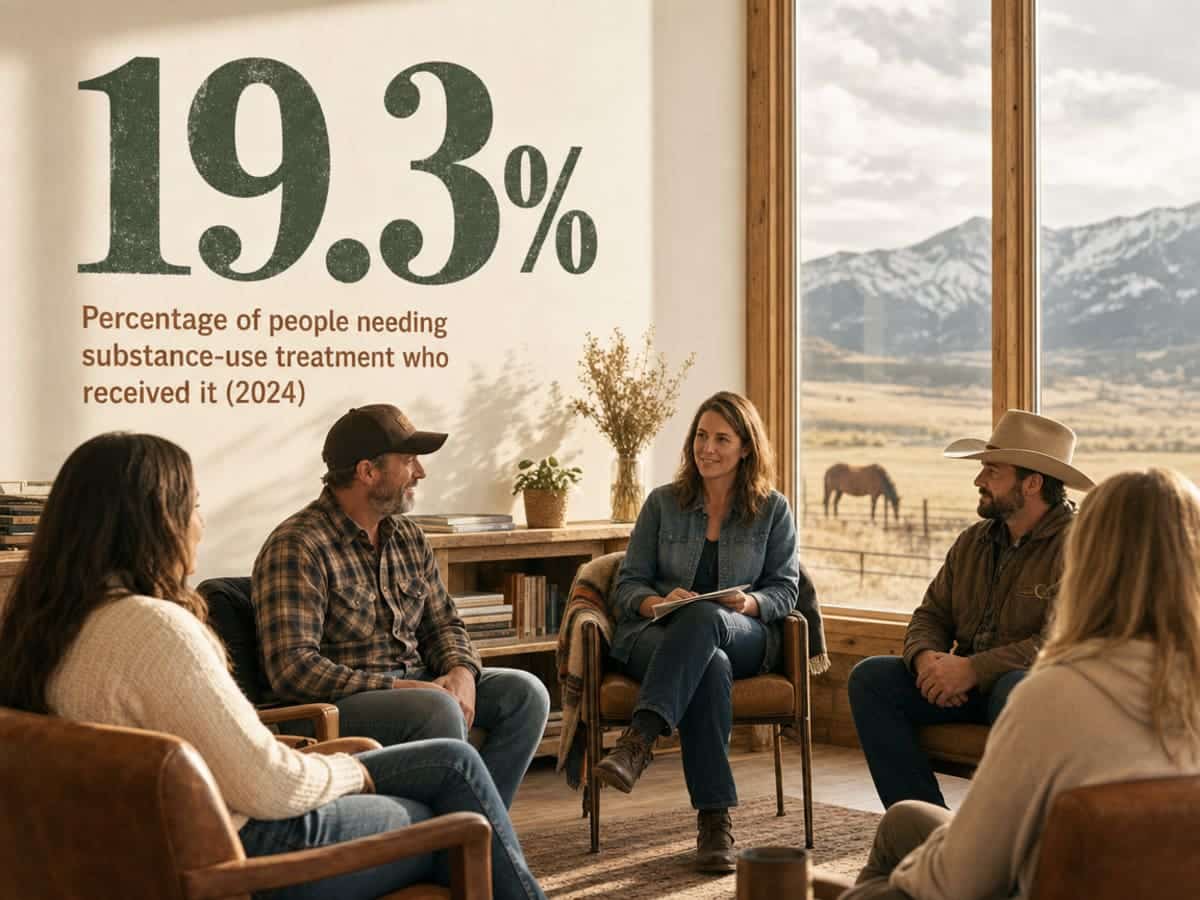
Here is a number worth sitting with for a second. In 2024, about 27.9 million people aged 12 or older in the United States had alcohol use disorder, and only 19.3% of people classified as needing substance-use treatment received any treatment that year 7, 8. That is a national survey of the general population, not a measure of any one facility’s results, but it tells you two true things: you are far from alone, and the system is genuinely hard to get into. If this has felt confusing and exhausting, that is the terrain, not a personal failure.
So let’s flip the usual order. Instead of starting with amenities, start with a clinical picture of the person who needs care. How heavy and how long has the drinking been? Are there other health conditions? Is there anxiety, depression, or past trauma in the mix? What does the home situation look like after discharge? Those answers decide which programs are a real fit — and which are just pretty pictures.
Match the program to the person, not the person to the program
Withdrawal risk is the first question, not the last
Before you compare anything else — the counseling style, the equine therapy, the view out the window — you need to know whether the body can safely stop drinking without medical supervision. For a lot of people, the answer is yes with outpatient support. For others, suddenly stopping heavy, long-term drinking can trigger seizures, severe autonomic symptoms, or delirium tremens. NIAAA notes that alcohol withdrawal can be life-threatening after chronic heavy drinking stops suddenly, and it is linked to roughly 260,000 emergency-department visits and about 850 deaths each year in the United States 2. That is not a scare tactic. It is the reason the first call matters.
When you talk to admissions, ask plainly: does the facility provide medically monitored detox on-site, or will you need to complete withdrawal somewhere else first? If detox is on-site, who oversees it, and what hours are medical staff physically present? If it is off-site, what is the handoff — same day, same transportation, same records?
Share honest details with whoever answers the phone. How much, how often, how long, any past withdrawal symptoms, any seizures, any blood pressure or liver issues. You are not being judged. You are helping them tell you whether their program is actually built for your body right now, or whether a hospital-based detox should come first.
Co-occurring conditions change what ‘fit’ means
Alcohol rarely shows up alone. Anxiety, depression, PTSD, chronic pain, ADHD, old trauma that never got spoken out loud — these often sit underneath the drinking, and they do not pause for 30 days just because you checked in somewhere. NIAAA points out that people with more severe alcohol use disorder or co-occurring mental-health conditions may benefit from licensed behavioral-health treatment that can address both at once 1.
So the question for admissions is not just “do you treat dual diagnosis?” — most places will say yes. Ask what that actually looks like. Is there a licensed mental-health clinician on staff, or just a visiting consultant? Can they continue a medication you already take, or do they expect you to stop it? If a trauma history surfaces in group, who is qualified to work with that, and how?
If the honest answer is “we focus on the drinking and refer out for the rest,” that may still be the right program for you — but you need to know that before you arrive, not after.
Individualized plans vs. a template schedule
Every residential program hands out a daily schedule. That is not the same thing as a treatment plan. Montana’s substance-use-disorder rules, for example, require an individualized treatment plan developed by an interdisciplinary team — not a one-size handout stapled to a folder 10. The standard exists because results depend on the plan actually reflecting the person in front of the clinician.
Ask how the plan gets built in the first week. Who writes it? Who reviews it, and how often? What happens when something is not working — do goals get updated, or does the schedule keep rolling? Can you bring in specific issues like a strained marriage, a complicated grief, a job you are afraid to lose, and see them reflected in what you do each day?
A real plan should feel like it was written about you by week two. If every resident seems to be doing the exact same thing at the same time with the same homework, that is a template, not care. You deserve the difference.
What evidence-based care actually looks like inside
Behavioral therapy you can name
“Evidence-based” is a phrase that gets stamped on almost every rehab website. It only means something if the people answering the phone can tell you which therapies they actually use and why. NIAAA is clear that behavioral healthcare and medications are the two evidence-based pillars of alcohol-use-disorder care, and the strongest results come when the approach is matched to the individual rather than handed out as a package 1, 4.
So ask by name. Does the program use cognitive behavioral therapy, motivational enhancement, or structured relapse-prevention work? Are 12-step facilitation and peer support offered alongside those, or in place of them? Family therapy — is it a single session or a defined program that your spouse, parent, or adult kids can actually plan around?
You do not need to become a clinician to ask good questions. If the person on the phone can walk you through what a Tuesday looks like, who leads which group, and how group work connects to one-on-one counseling, that is a very good sign. If the answer is a vague “we do a little of everything,” keep asking until you get specifics or move on to the next number on your list.
The medication question most people never ask
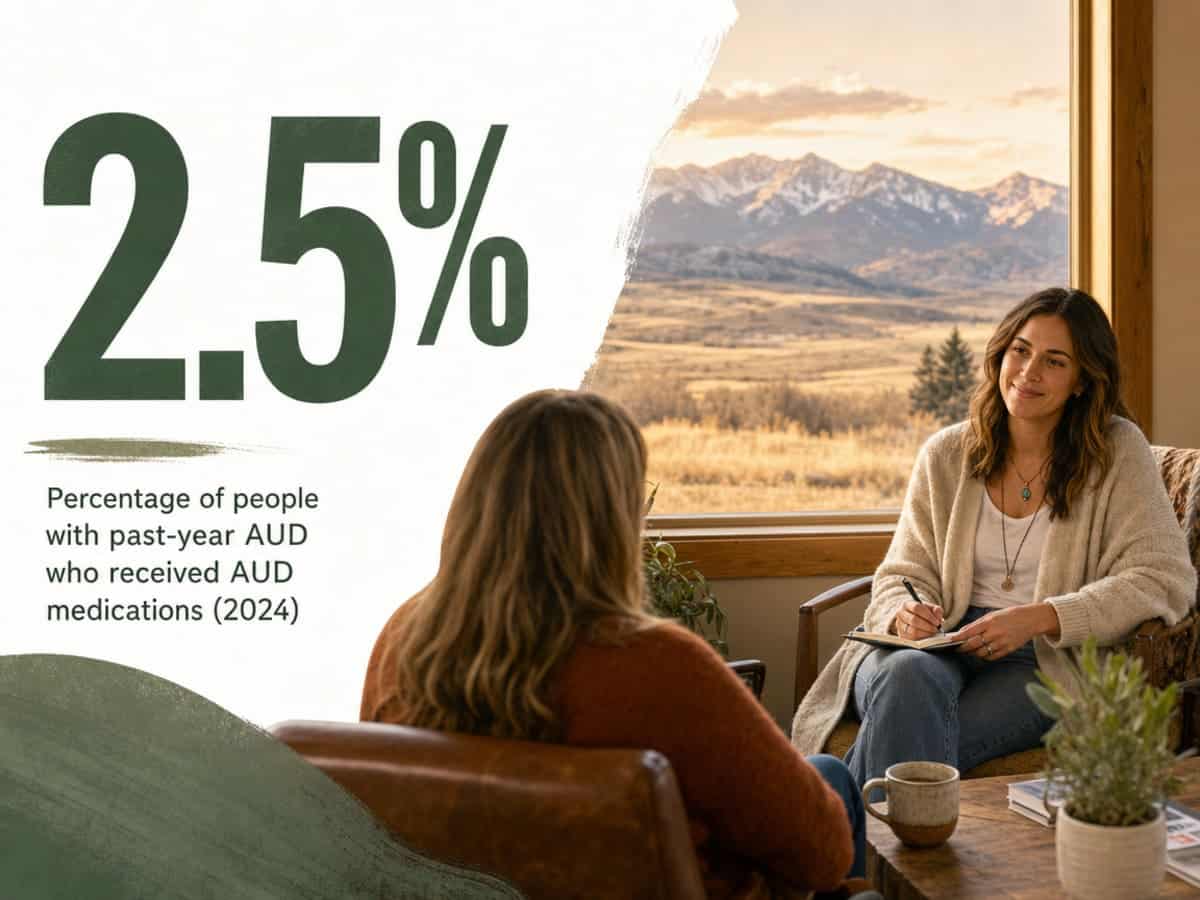
Here is a gap worth knowing about before you make any calls. In 2024, only 2.5% of people with a past-year alcohol use disorder received any FDA-approved AUD medication, even though three of them have been available for years: naltrexone, acamprosate, and disulfiram 8, 3. Three options on the shelf, and almost no one is being offered them. That is not because the medications do not work. It is because the question rarely gets asked.
You can be the person who asks it. During a residential stay, there is time to be evaluated by a medical provider, start a medication if it fits, and see how your body responds while you are in a supported setting. SAMHSA’s clinical guidance says medication choice should take into account your preferences, your recovery stage, your age, your medical conditions, other prescriptions you take, and whether a medication is safe for your liver or kidneys 5, 6. In other words, it is a real decision made with a provider, not a yes-or-no checkbox.
Ask admissions directly: does a medical provider evaluate every resident for AUD medication, or only on request? If a medication is started inside, who writes the prescription at discharge, and how does that handoff work with a provider back home? If the program does not prescribe at all, who do they coordinate with? None of this commits you to taking anything. It just keeps the door open — which, given how rarely it is opened for people, is worth a lot.
The 30 vs. 60 vs. 90 day question, honestly
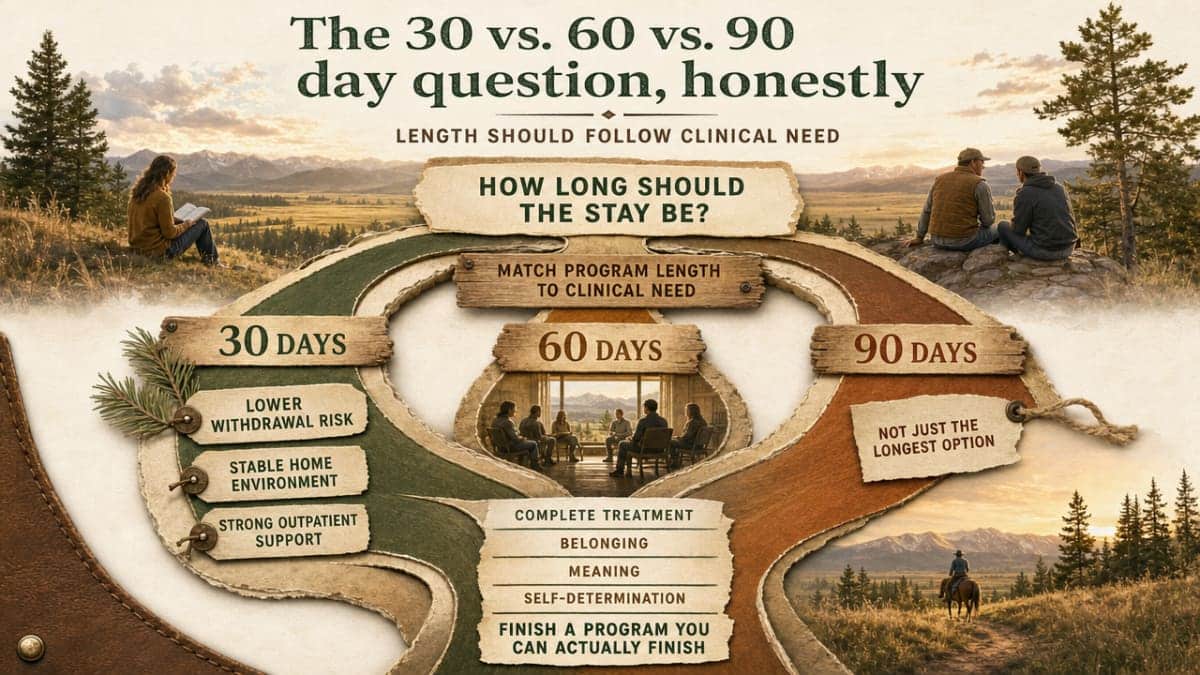
Almost every family asks this one early: how long should the stay be? The honest answer is that length should follow clinical need, not a default setting. A 2023 realist review of residential treatment for adults with substance-use disorders looked at 24 studies and found that completing treatment was associated with real improvements in substance use and mental health. The mechanisms that seemed to drive change were belonging, meaning in life, and self-determination — not the number on the calendar 15. In other words, finishing a program you can actually finish, in a place where you feel like a person, matters more than enrolling in the longest option available and leaving early.
That reframes the choice. A 30-day stay can be the right call if withdrawal risk is lower, your home environment is stable, you have strong outpatient support waiting, and you can keep going to therapy and meetings after discharge. A 60- or 90-day stay often fits better when drinking has been heavy for years, when there are co-occurring mental-health concerns that need more time to settle, when previous shorter stays did not hold, or when going straight back into the old environment would make the first weeks nearly impossible.
Ask admissions how they help you decide, and whether length can be revisited. Can you start with 30 days and extend if the clinical team recommends it? What triggers that conversation, and how does insurance factor in? A program that treats length as a living decision — tied to your progress and your plan — is doing it right. One that pushes a specific number before meeting you is selling, not treating.
How to verify a facility is who it says it is
License, scope, and accreditation
Marketing pages are not proof. Before you wire a deposit or pack a bag, confirm the facility is actually licensed by the state it operates in, and licensed for the exact level of care you need. States categorize these programs differently. Montana, for example, separates substance-use-disorder facilities into outpatient, inpatient, residential, and partial-hospitalization categories, and licenses each one specifically 9. A program licensed as outpatient cannot legally deliver residential care, no matter what the website suggests.
You can usually look this up on the state health department’s website in about ten minutes. Search the facility’s legal name and the words “license” or “registry” along with the state. If the site lists an expiration date, make sure it has not passed. If you cannot find a listing, call the state licensing office and ask directly.
Accreditation is a separate layer. The Joint Commission and CARF are the two most common accreditors for addiction treatment, and either one signals that an outside body has reviewed clinical practices, safety, and documentation. Ask the facility which accreditation it holds and when it was last surveyed. A clear answer in under a minute is a good sign.
Residential treatment is not sober living
Montana makes the line visible. Residential treatment is licensed under the state’s substance-use-disorder facility rules 9, 10. Recovery residences are a separate category and have had to register with the state since October 1, 2023 under Senate Bill 94, with a public registry you can search 11. Most states draw a similar line in some form.
So when a program tells you about its “home-like setting,” ask the follow-up: is this a licensed residential treatment facility, a recovery residence, or both on the same campus? If you need clinical care right now, you need the first one.
Insurance, cost, and the questions billing teams can answer
Money is the part most people dread asking about, and it is the part that quietly decides what is actually available to you. Take a breath here too — nobody expects you to walk in fluent in insurance language. The billing team’s job is to translate it.
Start with what federal rules already protect. Marketplace plans must cover substance-use-disorder treatment and inpatient behavioral-health services as essential health benefits 13. On top of that, federal parity law generally says treatment limitations for mental-health and substance-use-disorder benefits cannot be more restrictive than comparable limits for medical and surgical care 12. That does not mean every plan pays for every facility — network status, prior authorization, deductibles, and medical-necessity rules still shape what you owe — but it does mean you have more ground to stand on than you may think.
Call your insurer and the facility’s billing team in the same afternoon if you can. Ask the facility: are you in-network with my plan, and if not, what does out-of-network look like for a residential stay? What does prior authorization require, and who files it? What is the expected daily rate, and what is not included — detox, medications, labs, family week? If a stay is denied or cut short, what is the appeals process, and will someone on staff help?
Also ask what the program does when insurance runs out before the clinical team thinks you are ready to leave. A straight answer there tells you a lot about who you are dealing with.
Privacy, family involvement, and what gets shared
Fear of who will find out keeps a lot of people from making the call in the first place. The boss. The in-laws. The pediatrician. The ex. If that worry is sitting on your chest right now, know that substance-use treatment records get stronger federal protection than most health information. SAMHSA explains that 42 CFR Part 2 protects the confidentiality of records for people receiving substance-use-disorder diagnosis, treatment, or referral services at federally assisted programs 14. In plain terms: the facility generally cannot confirm you are even there without your written permission.
That protection cuts both ways, though. If you want your spouse, your adult child, or your primary care doctor looped in during the stay, you have to sign specific releases. Montana’s facility rules require a written confidentiality policy under 42 CFR Part 2 for exactly this reason 10. Ask admissions what forms you will sign, who you can name, and how you can change your mind later.
Family involvement is a separate question worth raising early. Does the program offer structured family therapy or a family week where loved ones learn the shape of recovery alongside you? A good program treats the people around you as part of the plan — with your consent, on your terms.
Aftercare is part of the choice, not an afterthought
The first 30, 60, or 90 days inside a program are not the finish line. They are the setup for the months that follow, when you are back in your kitchen, your car, your workplace. Ask admissions what happens on day 31, day 100, day 365. A good program has a specific answer before you ever check in.
Look for continuing care that is scheduled, not suggested. Weekly virtual groups, structured follow-up calls at defined intervals, and a named case manager who helps connect you to outpatient counseling, a prescribing provider, and local peer support. NIAAA’s quality guidance treats continuing care as part of evidence-based treatment, not a bonus 4. If medication was started during the stay, ask who writes the next prescription and when the first appointment is on the calendar 5.
Also ask about the step down. If going straight home feels like too much, is there a registered recovery residence they trust to refer to 11? What does the alumni community actually do — a text thread, or real connection? The answer tells you whether aftercare is a program or a promise.
The script: what to ask admissions before you say yes
You do not need to sound polished on this call. You just need a short list in front of you so the big questions do not slip past when a kind voice on the other end makes you feel better for a minute. Keep this near the phone.
- Medical safety.
- Do you provide medically monitored detox on-site, and who oversees it? If not, where do you refer, and how does the handoff work? What happens if withdrawal symptoms get worse than expected 2?
- Clinical fit.
- Which behavioral therapies do you use by name, and who leads them? Do you have a licensed mental-health clinician on staff for co-occurring conditions, or do you refer out 1? How is my treatment plan built in the first week, and how often is it updated 10?
- Medication.
- Does a medical provider evaluate every resident for naltrexone, acamprosate, or disulfiram, or only on request? Who prescribes at discharge, and how do you coordinate with a provider back home 3, 5?
- Family and privacy.
- What releases will I sign, and can I change them later 14? Is there a structured family program?
- Money and aftercare.
- Are you in-network, what does prior authorization require, and what is not included in the daily rate 12, 13? What does continuing care look like at 30, 90, and 365 days 4?
If an answer is vague, ask again. You are allowed to.
A quiet word before you make the call
Reading this far is not a small thing. It is the shape of a decision already being made, even if the phone has not been picked up yet. Be gentle with the next hour.
Pick two or three programs that passed your real criteria — not the ones with the best photos, but the ones whose admissions team could answer your questions in plain language. Call them tomorrow with your list in hand. If one of those calls is to Rocky Mountain Treatment Center in Great Falls, bring the same questions you would bring to anyone else. You deserve specific answers, a plan that fits you, and a steady voice on the other end of the line. That is the start.
Frequently Asked Questions
How do I know if I need medically monitored detox before residential rehab?
If you have been drinking heavily and daily for months or years, or you have ever had seizures, shakes, sweats, or hallucinations when you cut back, assume you need medical supervision until a clinician tells you otherwise. Alcohol withdrawal can be life-threatening after chronic heavy drinking stops suddenly 2. Call a facility and describe your pattern honestly before you try to stop on your own.
Is a 90-day program really better than a 30-day program?
Not automatically. A 2023 review of residential treatment found that completing a program was tied to better outcomes, and that belonging, meaning, and self-determination mattered more than calendar length 15. A 30-day stay you finish, with strong aftercare, can beat a 90-day stay you leave early. Match length to clinical need, your home situation, and whether you can realistically stay the full course.
Should I ask about medication for alcohol use disorder, even in residential treatment?
Yes. Only 2.5% of people with past-year alcohol use disorder received an FDA-approved AUD medication in 2024, even though naltrexone, acamprosate, and disulfiram have been available for years 8, 3. Residential care is a good window to be evaluated by a medical provider and start a medication if it fits. Ask who prescribes inside and who continues the prescription after discharge 5.
What’s the difference between a residential rehab and a sober living or recovery residence?
Residential rehab is clinical care with licensed counselors, medical oversight, and an individualized treatment plan 10. A recovery residence, often called sober living, is structured housing with peer support and house rules, and in Montana it must register with the state 11. Sober living can be a strong step after residential treatment, but it does not deliver therapy, detox, or medical care itself.
Will my insurance cover residential alcohol treatment?
Often, at least in part. Marketplace plans must cover substance-use-disorder treatment and inpatient behavioral-health services as essential health benefits 13, and federal parity law generally bars stricter limits on these benefits than on medical and surgical care 12. Network status, prior authorization, and medical-necessity rules still apply, so call your insurer and the facility’s billing team to confirm what your specific plan pays.
Can the rehab share information with my family or employer without my permission?
Generally no. Substance-use treatment records at federally assisted programs are protected under 42 CFR Part 2, which guards the confidentiality of diagnosis, treatment, and referral records 14. The facility usually cannot confirm you are even there without your written consent. If you want family, a doctor, or an employer looped in, you sign specific releases, and you can change them later.
References
- Recommend Evidence-Based Treatment. https://www.niaaa.nih.gov/health-professionals-communities/core-resource-on-alcohol/recommend-evidence-based-treatment-know-options
- Alcohol Use Disorder: From Risk to Diagnosis to Recovery. https://www.niaaa.nih.gov/health-professionals-communities/core-resource-on-alcohol/alcohol-use-disorder-risk-diagnosis-recovery
- Treatment for Alcohol Problems: Finding and Getting Help. https://www.niaaa.nih.gov/publications/brochures-and-fact-sheets/treatment-alcohol-problems-finding-and-getting-help
- Step 3—CHOOSE quality care. https://alcoholtreatment.niaaa.nih.gov/how-to-find-alcohol-treatment/step-3-choose-quality-care
- Prescribing Pharmacotherapies for Patients With Alcohol Use Disorder. https://library.samhsa.gov/sites/default/files/PEP20-02-02-015.pdf
- TIP 49: Incorporating Alcohol Pharmacotherapies. https://library.samhsa.gov/product/tip-49-incorporating-alcohol-pharmacotherapies-medical-practice/sma13-4380
- Highlights for the 2024 National Survey on Drug Use and Health. https://www.samhsa.gov/data/sites/default/files/NSDUH%202024%20Annual%20Release/2024-nsduh-nnr-highlights.pdf
- SAMHSA Releases Annual National Survey on Drug Use and Health. https://www.samhsa.gov/newsroom/press-announcements/20250728/samhsa-releases-annual-national-survey-on-drug-use-and-health
- OIG-Letter. https://dphhs.mt.gov/assets/oig/LicensureBureau/SUDFLetterUpdated_20251.pdf
- SUDF Rules. https://dphhs.mt.gov/assets/oig/ChemicalDependencyFacilities20251.pdf
- Montana Recovery Residence Registry – dphhs. https://dphhs.mt.gov/BHDD/MontanaRecoveryResidenceRegistry
- FAQs About Mental Health and Substance Use Disorder Parity. https://www.cms.gov/cciio/resources/fact-sheets-and-faqs/downloads/faqs-part-39.pdf
- Mental health & substance abuse coverage. https://www.healthcare.gov/coverage/mental-health-substance-abuse-coverage/
- Statutes, Regulations, and Guidelines. https://www.samhsa.gov/substance-use/treatment/statutes-regulations-guidelines
- A realist review of residential treatment for adults with substance use disorder. https://pubmed.ncbi.nlm.nih.gov/36747370/


