
Key Takeaways
- Relapse signals a mismatch between the intensity of addiction and the intensity of prior care, not personal failure or a starting point reset.
- Treatment episodes shorter than 90 days show limited effectiveness, and completing the full inpatient stay significantly lowers early relapse risk 12, 3.
- Integrated care that treats substance use and co-occurring mental health conditions together under one team is a clear predictor of staying sober after discharge 7, 3.
- When evaluating a program, weigh the continuing care model heavily, since active outreach, weekly groups, and structured check-ins drive the strongest long-term outcomes 4, 16.
When Relapse Is the Signal, Not the Verdict
If you’re reading this after another relapse, take a breath. You’re not weak. You’re not broken. And you’re not back at square one.
The National Institute on Drug Abuse states that when someone in recovery relapses, it means treatment needs to be adjusted, resumed, or rebuilt with a different approach — not that the person failed 15. This perspective reframes relapse as valuable information, highlighting where the previous plan fell short rather than defining your worth.
Many individuals seeking acute residential treatment have previously tried various approaches, from weekend detoxes to outpatient programs or shorter residential stays. Despite learning recovery vocabulary and doing the work, cravings, grief, or anxiety often resurface.
This article operates on the premise that repeated relapse often indicates a mismatch between the intensity of the addiction and the intensity of the care received. This could be due to insufficient time in a structured environment to build new habits, unaddressed mental health symptoms, a discharge that occurred before the home environment was stable, or a lack of a comprehensive long-term plan.
The following sections will explore how residential care, when appropriately matched to the problem, can address these gaps, from detox through the first year of returning home.
What Acute Residential Treatment Actually Does Differently
24/7 Structure That Outpatient Cannot Replicate
Consider a typical day in early recovery at home. You might wake up in the same environment where substance use occurred, encounter familiar triggers during your daily routine, and by afternoon, your body may anticipate old patterns. Willpower alone can be insufficient against years of ingrained habits.
Acute residential treatment temporarily removes these triggers. You are in a new environment with a structured, consistent schedule: meals, group therapy, individual sessions, skill-building, outdoor activities, and evening meetings. Support is available around the clock, ensuring someone is there during difficult moments.
This continuous structure is a defined level of care. High-intensity residential programs provide a 24-hour therapeutic environment specifically designed for individuals who have struggled to maintain sobriety in less intensive settings 6. The goal is to provide a safe space to practice sober living before facing the challenges of home.
While outpatient and intensive outpatient programs are valuable for many, a few hours of weekly counseling often cannot counteract the influence of 165 hours spent in an old environment. If previous outpatient attempts were unsuccessful, it may indicate that the program’s intensity did not match the severity of the addiction.
The Residential vs. Day Treatment Evidence
A significant study comparing residential treatment with day treatment (where individuals attend structured programs during the day but return home at night) offers important insights. At six months post-admission, day-treatment clients had 3.06 times higher odds of relapse compared to residential clients 1. This early advantage highlights why a fully residential setting can effectively interrupt cycles of relapse.
However, it’s crucial to note that by 12 to 18 months, the difference between the two groups diminished 1. This doesn’t imply residential care becomes ineffective, but rather that its initial benefits require sustained effort. Without ongoing support such as continuing care, mutual-help groups, or consistent counseling, the early gains can erode.
This finding serves as a roadmap: acute residential treatment is an effective tool for stabilization and skill-building, offering a strong start in the first six months. To maintain this progress, a structured transition to ongoing support is essential.
Programs that successfully break relapse cycles are not designed as short-term fixes but as the beginning of a longer recovery journey. Reviews of residential evidence confirm that inpatient care is particularly beneficial for individuals with higher severity, unstable home environments, or co-occurring conditions, especially when combined with subsequent support 2. If this describes your situation, research supports this level of care, emphasizing the importance of a continuing-care plan upon discharge.
The next section will delve into the optimal duration of the residential phase itself.
Why 30 Days Often Is Not Enough
The 90-Day Threshold and What It Means for You
Ninety days doesn’t necessarily mean 90 consecutive days in a residential facility. It can involve 30 days of intensive inpatient care followed by step-down support, or 60 days residential with structured aftercare, or a full 90 days residential if clinically indicated. The key is the total duration of treatment, not just the time spent in a residential bed.
Longer stays provide crucial benefits: more time for the brain to stabilize post-detox, increased opportunities to practice new coping skills under less stress, deeper engagement in group sessions to recognize personal patterns, and dedicated space to address underlying issues like grief, trauma, or resentments.
If previous attempts felt incomplete after 28 days, it was likely due to insufficient time for comprehensive healing.
Completion, Length of Stay, and Early Relapse Risk
A cohort study tracking individuals for three months after inpatient substance use treatment revealed that 37% relapsed within that period 3. While this might seem discouraging, the study also identified factors that differentiated those who relapsed from those who maintained sobriety.
Two key findings emerged: first, completing the inpatient stay, rather than leaving prematurely, significantly reduced relapse risk 3. Second, individuals with co-occurring psychiatric diagnoses (e.g., depression, anxiety, trauma) were more prone to relapse if these conditions were not treated concurrently with the addiction 3. Younger age and treatment at short-term clinics also increased risk.
These findings collectively suggest that individuals most likely to remain sober in the critical first 90 days at home were those who received adequate time in treatment and had their mental health needs addressed comprehensively.
Therefore, if you’ve left a program early in the past, it wasn’t a personal failing but a data point indicating the need for a longer, more supportive treatment duration. The next attempt should prioritize a length of stay that can be completed and a setting where underlying mental health conditions receive integrated treatment, not just a referral.
A thorough admissions process will inquire about your mental health history, past treatment experiences, and the circumstances surrounding previous relapses. The appropriate length of stay is a personalized clinical decision, tailored to your specific history and what is needed to interrupt the relapse cycle.
Treating the Other Half of the Problem: Co-Occurring Mental Health
For many caught in a relapse cycle, substance use is often a symptom, not the root cause. Underlying issues like depression, anxiety, or trauma frequently drive the addiction. When residential treatment focuses solely on substance use and defers mental health treatment, the risk of relapse increases upon returning home, as the primary drivers remain unaddressed.
Integrated treatment, where one team and one plan address both substance use and mental health concurrently, is crucial. SAMHSA’s clinical guidance emphasizes that co-occurring-enhanced programs, which treat both conditions together rather than separately, offer the strongest evidence-based model for individuals with dual diagnoses 7.
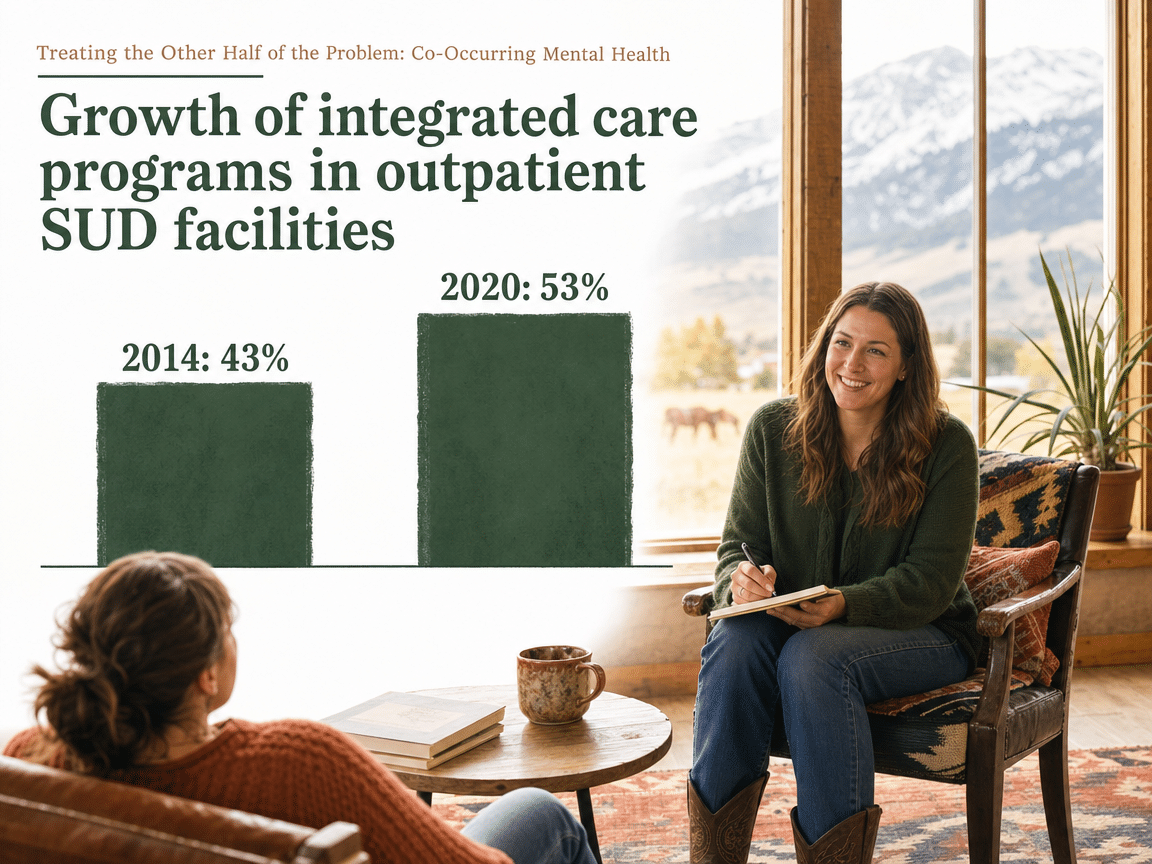
Despite this, national data from 2020 showed that only 53% of outpatient substance use facilities offered dedicated integrated care programs, though this was an increase from 43% in 2014 13. This highlights a significant gap; nearly half of outpatient facilities still lack integrated tracks. If you’ve been told your mental health issues would need “separate handling,” you’ve experienced this gap firsthand.
A residential setting that integrates both treatments under one roof transforms the daily experience. Your therapist understands both your panic attacks and your drinking patterns. Your psychiatrist collaborates with your counselor. Trauma work and relapse prevention are interconnected components of a unified treatment plan, developed by a cohesive team.
This integration is vital, as untreated psychiatric conditions were identified as a clear predictor of relapse in the first three months post-inpatient discharge 3. If previous programs offered only a referral for mental health, that was a hand-off, not integrated care, and hand-offs can lead to individuals falling through the cracks.
When evaluating residential options, ask specific questions beyond “do you treat dual diagnosis?” Inquire about the mental health staff, frequency of sessions, and whether your counselor is involved in treatment decisions. Vague responses should prompt further investigation.
Detox: The Medically Monitored First Chapter
Before any deeper therapeutic work can begin, the body must safely stabilize. This is the purpose of detox.
If previous attempts bypassed this crucial step or involved trying to manage withdrawal at home, you understand how quickly the situation can deteriorate. Alcohol withdrawal can cause dangerous spikes in blood pressure and seizures. While opioid withdrawal is typically not fatal, its severe discomfort often drives individuals back to substance use. Attempting to endure the initial 72 hours without medical supervision is not a test of willpower but a clinical situation requiring professional care.
Medically monitored detox involves nurses on duty, physician oversight, regular vital sign checks, and medications to alleviate symptoms and prevent dangerous complications. In Montana, residential withdrawal management is a regulated level of care, requiring facilities to meet specific licensing, staffing, and protocol standards 17. This structure ensures that withdrawal is managed safely, transforming it from the riskiest to the most secure phase of the process.
Effective detox transitions seamlessly into residential care, often within the same facility and with the same team. By the time the acute physical withdrawal subsides, you are already integrated into the program designed to support your long-term recovery.
Equine Work and Other Experiential Therapies
Some of the deepest struggles people face are not easily articulated through words; they manifest in physical responses—a racing heart, tense shoulders, or emotional numbness. This is why experiential therapies play a vital role in residential care.
Equine-assisted therapy is a prime example. Horses, as sensitive prey animals, instinctively react to human emotional states. If you approach a horse feeling agitated, it may remain unresponsive. However, if you calm your breathing and regulate your emotions, the horse’s demeanor can soften. This interaction teaches self-regulation, as you cannot deceive a thousand-pound animal. The therapy lies in the need to genuinely manage your internal state to achieve a desired interaction.
A 2022 review of equine-assisted services in substance use treatment found preliminary evidence supporting improved treatment retention, completion, and mental health outcomes. Participants reported increased self-efficacy and motivation 8. Clinical goals identified in the literature include emotion regulation, trust, responsibility, impulse control, and reading social cues 9—all critical skills for preventing relapse.
Equine work is not a standalone cure but a complementary tool within a comprehensive program that includes individual counseling, group therapy, and 12-step support. It offers a unique way for lessons to be internalized physically, not just intellectually.
Family Week: Repairing the System Around You
Addiction impacts not just the individual but the entire family system. It can lead to strained relationships, tense family gatherings, children learning to navigate unpredictable home environments, and spouses becoming hyper-vigilant. By the time an individual enters treatment, their loved ones are often profoundly exhausted.
Family programming is essential because recovery is difficult to sustain in a family system that has not also begun to heal. A structured family week, typically involving several days of education, joint therapy sessions, and facilitated honest conversations, provides families with new communication tools and a clearer understanding of addiction. Family members learn that addiction is a disease, not a series of poor choices, and individuals in recovery can hear, often for the first time, how their substance use affected their loved ones.
Research supports this approach: reviews of family involvement in substance use treatment indicate that engaging families improves treatment engagement, retention, and long-term outcomes, while also reducing harm to those around the person in recovery 10.
Eventually, you return home. The critical question is whether you return to a family system that has participated in the healing process or one still operating on old, unhelpful patterns. Family week can make a significant difference in this transition.
The Handoff: Why Continuing Care Is the Real Relapse-Prevention Engine
Zoom Groups, Check-In Calls, and the First Year Home
Often, the most challenging day in recovery isn’t during detox, but rather weeks or months after returning home, when the structure of treatment feels distant and daily life tests newly acquired skills.
Continuing care is designed for these moments. A meta-analytic review of continuing care for substance use disorders found that ongoing support after intensive treatment yields significant benefits, with stronger effects when the care is sustained and actively engaging 4. This means that a simple list of phone numbers at discharge is insufficient; effective continuing care involves consistent weekly groups, scheduled check-ins, and proactive outreach.
A practical approach includes a regular Zoom group with familiar faces and structured follow-up calls at key intervals (e.g., 30, 60, 90, 180, and 365 days post-discharge). These touchpoints are not merely ceremonial. Reviews of continuing-care models show that programs actively reaching out, particularly during high-risk periods after discharge, help individuals re-engage with treatment more quickly if they experience a slip, thereby minimizing the duration and impact of any relapse 16.
For those in remote areas, telehealth options are invaluable. Evidence syntheses on telehealth for addiction and mental health treatment indicate that outcomes are generally comparable to or better than in-person care regarding adherence, retention, and substance use reduction 11. A virtual meeting from your home can be just as effective.
Chronic-care research consistently demonstrates that individuals receiving sustained, stepped support after residential care achieve better long-term addiction outcomes compared to those whose treatment ends at discharge 5. The first year at home is not a victory lap but a critical period where continuing care performs its essential, often quiet, work.
Choosing a Program That Will Not Disappear at Discharge
When selecting a residential program, prioritize what happens after discharge. Ask specific questions:
- What does the first week at home entail?
- Who will contact me, and when?
- Is there a mandatory weekly group, or just an optional one?
- At what points post-discharge does the program initiate contact (e.g., 30, 90 days, a year)?
- Are alumni actively integrated into the community, or do they typically disengage after a few months?
Vague answers are telling. Continuing-care research consistently points to longer duration, higher intensity, and active outreach as key drivers of better outcomes, surpassing light-touch aftercare 4, 16. If a program views residential treatment as the primary service and aftercare as an afterthought, it lacks a crucial component for relapse prevention.
Also, inquire about the program’s approach to a slip or relapse. NIDA’s honest framing is that relapse indicates a need to adjust or resume treatment, not a reason to dismiss the individual 15. A program with a clear re-engagement pathway—such as prompt return calls, immediate access to group sessions, or discussions about stepping back up to a higher level of care—is designed to address the reality of addiction.
This comprehensive, long-term model—encompassing medically monitored detox, extended residential care (30/60/90 days), family week, and structured, year-long continuing care—forms the foundation of Rocky Mountain Treatment Center’s program. If previous attempts concluded at discharge, this integrated approach may be the missing piece for lasting recovery.
Frequently Asked Questions
How is acute residential treatment different from a standard 30-day rehab?
A standard 30-day rehab refers to a specific length of stay. Acute residential treatment, however, is a comprehensive level of care. It provides 24/7 structure, on-site clinical staff, and skill-building specifically for individuals who have struggled to maintain sobriety in less intensive settings 6. The duration of stay—whether 30, 60, or 90 days—is determined by your individual history and clinical needs, and it includes integrated detox and continuing care components.
Does relapse mean my last treatment failed?
No. The National Institute on Drug Abuse clearly states that a relapse indicates that treatment should be adjusted, resumed, or modified—not that you or the program failed 15. It provides valuable information about where the previous plan may have been insufficient. Perhaps the treatment duration was too short, underlying mental health issues were not adequately addressed, or there was a lack of robust continuing care. This understanding allows for necessary adjustments in subsequent treatment attempts.
How long should I stay in residential treatment to actually break the relapse cycle?
The goal is to stay long enough to complete the necessary work. The U.S. Surgeon General’s report indicates that for many individuals, treatment episodes shorter than 90 days have limited effectiveness 12. This doesn’t necessarily mean 90 consecutive days in residential care; it could involve 30 or 60 days on-site combined with structured continuing care. The appropriate length is a clinical decision based on your personal history, home environment, and any co-occurring mental health conditions that require treatment alongside addiction.
What happens if I have depression, anxiety, or trauma alongside addiction?
You need a program that treats both conditions simultaneously, with a unified team and treatment plan—known as integrated care. SAMHSA guidance emphasizes that co-occurring-enhanced residential programs yield better outcomes than treating these diagnoses separately or sequentially 7. Untreated mental health conditions are a significant predictor of relapse in the initial three months after inpatient discharge 3. It’s crucial to ask about the mental health professionals on staff and the frequency and integration of their services.
Is equine therapy a real treatment or just a marketing extra?
Equine therapy is a legitimate clinical tool with growing evidence supporting its effectiveness. A 2022 review found that equine-assisted services in addiction treatment showed positive indicators for retention, completion, and mental health, along with increased self-efficacy and motivation 8. Its clinical objectives are practical, focusing on emotion regulation, trust, and impulse control 9. While not a standalone cure, it complements individual counseling, group work, and 12-step support within a comprehensive treatment plan.
What does continuing care look like after I leave residential treatment?
The most effective continuing care is active and sustained. This typically includes a standing weekly group, scheduled check-in calls at 30, 60, 90, 180, and 365 days post-discharge, and a clear pathway for re-engagement if a slip occurs. Meta-analytic evidence demonstrates that continuing care produces better outcomes when it is longer-lasting and actively engaging rather than passive 4. Telehealth groups via video are also effective, with outcomes generally comparable to or better than in-person care for adherence and retention 11.
References
- Relapse outcomes in a randomized trial of residential and day drug abuse treatment. https://pubmed.ncbi.nlm.nih.gov/11239724/
- Treatment Programs for Substance Use Disorder. https://www.ncbi.nlm.nih.gov/books/NBK584391/
- Relapse after inpatient substance use treatment. https://pubmed.ncbi.nlm.nih.gov/30447514/
- How effective is continuing care for substance use disorders? A meta‑analytic review. https://pmc.ncbi.nlm.nih.gov/articles/PMC3840113/
- The Continuing Care Model of Substance Use Treatment. https://pmc.ncbi.nlm.nih.gov/articles/PMC4007701/
- Level 3.5 by service characteristics (ASAM Criteria). https://www.pa.gov/content/dam/copapwp-pagov/en/ddap/documents/documents/asam/level%203.5%20by%20service%20characteristics.pdf
- Chapter 7 – Treatment Models and Settings for People With Co‑Occurring Disorders. https://www.ncbi.nlm.nih.gov/books/NBK571024/
- Equine‑assisted services for individuals with substance use disorders: A scoping review. https://pmc.ncbi.nlm.nih.gov/articles/PMC9749232/
- Implementation of Equine Therapy into Treatment Programming for Substance Use Disorders. https://red.mnstate.edu/cgi/viewcontent.cgi?article=1924&context=thesis
- Family Involvement in Treatment and Recovery for Substance Use Disorders. https://pmc.ncbi.nlm.nih.gov/articles/PMC8380649/
- The research evidence on the efficacy of telehealth for addiction and mental health treatment (RTI/CCME presentation). https://medicaid.ncdhhs.gov/rti-ccme-telehealth-presentation-march-3-2022/download?attachment
- Chapter 3 – Prevention and Treatment of Substance Use Disorders (Facing Addiction in America, Surgeon General’s Report). https://www.ncbi.nlm.nih.gov/books/NBK424848/
- Availability and Correlates of Integrated Treatment for People with Co‑Occurring Disorders. https://aspe.hhs.gov/reports/availability-correlates-integrated-treatment-people-cods
- Chapter 4 – Early Intervention, Treatment, and Management of Substance Use Disorders (Facing Addiction in America, Surgeon General’s Report). https://www.ncbi.nlm.nih.gov/books/NBK424859/
- Treatment and Recovery. https://nida.nih.gov/publications/drugs-brains-behavior-science-addiction/treatment-recovery
- Impact of Continuing Care on Recovery From Substance Use Disorder. https://pmc.ncbi.nlm.nih.gov/articles/PMC7813220/
- WITHDRAWAL MANAGEMENT PROGRAM REQUIREMENTS (Montana Administrative Rules, ASAM 3.2-WM). https://rules.mt.gov/browse/collections/aec52c46-128e-4279-9068-8af5d5432d74/policies/00772422-0ddc-4ffe-8846-1b23b1dad727