Key Takeaways
- Spiritual programs in Great Falls pair medical detox, counseling, and dual diagnosis care with optional faith-based tracks, so scripture, 12-Step work, or meditation stay choices rather than requirements.
- Montana’s alcohol-related deaths nearly doubled between 2009-2013 and 2019-2023, making clinically grounded care that understands rural isolation and long winters essential alongside any spiritual component.
- Personal spiritual growth, not religious label, tracks with better outcomes: a 2026 meta-analysis found 13-18% risk reduction in harmful use, while faith works as a complement to evidence-based treatment, not a replacement.2,3
- Before committing, ask whether spiritual programming is truly optional, how detox is medically monitored, whether dual diagnosis is treated, if staff are in recovery, and what aftercare touchpoints exist.
What You’re Actually Asking When You Search for a Spiritual Program
When you typed “spiritual programs Great Falls MT” into a search bar, you probably weren’t asking for a theology lesson. You were asking something quieter and harder: Is there a place where I can get sober without being preached at? Or a place where my faith actually gets to come with me instead of being left at the door?
Both of those questions are fair. And they usually sit next to some other worries you haven’t said out loud yet. Will they make me pray? Will they judge me if I do? What if I used to believe and don’t anymore? What if I want to believe again but feel too broken to try?
Take a breath. You’re not alone in any of that. The fact that you’re reading this, comparing options, asking careful questions, that’s already a step, and it counts.
Here’s what a good spiritual program in Great Falls actually is: a residential recovery setting where medical detox, one-on-one counseling, group work, and family support form the ground floor, and where faith-based tracks like optional Bible study, 12-Step spiritual work, meditation, and reflection outdoors are doors you choose to open. Not requirements. Options. The rest of this guide walks you through how those pieces fit together, what the research says, and what to ask before you say yes to any program.
The Great Falls Backdrop: Why This Search Feels Urgent
You’re not searching in a vacuum. If you live in or near Great Falls, you already know how normal heavy drinking can feel here. Barstools on Central Avenue, tailgates in the fall, a beer after a long shift at Malmstrom or the refinery. It looks like community. Sometimes it is. Sometimes it’s how a problem hides in plain sight.
The numbers say the quiet part out loud. Montana counted 1,563 alcohol-related deaths across 2009–2013. In the most recent five-year window, 2019–2023, that number nearly doubled to 2,941. Behind each of those is a person, a family, a Sunday dinner that goes silent. If you’re feeling like something has shifted in your town, or in your own house, you’re reading the room correctly.17
Statewide, an estimated 79,000 Montanans live with a substance use disorder, and about 64,000 adults meet criteria for alcohol use disorder. Cascade County, where Great Falls sits, carries its share of the opioid burden too, with 367 opioid-related events tracked at a rate of 89.6 per 100,000 residents. Rural distance, long winters, and thin provider coverage don’t make any of this easier.16,18
Here’s why that context matters for your search. When you’re looking for a spiritual program, you’re not just looking for prayer time on a schedule. You’re looking for something strong enough to meet what’s actually happening in this part of the country. That means medical detox for bodies that have been through it. Counselors who understand rural isolation. A community that keeps showing up after the 30 days are over. Faith, when you want it, layered into care that already has clinical weight behind it.
You’re allowed to want both. The stakes here are real, and so is the help.
Spiritual, Not Religious: The Distinction That Changes Everything
Here’s a word that might be scaring you off before you even walk in the door: religious. If you grew up in a certain kind of church, or watched someone you love get wounded by one, that word can feel like a locked room. Good news: the research keeps drawing a line between religion and spirituality, and it matters for what you’re about to walk into.
In one empirical review of people in recovery, participants said spirituality, not institutional religion, was what made “all the difference” for them, especially those with prior treatment or 12-Step experience. Another NIH-supported analysis found that religious affiliation on its own isn’t enough to protect against alcohol use disorder, but personal spiritual practices, things like prayer, quiet reflection, and mindfulness, can help reduce hazardous drinking and support relapse prevention.6,7
So what’s the difference in plain language? Religion tends to mean a shared framework: doctrine, membership, a building, a schedule. Spirituality is smaller and more personal. It’s what you do when nobody’s watching. It’s the moment on a walk when something inside you loosens. It’s a whispered prayer at 3 a.m., or the sense that you’re not carrying this alone.
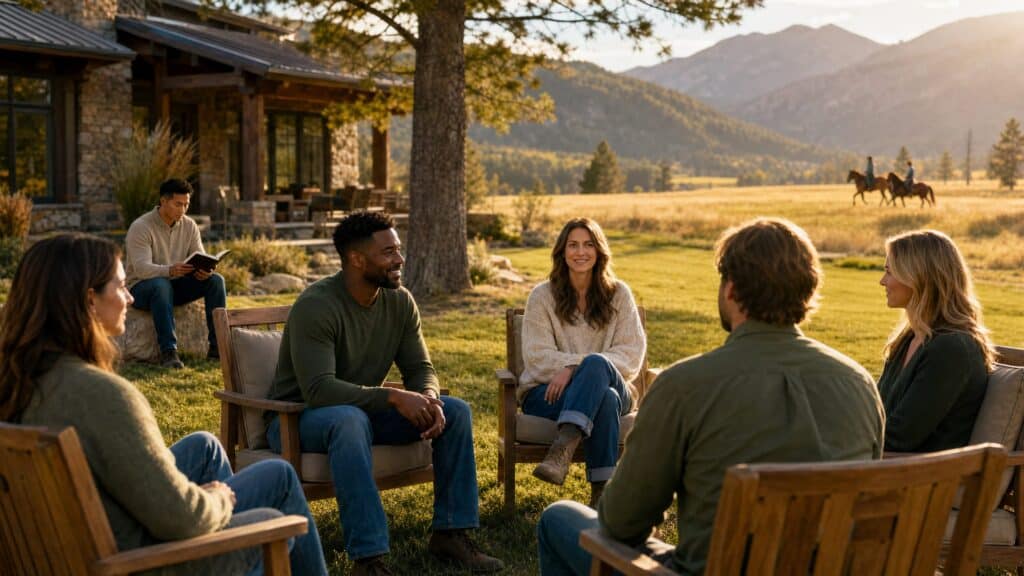
A good spiritual program in Great Falls holds space for both, and doesn’t force either. You can attend an optional Bible study if scripture grounds you. You can skip it entirely and still do meaningful spiritual work through 12-Step conversations, meditation, or simply learning to sit with yourself again. You get to define what higher power, faith, or meaning means to you, and the staff meets you there instead of handing you a script.
That’s the shift. Spiritual programs aren’t asking you to sign a statement of belief. They’re asking whether you’d like a wider set of tools while you rebuild.
What Spiritual Programming Actually Looks Like Inside Treatment
The Clinical Floor Underneath: Detox, Counseling, Dual Diagnosis
Before anything spiritual happens, your body has to get safe. That’s not a footnote, it’s the whole starting point. If you’ve been drinking heavily or using opioids, stopping cold on your own can be dangerous. Medically monitored detox handles that first stretch with nurses checking vitals, medications easing the worst of withdrawal, and staff sitting with you through nights that feel long.
Once detox stabilizes you, individual counseling and group work carry the day. You’ll dig into what started the use, what kept it going, and what patterns your family passed down without meaning to. If depression, anxiety, PTSD, or another mental health condition is riding alongside the substance use, dual diagnosis care treats both at once instead of pretending they’re separate rooms in the same house.
This clinical floor matters because research is clear on one thing: spiritual and faith-oriented care works best as a complement to evidence-based treatment, not a replacement for it. A prayer group can’t detox you. A Bible study can’t titrate your anxiety medication. But the reverse is also true. Clinical care alone sometimes leaves the deeper questions unanswered, and that’s where the spiritual doors open next.2
Optional Bible Study and Faith-Based Groups
If scripture is part of your life, or you want it to be again, optional Bible study inside a residential program can feel like breathing room. Small group. A few chapters. Honest conversation about what a passage stirs up for someone in early sobriety. No performance. No quiz.
Faith-based programming is not fringe territory in American addiction care. One review found that 73% of U.S. substance abuse recovery programs include a spirituality-based element, and more than 84% of scientific studies reviewed showed faith as a positive factor in prevention or recovery. That’s the norm, not the exception.4
What matters at a good program in Great Falls is the word optional. If you want the study, it’s there. If you don’t, your treatment plan doesn’t change and no one keeps score. You can also step in for one session, see how it lands, and step out again. That kind of consent, the freedom to try and stop, is what separates faith-based support from religious pressure.
12-Step Meetings and the Higher Power Question
12-Step meetings show up almost everywhere in residential recovery, and for good reason. They give you a room full of people who get it, a language for talking about what happened, and a structure for the work ahead. Involvement in AA and the Twelve Step approach is a common pathway that provides social support and, for many people, deepens spiritual practices over time.22
Here’s where readers get nervous: the higher power language. Step Two mentions “a Power greater than ourselves.” Step Three talks about turning your will over. If you’re not sure what you believe, or you’re sure you don’t believe in the God you grew up with, those steps can feel like a wall.
They don’t have to be. The 12-Step tradition intentionally leaves higher power open. For some, it’s the God of their childhood, reclaimed. For others, it’s the group itself, the collective wisdom in the circle. For others still, it’s nature, honesty, or a felt sense of something bigger than the addiction. The article on spiritual awakening in 12-Step recovery describes this experience as personal and often gradual, not a lightning-bolt conversion 5. You get to name your own.
Meditation, Journaling, and Nature Reflection
Not everyone finds their footing through group talk or scripture. Some of the most meaningful spiritual work in recovery happens quietly, alone, and on your own timeline.
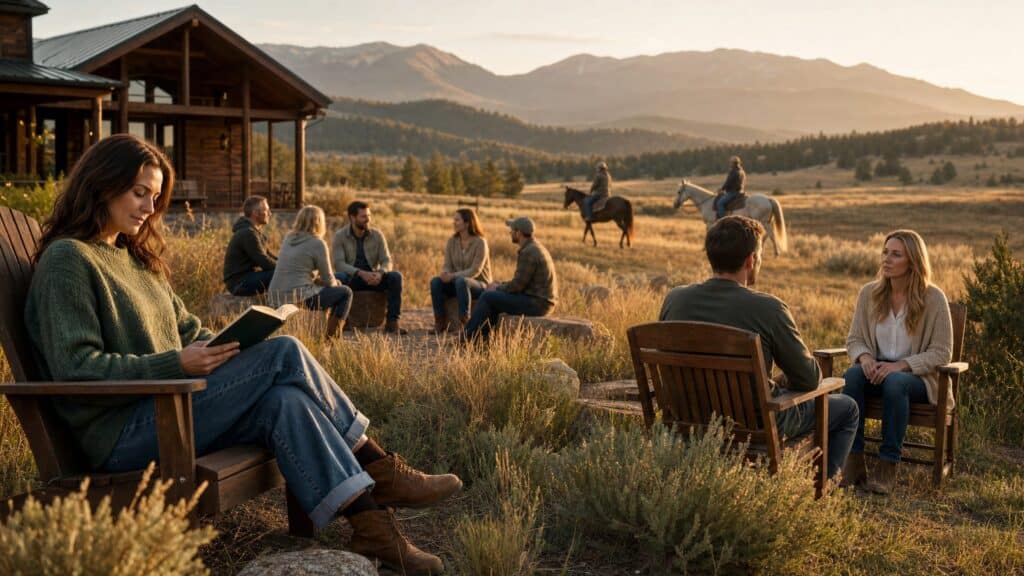
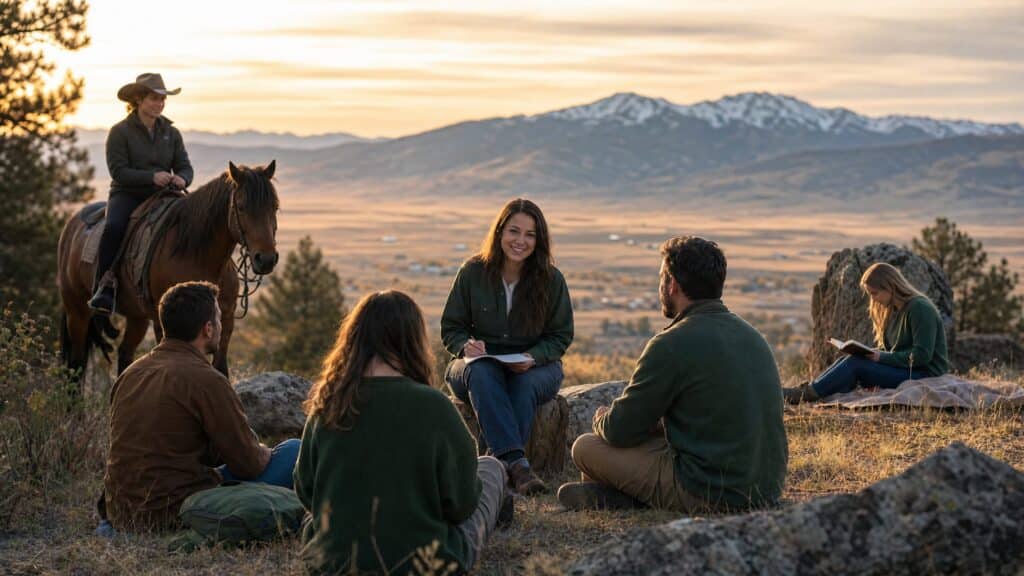
Meditation and breathing exercises settle a nervous system that’s been in overdrive for years. Journaling gives you a place to put thoughts that are too tangled to say out loud yet. Time outside, walking, sitting on a bench, watching light shift across the Rockies, offers what NIH-supported research describes as spiritual experiences and practices that may help reduce hazardous drinking and support relapse prevention.7
These aren’t extras tacked on to fill an afternoon. They’re doors, same as the others. Some readers find their whole spiritual life lives here, in the quiet practices, and never touch a Bible study or a formal prayer. That’s a full path, not a lesser one.
How Faith Shapes Outcomes: What the Research Actually Says
You don’t need to take anyone’s word for whether spirituality helps in recovery. The research has been catching up for years, and the most recent numbers are worth sitting with.
A 2026 meta-analysis pooled 55 rigorous studies and more than 540,000 participants to ask a simple question: does spirituality actually reduce harmful alcohol and drug use? The answer was yes, and by a measurable amount. People with general spiritual engagement showed a 13% risk reduction in harmful use. Among those who attended religious services more than weekly, that number climbed to 18%. Not a miracle cure. Not a promise. But a real, consistent signal across hundreds of thousands of lives.3
Here’s what that pattern suggests: dose matters. The people who leaned in more, whether through community, practice, or ritual, saw more protection. It’s the same logic you’d apply to any tool. Picking it up once helps a little. Using it regularly helps more.
Zoom in on treatment itself, and the picture holds. In a randomized clinical trial of opiate dependence treatment, participants whose spirituality scores rose over 12 months reported fewer days of heroin use and had fewer positive urine screens for opioids compared to those whose spirituality stayed low. Notably, changes in religiosity alone didn’t produce the same effect, only personal spiritual growth did. That’s a meaningful distinction if you’ve been wary of the religion word.8
A caveat worth naming: a 2019 meta-analysis of randomized trials found spiritual and religious interventions had a moderate but statistically non-significant effect versus inactive controls, and no clear edge over active treatments. Translation: faith-based work helps, but it’s a companion to detox, counseling, and medication, not a stand-in. That’s the honest read, and it’s the frame a good Great Falls program will use.2
Horses, Open Country, and the Case for Experiential Spiritual Work
Some of the deepest work in recovery happens without words. You stand next to a 1,200-pound animal, and your body has to slow down. Your breathing changes. The horse mirrors what you’re bringing into the pen, calm if you’re calm, uneasy if you’re hiding something. For a lot of people, that’s the first honest conversation they’ve had in years, and it happens without a syllable spoken.
Equine work fits into a spiritual program because it’s experiential. It puts you in your body, in weather, in wide country, doing something real. Montana lends itself to this. The land is already a kind of church for people who don’t do buildings.
The research is early but pointing in a hopeful direction. A randomized controlled trial of complementary horse-assisted therapy in residential care found that 44% of participants in the equine group completed their treatment, compared with 32% in the treatment-as-usual group. That’s a real gap in a field where staying long enough to finish is half the battle. Fair caveat: the sample was small, and the difference didn’t reach statistical significance, so the authors framed it as a signal worth studying further, not a proven cure.10
Other studies fill in the picture. A 2023 randomized trial of 100 patients found that adding equine-assisted therapy to standard care produced statistically significant gains in emotion regulation, self-efficacy, and self-esteem. A separate study of residential patients in withdrawal reported improvements in anxiety, depression, and irritability after four weeks of equine interaction. None of that replaces detox or counseling. It sits beside them, doing what talk therapy sometimes can’t reach.13,14
If you find your quiet with a horse instead of in a chapel, that still counts as spiritual work. The doors are wider than you think.
If Church Hurt You Before: Trauma-Aware Spiritual Care
Let’s name it plainly. Some of you reading this grew up in pews, sang the songs, memorized the verses, and got hurt anyway. Maybe a leader shamed you for who you loved, or what you struggled with, or a question you asked out loud. Maybe your addiction started under a steeple, or got worse because the people there couldn’t handle the truth. If the word spiritual makes your shoulders tense, that reaction is information. Honor it.
Good treatment doesn’t pretend that wound isn’t there. The research is honest about the double edge, too. While most studies show faith supports recovery, negative religious experiences can contribute to substance use for some people, and thoughtful programs work to avoid re-triggering those wounds. Provider beliefs matter as well. One review found that clinicians’ own religiosity can shape their attitudes toward patients, sometimes in ways that add stigma rather than remove it. Translation: not every faith-adjacent program is safe for someone carrying church trauma. You get to ask.1,4
Trauma-aware spiritual care looks like this in practice. Nobody makes you pray out loud. Nobody quotes scripture at your pain. If a group starts to feel like a place you’ve been hurt before, you can leave without explanation and without penalty. Your counselor asks what words work for you, God, higher power, the group, the mountains, and uses yours instead of theirs.
Consent runs the room, not doctrine.You don’t have to arrive healed to walk through the door. You just have to keep the door in your own hands.
Peers, Not Preachers: How Conversations Actually Sound
The person sitting across from you in group probably knows what a shaky morning feels like. Not from a textbook. From their own kitchen, a few years back. At a treatment center where a large share of the staff are in recovery themselves, spiritual conversations don’t sound like sermons. They sound like two people comparing notes on what actually helped.
That changes the whole tone. When you say something raw, about a relapse, about a father who died drunk, about a prayer you tried once and felt nothing, you’re not being managed. You’re being met. Provider attitudes shape care more than most people realize, and clinicians’ own beliefs can either reduce shame or quietly add to it. Peer-informed staff tend to reduce it, because they’ve already been on your side of the table.1
You’ll hear questions more than lectures. What does higher power mean to you today? What word works? What doesn’t? That’s not soft. That’s the work.
After 30, 60, 90 Days: Building a Sober Life That Holds
Residential treatment is a beginning, not a finish line. What you build in those first 30, 60, or 90 days matters, and what you carry out the door matters just as much. This is where spiritual programming stops being a schedule on a wall and starts being a rhythm you actually live.
Here’s the pattern research keeps returning to: spiritual growth during treatment tracks with better outcomes over time. In that opiate treatment study, the people whose spirituality scores climbed over 12 months, not the ones whose religious identity stayed the same, reported fewer heroin-use days at follow-up. Growth, not label. That distinction shapes how you plan what comes next.8
Practical aftercare looks like a few small commitments that repeat. A weekly meeting, in person or on a Zoom group. A morning practice, five minutes of quiet, a chapter, a walk. A sponsor or a counselor you call before you drink, not after. Family members who now know what to say and what not to say because they came to their own sessions. Follow-up check-ins at 30, 60, 90, 180, and 365 days from a care team that hasn’t forgotten your name.
Recovery doesn’t hold because of one big decision. It holds because the doors you opened in treatment stay open at home.
Choosing a Program in or Near Great Falls: What to Ask on the Call
The first phone call is usually the hardest part. Your voice might shake. You might not know what to say. That’s fine. The person on the other end has heard nervous before. Here’s a short list of questions to keep next to you, so you don’t have to think of them in the moment.
- Is spiritual programming optional?
- The answer should be a plain yes. If Bible study or prayer is treated as a requirement rather than an offering, that’s a mismatch with what the research supports about personal, chosen spiritual engagement.6
- What does detox look like here?
- You want medically monitored care, not a cot and a Bible. Faith works best layered on top of clinical treatment, not in place of it.2
- Do you treat mental health conditions alongside addiction?
- Depression, anxiety, PTSD, and trauma often ride alongside substance use. Dual diagnosis care matters.
- Are staff in recovery themselves?
- This shifts the tone from clinical to peer, which changes how spiritual conversations actually land.
- What happens after I leave?
- Ask about weekly groups, follow-up check-ins, and family programming. A good program will name specific touchpoints, not vague promises.
You don’t need perfect words. You just need to make the call. Rocky Mountain Treatment Center in Great Falls is one place these questions get answered honestly, and the door stays in your hands.
Frequently Asked Questions
Do I have to be religious to join a spiritual program in Great Falls?
Is Bible study required, or can I skip it?
How does spiritual programming work alongside medical detox and counseling?
What if I’ve been hurt by a church or religious group in the past?
How does the 12-Step ‘higher power’ idea work if I don’t believe in God?
What happens with spiritual support after I leave residential treatment?
References
- Religious and spiritual beliefs and attitudes towards addiction: Implications for treatment. https://pmc.ncbi.nlm.nih.gov/articles/PMC8664870/
- The efficacy of spiritual/religious interventions for substance use problems: A systematic review and meta-analysis of randomized controlled trials. https://pubmed.ncbi.nlm.nih.gov/31349206/
- Spirituality and Harmful or Hazardous Alcohol and Other Drug Use: A Meta-analysis. https://pmc.ncbi.nlm.nih.gov/articles/PMC12917744/
- Belief, Behavior, and Belonging: How Faith is Indispensable in Preventing and Recovering from Substance Abuse. https://pmc.ncbi.nlm.nih.gov/articles/PMC6759672/
- Spiritual Awakening in 12-Step Recovery. https://pmc.ncbi.nlm.nih.gov/articles/PMC10947114/
- The Role of Spirituality and Religiousness in Aiding Recovery from Alcohol and Other Drug Problems: An Empirical Review. https://pmc.ncbi.nlm.nih.gov/articles/PMC7989793/
- Religious Affiliation and Spiritual Practices: An Examination of the Relationships Between Spirituality, Religion, and Alcohol Use. https://pmc.ncbi.nlm.nih.gov/articles/PMC4872613/
- Effect of Religiosity and Spirituality on Drug Treatment Outcomes. https://www.ncbi.nlm.nih.gov/pmc/articles/PMC2693037/
- Spirituality and Religion in Substance Misuse Prevention and Recovery. https://pressbooks.ulib.csuohio.edu/substancemisusepart1/chapter/ch-6-1-spirituality-and-religion-in-substance-misuse-prevention-and-recovery/
- Complementary horse-assisted therapy for substance use disorders: A randomized controlled trial. https://pubmed.ncbi.nlm.nih.gov/32019584/
- Examining the Psychological Measures and Feasibility of Recreational Trail Rides in Reducing Cravings for Addictive Substances among Veterans: A Replication Pilot Study. https://pubmed.ncbi.nlm.nih.gov/39002109/
- An evaluation of the effect of equine-facilitated psychotherapy on patients with substance use disorders (EFPP program description). https://pmc.ncbi.nlm.nih.gov/articles/PMC10306210/
- Impact of Equine Interaction during Psychotherapy on Anxiety and Depression for Residential Treatment Program Patients Experiencing Substance Withdrawal. https://docs.lib.purdue.edu/cgi/viewcontent.cgi?article=1137&context=paij
- Equine-assisted therapy effectiveness in improving emotion regulation, self-efficacy, and self-esteem among patients with substance use disorders: A randomized controlled trial. https://pmc.ncbi.nlm.nih.gov/articles/PMC10576391/
- The Impact of Equine-Assisted Therapy on Mental Health and Addictive Behaviors in Patients Receiving Addiction Treatment (EQUI-ADDICT). https://clinicaltrials.gov/study/NCT07495839
- Montana Substance Use Disorders Task Force Strategic Plan. https://dphhs.mt.gov/assets/publichealth/EMSTS/opioids/MontanaSubstanceUseDisordersTaskForceStrategicPlan.pdf
- Alcohol Use in Montana. https://dphhs.mt.gov/assets/BHDD/PreventionResources/AlcoholUse2024Final.pdf
- Summary of Opioid Use in Montana. https://dphhs.mt.gov/assets/publichealth/EMSTS/Data/Opioid_Drug_Use_Summary.pdf
- Equine-assisted services for individuals with substance use disorder: A systematic review. https://pmc.ncbi.nlm.nih.gov/articles/PMC9749232/
- The Role of Spirituality and Religiousness in Aiding Recovery from Alcohol and Other Drug Problems: An Empirical Review. https://pubmed.ncbi.nlm.nih.gov/33767804/
- Complementary horse-assisted therapy for substance use disorders: A randomized controlled pilot study. https://pmc.ncbi.nlm.nih.gov/articles/PMC7001193/
- Spirituality, Religiousness, and Alcoholics Anonymous in Recovery. https://www.ncbi.nlm.nih.gov/pmc/articles/PMC4446209/