Key Takeaways
- Montana’s rural geography, long winters, and limited meeting access make consistent recreation a practical bridge between residential treatment and the daily work of staying sober.
- Repeatable routines matter more than intensity: a weekly walk, a familiar state park, equine work, or volunteering with Fish, Wildlife & Parks helps regulate cravings and emotion 13, 4.
- Senate Bill 94 now requires Montana recovery residences to register with DPHHS and meet safety and referral standards, so check the state registry and certification before choosing a home 9, 8.
- Pair recreation with the safety net—save 988, the Montana Warm Line, and a peer specialist’s number, and call before a hard day arrives rather than after 17, 2.
Why recreation does the heavy lifting in rural Montana recovery
For those living in rural Montana, the path to sobriety presents unique challenges. The nearest support meetings can be miles away, winters are long, and social gatherings often revolve around bars. In this environment, the question isn’t just about wanting recovery to work, but about actively filling the hours between professional support sessions.
This is where recreation becomes more than just a pastime; it becomes a cornerstone of recovery. Activities like a walk along the river, volunteering at a state park, spending time with horses, or a fishing trip with a trusted friend are not mere distractions. They are integral to the recovery process, especially during times when clinical support isn’t immediately available. Research indicates that nature-based interventions consistently improve mental health outcomes, including reductions in depression and anxiety, and an enhanced quality of life 1. A 2024 review specifically highlighted positive outcomes in approximately 85% of studies on natural interventions in substance use treatment, noting improved emotional regulation and a stronger sense of freedom that counteracts the urge to use 13.
While these activities don’t diminish the difficulty of recovery, they transform the surrounding landscape from mere scenery into an active component of a personalized recovery plan. They bridge the gap between a residential treatment stay and the return to daily life.
Movement as craving relief: walking, biking, and weekly rhythm
Cravings often appear unexpectedly—during a commute, in quiet evenings, or on solitary weekends. Rather than relying solely on willpower, having established physical routines can be a powerful tool.
Exercise-based treatments for substance use disorders can effectively supplement standard care. Small clinical studies suggest that structured physical activity can lead to improved mood, reduced cravings, and lower stress levels for individuals in recovery 12. While these studies are often limited in size and scope, and exercise is not a standalone treatment, it offers a practical and accessible coping mechanism. For someone returning to a small town after a residential program, engaging in physical activity at 4 p.m. on a Wednesday can provide relief without leading back to old habits.
The key lies in consistency, not intensity. A regular thirty-minute walk on a familiar county road several times a week can be more beneficial for the nervous system than sporadic, intense workouts. This routine allows the body to anticipate movement and the mind to engage in constructive thought rather than dwelling on cravings.
In rural Montana, this can manifest in various ways:
- A consistent morning walk, even in winter, equipped with appropriate gear.
- Reviving an old bicycle for regular rides on gravel roads after work.
- Maintaining a gym membership in a nearby town, used consistently on specific days.
- Weekend rides into the hills with a trusted, sober companion.
The emphasis is on repetition. A single walk is a positive step, but consistent engagement throughout the week marks the beginning of a transformed life.
Nature as a daily prescription: trails, rivers, and the Montana state park system
The intuitive wisdom of “going outside” for restlessness is now supported by scientific evidence. Reviews of natural interventions in substance use treatment confirm that spending time in natural environments helps individuals regulate emotions, mitigate cravings, and cultivate a sense of freedom that can rival the urge to use 13. This sense of freedom holds particular significance in Montana.
Montana’s 55 state parks are designed for regular engagement, not just occasional visits. They offer diverse activities throughout the year: camping, hiking, fishing, swimming, and boating in warmer months, transitioning to cross-country skiing and snowmobiling when snow arrives 18. The state’s Fish, Wildlife & Parks system boasts over 4,000 miles of groomed snowmobile trails, ensuring that seasonal changes don’t hinder outdoor routines 3. This means a sober outdoor routine can be maintained consistently, regardless of the time of year.
For someone recently returned from a residential program, a practical approach is to select one park within an hour’s drive and commit to regular visits. This could involve exploring Lewis and Clark Caverns in the summer, Makoshika in the fall, or ice fishing on a frozen lake in January. The goal isn’t to conquer every trail, but to develop a deep familiarity with one location, making visits feel like a return home rather than an elaborate expedition.
To foster this habit:
- Keep a small bag ready with essentials like boots, a layer, water, and a snack to minimize friction.
- Designate a specific day of the week for visits, rather than waiting for a particular mood.
- Occasionally invite a sober companion. Solo excursions build self-reliance, while shared experiences reinforce sober connections.
- Practice mindfulness by observing nature, such as a magpie on a fencepost or ice on cottonwoods. This attention can be a form of therapy.
These seemingly small, consistent actions—a walk along the Missouri, a cast into the Madison, a climb up a familiar ridge—build a resilient foundation for recovery. When difficult days inevitably arise, the body will instinctively know where to find solace.
Horses, trust, and the equine bridge between treatment and home
Horses offer a unique form of interaction, responding to present emotional and physical cues rather than past behaviors. They sense tension in shoulders, shallow breathing, or an unsteady hand, providing immediate, honest feedback. This directness is a core component of equine-assisted therapy.
A scoping review of equine-assisted services for individuals with substance use disorders revealed significant benefits: when integrated with standard care, equine sessions improved treatment retention and completion, and participants reported enhanced mental health outcomes 14. While acknowledging the limitations of small study sizes and the need for more randomized trials, equine work serves as a valuable complement to counseling and detox, not a replacement. For those accustomed to numbing emotions, engaging with a thousand-pound animal that mirrors one’s nervous system in real-time offers a profound therapeutic experience distinct from traditional office settings.
This approach resonates deeply in Montana, where many individuals have a natural familiarity with horses. The routines of barn work, grooming, and trailer loading are often ingrained. Equine work within a residential program provides a structured environment to explore this connection, with counselors guiding participants to understand what the horse reveals about their inner state. Upon returning home, this experience creates a natural bridge to Montana’s broader outdoor lifestyle. The calm cultivated in the arena can be transferred to a fishing hole or a hiking trail.
If access to horses is available—whether personal, through neighbors, or community arenas—the therapeutic benefits can continue beyond residential treatment. A consistent morning chore at a barn can provide structure and purpose for many weeks. Even without direct access, the lessons learned—steady breath, gentle hands, focusing on the present rather than internal anxieties—are transferable skills that support ongoing recovery.
Service as recovery: volunteering with FWP and showing up for something bigger
There’s a profound sense of peace that comes from being genuinely useful. This isn’t about relentless productivity, but about contributing meaningfully—picking up litter on a trail, painting a picnic shelter, or guiding a tourist to local petroglyphs. Early recovery can often feel self-focused, centered on personal struggles. Service shifts this perspective, allowing individuals to contribute to someone else’s positive experience for a few hours.
Montana Fish, Wildlife & Parks offers diverse volunteer opportunities across its state park system, welcoming individuals, families, and groups. Roles include campground hosts, visitor center assistants, maintenance crews, and participants in special project days 4. The work is tangible, the hours are flexible, and personal stories are shared only by choice. This provides an opportunity to engage in meaningful physical activity, returning home with a sense of earned satisfaction rather than emptiness.
For someone newly sober, this combination is particularly impactful. It provides a reason to start the day, a place where one is expected, and an environment to connect with others who share similar interests, fostering social connections unrelated to past substance use.
If a full volunteer commitment feels overwhelming, scaling down is an option. Participating in a church cleanup, helping a neighbor stack wood, or spending a morning at a food bank can offer similar benefits. The core principle remains: directing attention outward provides a respite from internal cravings. Engaging once and observing the positive feeling afterward can motivate scheduling future commitments.
Peers, sober housing, and the people who keep you honest
While outdoor activities and natural environments offer significant support, they don’t address every aspect of recovery. During the first year after a residential stay, many individuals encounter moments when nature alone isn’t sufficient, and family members may struggle to provide appropriate support. This is where human connection becomes vital, particularly with others who understand the recovery journey firsthand.
In Montana, two key resources are peer support and sober housing. Peer support offers a direct connection to an individual who has navigated recovery, while sober housing provides a structured living environment. Both are founded on the principle that sobriety is more sustainable when shared with others who understand its demands.
Peer support specialists and the Montana Warm Line
A peer support specialist is a state-trained individual with lived experience in recovery. Montana State University’s training program aligns with SAMHSA’s definition, emphasizing that peer specialists help individuals“become and stay engaged in the recovery process and reduce the likelihood of relapse”by leveraging their personal experiences rather than a clinical hierarchy 2. This support can involve phone calls, coffee meetings, rides to meetings, and empathetic listening without judgment, even in challenging moments.
For those in small towns seeking initial support, the Montana Warm Line offers an accessible entry point. It is not a crisis hotline but a resource for individuals experiencing anxiety, loneliness, stress, grief, or urges to use, providing a confidential space to talk with someone who understands 17. There are no forms or appointments required, and calls can end at any time.
A helpful strategy is to call the Warm Line proactively, even when not in immediate need, to familiarize oneself with the service. Additionally, inquiring with a residential counselor or discharge planner about peer specialists assigned to one’s county and saving these contact numbers under easily recognizable names ensures that support is readily available when truly needed.
Recovery residences and what SB 94 changed
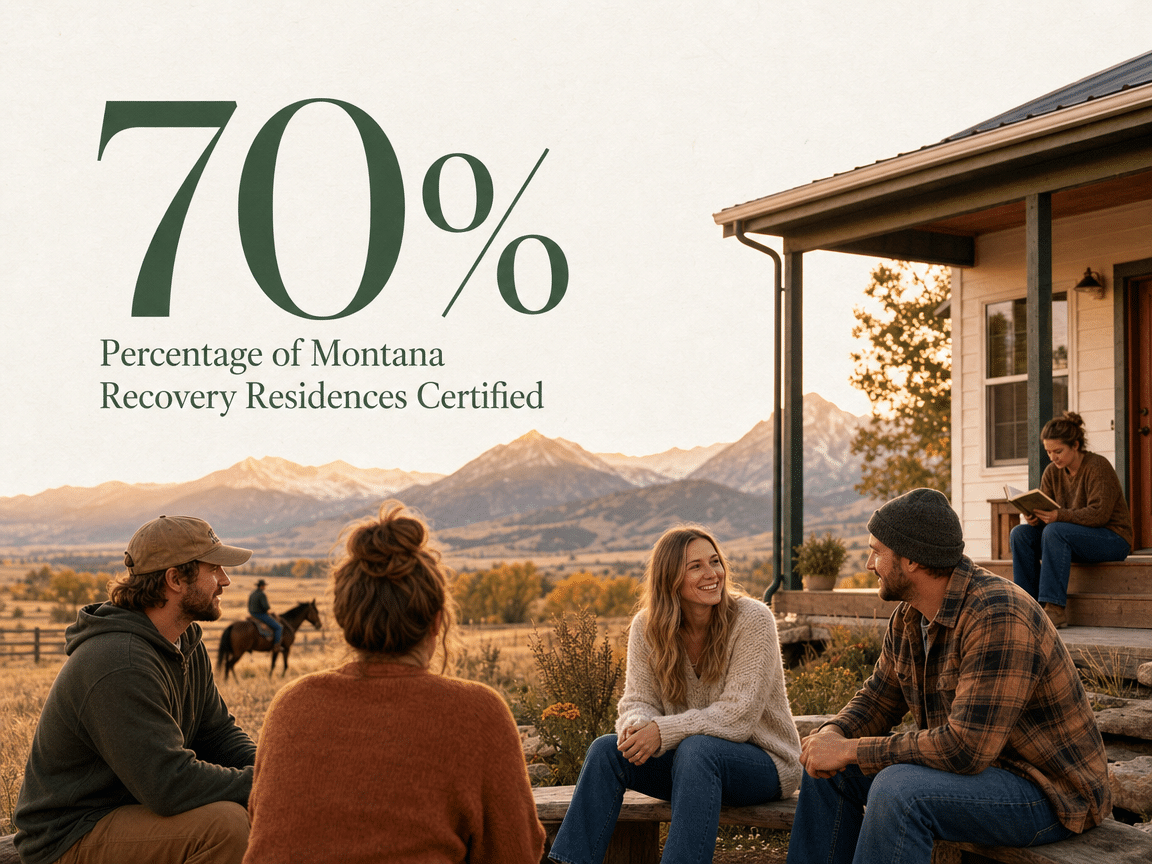
For some, transitioning directly from a 30, 60, or 90-day residential program back to their previous living situation can be overwhelming for early sobriety. A recovery residence, formerly known as a sober living home, provides an intermediate step. These homes typically enforce house rules, curfews, drug testing, chores, and group meals, creating an environment where all residents are committed to sobriety.
The Montana Recovery Residence Registry, maintained by DPHHS, lists residences by location and certification status 8. When considering a residence, it’s beneficial to inquire about connections to local sober recreational activities, such as hiking groups, volunteer days, or shared gym memberships among residents. Many residences offer such opportunities, recognizing that a supportive living environment combined with a rhythm of sober life is essential for sustained recovery.
Family and the next generation: keeping kids in the game
Recovery is not an isolated journey; it profoundly impacts family members, especially children, nieces, nephews, or younger siblings who observe the process. Your sobriety inevitably shapes their future, for better or worse. Fortunately, the same Montana recreational opportunities that support your recovery can also provide significant protective factors for them.
A 2023 study on adolescents found a correlation between higher levels of physical and recreational activity and lower rates of antisocial behavior and substance use, while excessive screen time showed the opposite trend 11. Although the study was observational and could not definitively prove causation, the pattern consistently appears in research: children who have structured activities, a sense of belonging, and adults who notice their presence are more likely to have stronger protective factors.
Montana DPHHS advocates for youth prevention as a collaborative effort involving home, school, and community, emphasizing consistent messaging and access to healthy, substance-free activities 6. In Missoula County, a local substance abuse prevention mill levy funds supervised non-school-hour activities specifically designed to offer alternatives to drug use, allocating substantial funds to various projects annually 10. Other counties have similar initiatives; inquiries at local courthouses or school district offices can reveal available programs.
For parents in early sobriety, a practical approach involves small, consistent actions. Taking children fishing on a Saturday, enrolling them in a 4-H project or a town recreational league, or bringing them along for a state park volunteer day allows them to witness positive, sober engagement. They don’t require a detailed explanation of your recovery; rather, they benefit from seeing consistent, sober Saturdays become the new family norm, week after week.
Where recreation fits in the bigger recovery picture
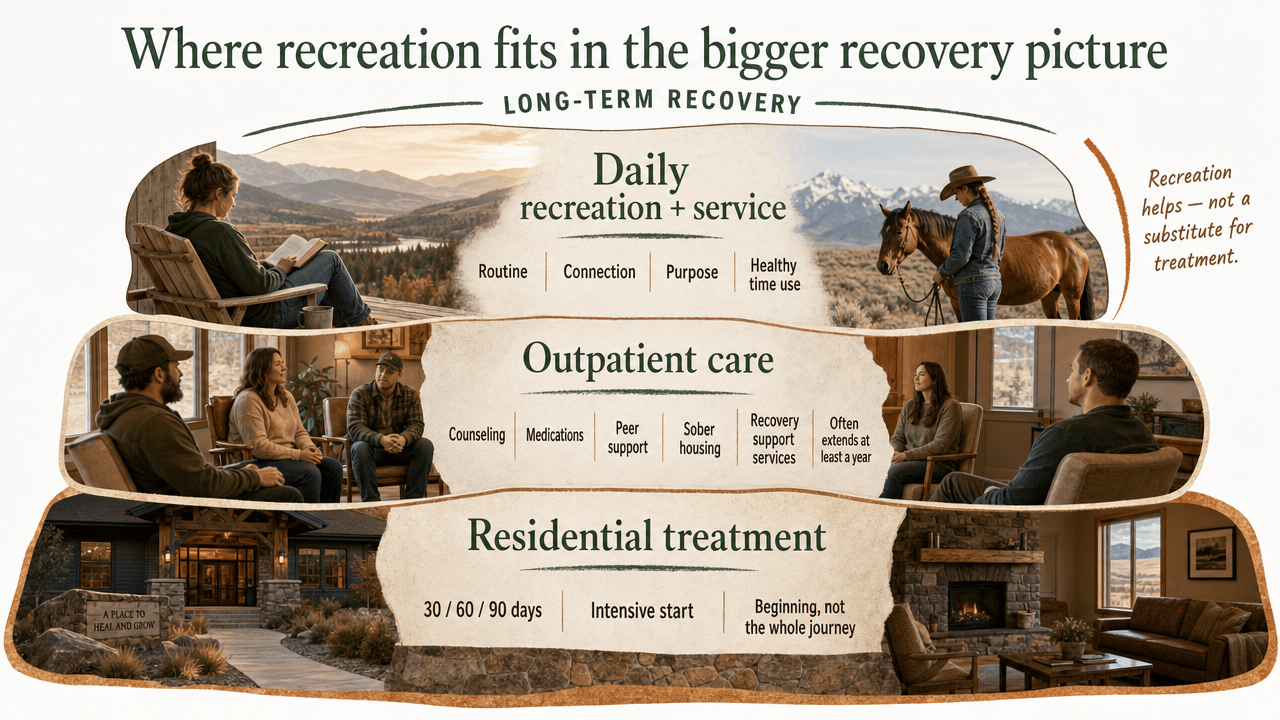
It’s important to view recreation within the broader context of recovery. While beneficial, recreation is not a substitute for formal treatment, nor is treatment alone typically sufficient for sustained sobriety through the first year. The U.S. Surgeon General’s framework for substance use disorder outlines a typical path for severe cases, involving one to three months of intensive residential rehabilitation, followed by outpatient care, counseling, appropriate medications, and recovery support services that often extend for at least a year 15. This illustrates the long-term nature of recovery, where a 30, 60, or 90-day residential stay is merely the beginning.
Montana’s policy direction aligns with this comprehensive view. The state’s HEART demonstration, approved through Medicaid, is built on the premise that residential treatment must be integrated with a full continuum of care. This includes outpatient services, peer support, housing assistance, and daily-life supports designed to prevent individuals from struggling in isolation 16. DPHHS oversees the formal substance use disorder treatment system and connects individuals to crisis and community resources 7. Recreation occupies the spaces between these formal touchpoints—the Tuesday walk, the Saturday volunteer shift, the regular fishing trip with a sponsor. These routines prevent the recovery plan from becoming solely a series of appointments.
Consider recovery as a three-layered structure. The foundational layer involves residential treatment, encompassing detox, counseling, equine sessions, family therapy, and ongoing care planning. The middle layer consists of outpatient counseling, peer specialists, and, if needed, a recovery residence. The top layer, which is lived daily, comprises recreation, service, and the small habits that make sober life feel personally fulfilling rather than a deprivation. If any of these layers are compromised, the entire structure can become unstable. When all layers are robustly stacked, they create a resilient framework capable of withstanding significant challenges.
When recreation isn’t enough: knowing the safety net
There will be days when a walk on the trail doesn’t alleviate distress, cravings persist, and quiet moments feel heavy rather than healing. This isn’t a failure of the recovery plan; it’s a signal that direct human support is needed, not just another mile of gravel.
Montana provides two critical phone numbers to keep readily accessible. The 988 Suicide & Crisis Lifeline is for moments of acute crisis or danger. The Montana Warm Line serves as a resource for less urgent but still challenging days—when experiencing anxiety, loneliness, grief, or urges to use, and needing to talk to someone who understands without judgment 17.
It’s advisable to utilize these resources proactively. A call to the Warm Line on a calm Sunday can serve as practice for a more difficult Tuesday. Combine this with regular contact with a peer specialist, follow-ups with a counselor, and a trusted individual who will answer your call. While recreation offers substantial support, it is not expected to carry the entire burden of recovery.
A small, repeatable plan for your first sober Montana season
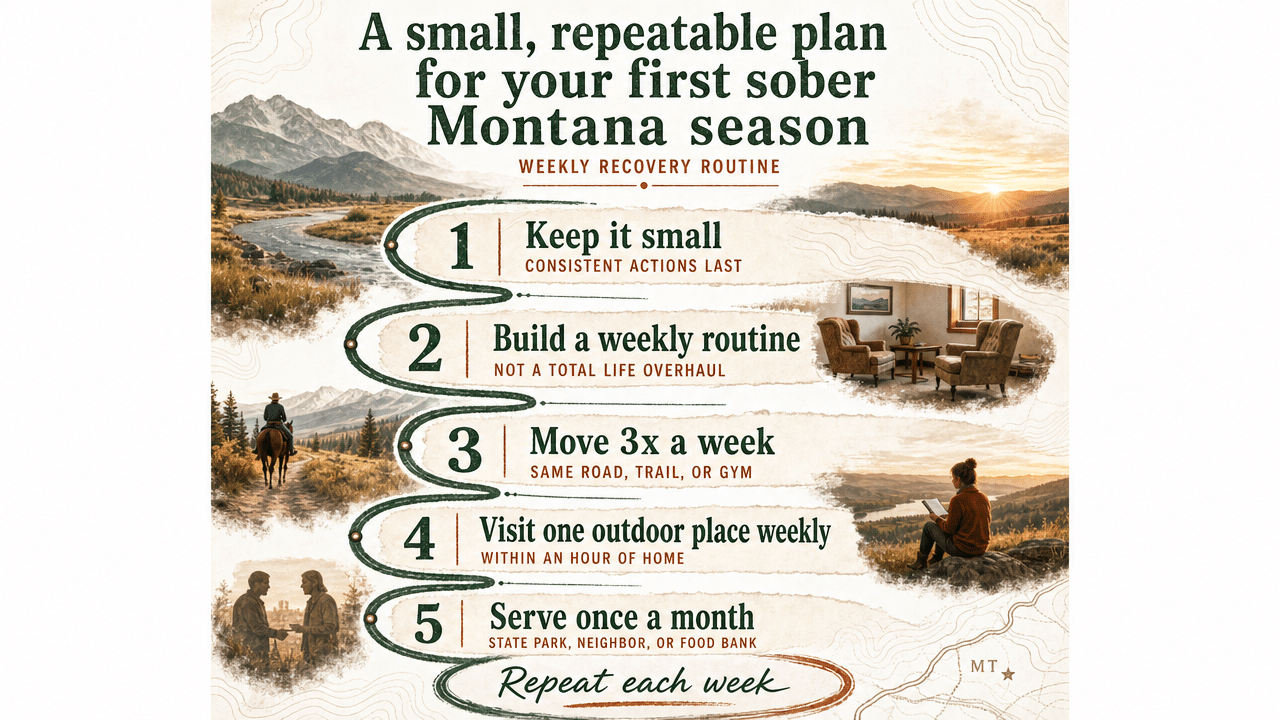
In early recovery, ambitious plans often falter, while small, consistent actions endure. The objective for your first sober season—whether it’s the summer after a residential stay or the long winter—is not to completely transform your life, but to establish a sustainable weekly routine.
Here’s a framework that has proven effective for many returning home:
- Establish one consistent movement habit, three times a week. This could be the same county road, trail, or gym. Prioritize the time commitment over the specific workout.
- Identify one outdoor location within an hour of home and visit it weekly. Become familiar with its features, like a particular bend in the river or a recurring bird.
- Commit to one service shift per month. This could involve a morning at a state park, helping a neighbor, or volunteering at a food bank. Schedule it in advance.
- Make one proactive call to a peer or sponsor when you don’t feel an urgent need. This practice makes it easier to reach out during challenging times.
- Keep one trusted person in your phone who will answer your call. Be open with them about your journey.
These five small, repeatable actions form the backbone of daily sobriety. The comprehensive work undertaken at Rocky Mountain Treatment Center—including counseling, equine sessions, family week, and continuing care calls at 30, 60, 90, 180, and 365 days—provides the essential foundation. These consistent habits are what you build upon, day after day, in a small Montana town, even when no one else is watching.
Frequently Asked Questions
What kinds of recreational programs in Montana actually support sobriety?
The most effective recreational programs in Montana for supporting sobriety are those that can be consistently repeated. Montana’s 55 state parks offer diverse activities like camping, hiking, fishing, boating, and winter sports, which can form the basis of a weekly routine 18. Volunteering with Montana Fish, Wildlife & Parks provides purpose and a sense of accountability 4. Equine-assisted services, peer-led groups, and activities within recovery residences further enhance these options. The key is to choose one outdoor location, one service commitment, and one person to share these experiences with, building a structured program around them.
Can I do outdoor recreation in Montana year-round, or is it mostly a summer thing?
Outdoor recreation in Montana is a year-round possibility. While summer offers hiking, fishing, swimming, and boating in the state park system, winter transitions to activities like cross-country skiing and snowmobiling, with thousands of miles of groomed trails maintained across the state 3. The specific activities may change with the seasons, but the habit of engaging with nature can remain constant. A January walk on snowshoes provides similar benefits for mood and craving management as a July hike.
How does equine therapy fit with recreation and the rest of my recovery?
Equine therapy serves as a valuable complement to traditional counseling, rather than a replacement. A scoping review of equine-assisted services for substance use disorders indicated improved treatment retention and mental health outcomes when integrated with standard care, despite the small scale of the studies 14. In Montana, equine work bridges the clinical setting with outdoor life. The sense of calm and self-awareness developed through interaction with horses can be transferred to other outdoor activities, such as hiking or fishing, and helps manage challenging moments in daily life.
I live in a small town with few meetings. How do I find peers and sober housing nearby?
Two state resources are excellent starting points. The Montana Recovery Residence Registry, maintained by DPHHS, lists certified sober living homes by location 8. For peer support, Montana State University’s training page explains how peer specialists, who have personal recovery experience, can connect you to local groups and activities 2. It’s advisable to ask your residential counselor or discharge planner about the peer specialist assigned to your county. Making a phone call is a significant first step toward finding local support.
What should I do if recreation and peer support aren’t enough on a hard day?
It’s crucial to use the available safety net proactively. If you feel in immediate danger, call 988, the suicide and crisis line. For less urgent but still difficult days—when you’re anxious, lonely, grieving, or struggling with urges to use—the Montana Warm Line provides a confidential space to talk with someone who understands 17. Save both numbers in your phone under easily recognizable names. While recreation offers significant benefits, it’s important to remember that human connection and professional support are vital components of a comprehensive recovery plan.
How do I get my family, including kids, involved in sober Montana recreation?
Start with small, consistent actions to normalize sober recreation for your family. Take your children fishing on a Saturday morning, enroll them in a town recreational league or a 4-H project, or bring them along for a Montana Fish, Wildlife & Parks volunteer day where they can see you contributing positively 4. Research indicates that higher levels of recreational activity in adolescents are linked to lower rates of substance use and antisocial behavior 11. Children benefit most from observing consistent, sober routines rather than receiving lengthy explanations about recovery.
References
- A Systematic Review and Meta-analysis of Nature-based Interventions for Improving Health Outcomes. https://pmc.ncbi.nlm.nih.gov/articles/PMC8498096/
- Peer Support Specialist Training. https://healthinfo.montana.edu/bhwet/pss.html
- Park Activities | Montana State Parks. https://fwp.mt.gov/stateparks/park-activities
- Volunteer With Montana FWP – Parks and Outdoor Recreation. https://fwp.mt.gov/aboutfwp/volunteer/land-positions
- Outdoor Recreation – Montana State University. https://www.montana.edu/wellness/campus-recreation/outdoor-recreation/
- Substance Abuse Prevention – Montana DPHHS. https://dphhs.mt.gov/schoolhealth/wellnessandprevention/SubstanceAbusePrevention
- Substance Use Disorder Services and Resources – Montana DPHHS. https://dphhs.mt.gov/BHDD/SubstanceAbuse/
- Montana Recovery Residence Registry. https://dphhs.mt.gov/BHDD/MontanaRecoveryResidenceRegistry
- Montana’s Recovery Residences – Enactment of Senate Bill 94 (2023). https://archive.legmt.gov/content/Committees/Interim/2025-2026/CJOC/Sept-2025/CJOC-SB94-Summary-2023.pdf
- Substance Abuse Prevention Mill Levy | Missoula County, MT. https://www.missoulacounty.gov/departments/grants-community-resources/county-funded-grants/substance-abuse-prevention/
- Physical and Recreational Activities, Sedentary Screen Time and Substance Use Among Adolescents. https://pmc.ncbi.nlm.nih.gov/articles/PMC9858952/
- Exercise-based treatments for substance use disorders. https://pmc.ncbi.nlm.nih.gov/articles/PMC4831948/
- A review of natural interventions in substance abuse treatment and recovery. https://pmc.ncbi.nlm.nih.gov/articles/PMC11570648/
- Equine-assisted services for individuals with substance use disorders. https://pmc.ncbi.nlm.nih.gov/articles/PMC9749232/
- Facing Addiction in America: The Surgeon General’s Report on Alcohol, Drugs, and Health – Chapter on Early Intervention, Treatment, and Management. https://www.ncbi.nlm.nih.gov/books/NBK424859/
- State of Montana – Healing and Ending Addiction through Recovery and Treatment (HEART) Demonstration. https://www.medicaid.gov/medicaid/section-1115-demonstrations/downloads/mt-heart-demo-pa.pdf
- Crisis Systems Information and Resources – Montana DPHHS. https://dphhs.mt.gov/BHDD/crisissystemsinformationandresources/
- About State Parks – Montana Fish, Wildlife & Parks. https://fwp.mt.gov/aboutfwp/about-state-parks