
Key Takeaways
- Effective opioid use disorder care stacks three things: medically supervised withdrawal, an honest medication decision, and counseling that addresses what drove the use.4
- Buprenorphine, methadone, and extended-release naltrexone each work differently, and federal guidance treats medication as first-line care, not a moral compromise.1
- Co-occurring depression, anxiety, trauma, or chronic pain shapes outcomes — roughly one in four people in opioid treatment carries a serious mental illness.6
- Plan the after before discharge: ongoing outpatient care beats repeat detox cycles, and naloxone belongs in multiple locations once you go home.5,11
What real treatment looks like when you’re done trying to quit alone
You already know how this goes. You try to stop. You make it a day, maybe three. Then your skin starts crawling, your gut turns inside out, and the only thing that quiets it is the thing you swore off. That isn’t weakness. That’s what opioid dependence does to a body that needs help to come down safely. Opioid use disorder treatment can provide the medical support and structure needed to manage withdrawal and begin recovery.
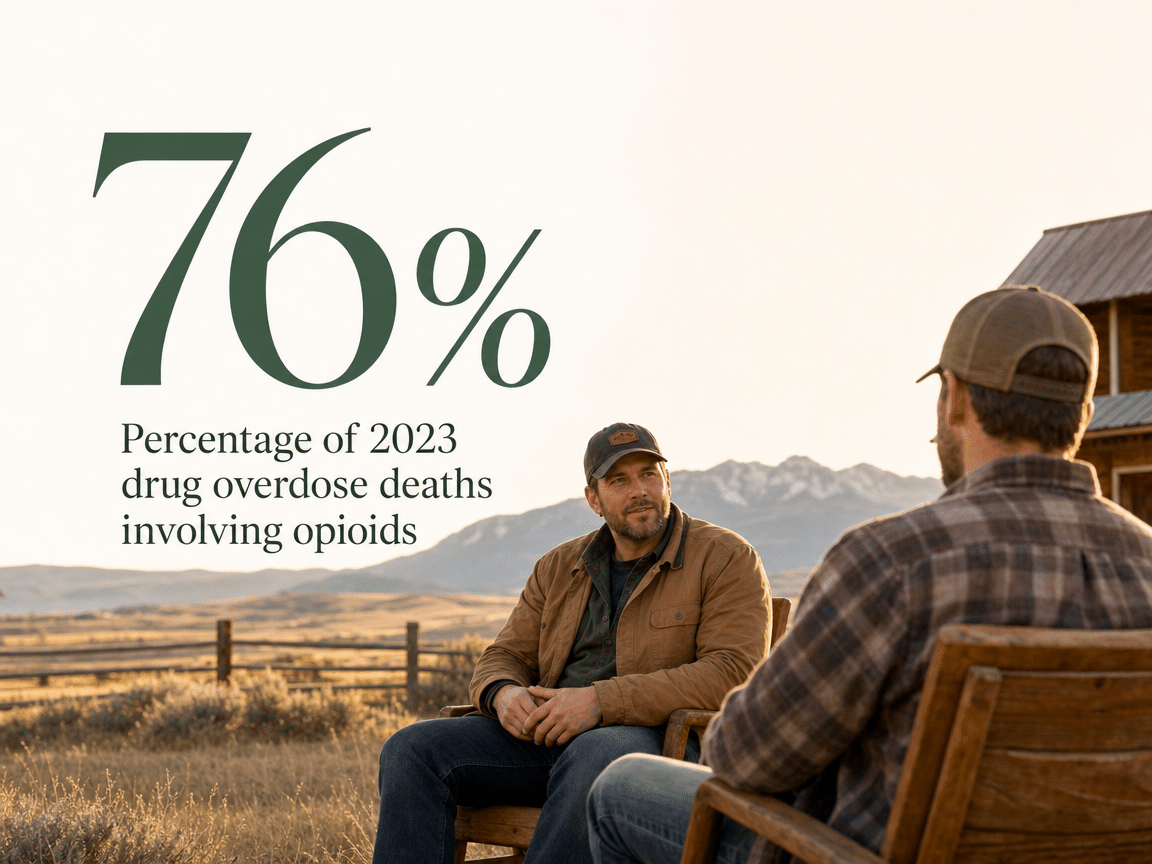
The stakes are real. Of the roughly 105,000 U.S. drug overdose deaths in 2023, about 76% involved opioids. You don’t need that number to scare you into action — you’re already here, reading. You need to know what comes next.3
Real treatment for opioid use disorder isn’t a single thing. It’s three things stacked together: stabilizing your body through medically supervised withdrawal, having an honest conversation about whether a medication like buprenorphine or naltrexone fits your life, and then doing the slower work of figuring out why the using started — trauma, pain, depression, grief, all the things detox alone can’t reach. The American Society of Addiction Medicine’s current guideline calls for that combined, individualized, long-term approach as the standard of care.4
This article walks you through what each of those pieces actually feels like, in plain words. You don’t have to do this alone, and you don’t have to do it perfectly.
The first 72 hours: what medically supervised withdrawal actually feels like
Hours 6 to 24: when your body starts asking for the drug back
It usually starts quiet. A little restless feeling in your legs. A yawn that doesn’t stop. Your nose runs and you’re not sick. That’s your nervous system noticing the drug is gone and turning the volume up.
By hour twelve, the muscle aches show up — that deep, bone-level soreness like you have the flu but worse. Your pupils get big. You’re cold, then sweating, then cold again. Anxiety climbs. Your stomach starts to cramp. With fentanyl, this can come on faster and harder than people expect.
In a medically supervised setting, this is when a nurse is checking on you every couple of hours, scoring your symptoms on a simple scale and giving you something to take the edge off — medication for the nausea, the cramps, the anxiety, the racing heart. You are not toughing this out alone in a back bedroom. You’re being watched over by people who have done this hundreds of times and know the difference between brutal and dangerous.
Day two and three: the worst of it, and what the staff are doing while you sweat
Day two is usually when people want to leave. Your skin feels like it’s on inside out. You can’t get comfortable in any position. Diarrhea, vomiting, gooseflesh, a kind of bottomless agitation that makes the clock crawl. Your mind keeps offering one clean solution, the only solution it has ever known, and it will not shut up about it.
This is the part where having a team matters. Behind the scenes, staff are tracking your vitals, keeping you hydrated, adjusting comfort medications, and — if it fits your situation — starting a conversation about induction onto buprenorphine, which can shorten and soften the worst of this. SAMHSA’s federal guidance treats medications for opioid use disorder as a first-line option, not a last resort, precisely because day two is survivable but a lot of people don’t survive it alone.1
You may cry. You may yell at someone who is trying to help you. None of that disqualifies you. The staff have seen it. They are not keeping score. Their job is to get you to hour 72 with your dignity and your life intact, and then keep going.
The first night of real sleep and the first meal that stays down
Somewhere around day three or four, something shifts. The sweating stops. Your stomach unclenches enough that toast and eggs sound possible. You eat. It stays down. That’s a win, and it deserves to be named as one.
Then comes the sleep. Not the twitchy half-conscious dozing of withdrawal, but actual sleep — three hours, then five, then a whole night. You wake up and remember a dream. You haven’t done that in a long time.
You are not cured. The hard work hasn’t started yet. But your body just proved to you that it knows how to come back. Hold onto that. The next part of treatment is built on this floor.
The medication conversation you deserve to have honestly
Buprenorphine, methadone, or extended-release naltrexone: what each one actually does
Three medications are approved in the U.S. for treating opioid use disorder, and each one works differently. You deserve to know what they actually do before anyone asks you to choose.1
- Buprenorphine
- A partial opioid agonist. In plain language: it sits on the same receptors fentanyl and heroin use, but only turns them on partway. That’s enough to quiet cravings and stop withdrawal without producing the high. It’s usually a dissolving tablet or film under your tongue, or a monthly injection. Many people can start it within a few days of their last use, once withdrawal has begun. It can be prescribed and managed in regular outpatient settings, which makes continuing it after residential care easier in a rural state.
- Methadone
- A full opioid agonist taken as a daily liquid dose at a federally licensed clinic. It has the longest track record of any medication for opioid use disorder. For people with severe, long-standing use — especially with high-dose fentanyl exposure — it is sometimes the only thing strong enough to hold steady. The tradeoff is the daily clinic visit, which can be hard if you live far from one.
- Extended-release naltrexone
- Different. It is not an opioid at all. It’s a monthly injection that blocks opioid receptors entirely, so if you used, you wouldn’t feel it. The catch: you have to be fully through withdrawal, usually 7 to 10 days opioid-free, before your first shot. That’s a real hurdle.2
“Am I just trading one drug for another?” The myth that keeps people sick
You’ve heard it. Maybe from a family member. Maybe from someone in a meeting. Maybe from your own head at three in the morning. If I take buprenorphine, I’m not really sober. I’m just on a different drug.
Here is the honest answer. Buprenorphine and methadone, when taken as prescribed for opioid use disorder, do not get you high. They do not cause the chaos, the lying, the stealing, the overdoses. They steady the part of your brain that opioid use rewired, so the rest of you can do the actual work of recovery — therapy, family repair, building a life worth staying for.
If someone tells you medication-assisted recovery isn’t real recovery, they are repeating something that has cost people their lives. You don’t have to argue with them. You just don’t have to listen.
Choosing no medication: when it can work and when it usually doesn’t
Some people get through opioid use disorder without ongoing medication. It happens. Usually it happens for people whose use was shorter, whose tolerance never climbed into fentanyl territory, who have strong housing and family support, and who stay deeply connected to counseling and a recovery community for the long haul.
If that is honestly your situation, an abstinence-based path with intensive therapy can hold. Be honest with yourself about whether it is.
For most people with heavy, long-term use — especially anyone whose tolerance was built on fentanyl — going medication-free out of detox carries a sharply higher risk of return to use, and the first use after a stretch of abstinence is when overdose risk is highest. Your tolerance is gone. The dose your body used to handle can stop your breathing.
This isn’t a verdict. It’s information. Talk it through with the medical team in detox while your head is clearing. The right answer for you may not be the right answer for the person in the next room, and that’s how it should be.4
Why the reason you used matters more than the drug itself
Trauma, grief, chronic pain: the things detox alone can’t touch
Detox gets the drug out. It does not get out what made the drug feel like the only answer in the first place.
Maybe it started with a back surgery and a bottle of pills that lasted six months too long. Maybe it started after your mother died and the grief was so loud you needed something to turn it down. Maybe it started in a body that has been holding onto something that happened when you were eleven, something you have not said out loud to anyone. Maybe it started with chronic pain that is still there, real and physical, on the morning of day five in detox.
None of those reasons make you broken. They make you a person whose nervous system found a tool that worked, until it didn’t.
This is the work that fills the weeks after withdrawal — sitting with a counselor and slowly naming what the using was doing for you. Numbing what. Quieting what. Postponing what. It is slow, often uncomfortable, and not optional if you want the next year to look different from the last one. The current standard of care pairs medication with psychosocial work for exactly this reason: the medication steadies the body, and the counseling addresses what the body was trying to escape.4
You don’t have to have the answers on day one. You just have to be willing to look.
When depression or anxiety is sitting underneath the use
For a lot of people, the opioid was never really about the opioid. It was about the depression that started in high school and never lifted. It was about the anxiety that made grocery stores feel impossible. It was about a brain that runs hot all the time, or one that runs flat and gray for months at a stretch.
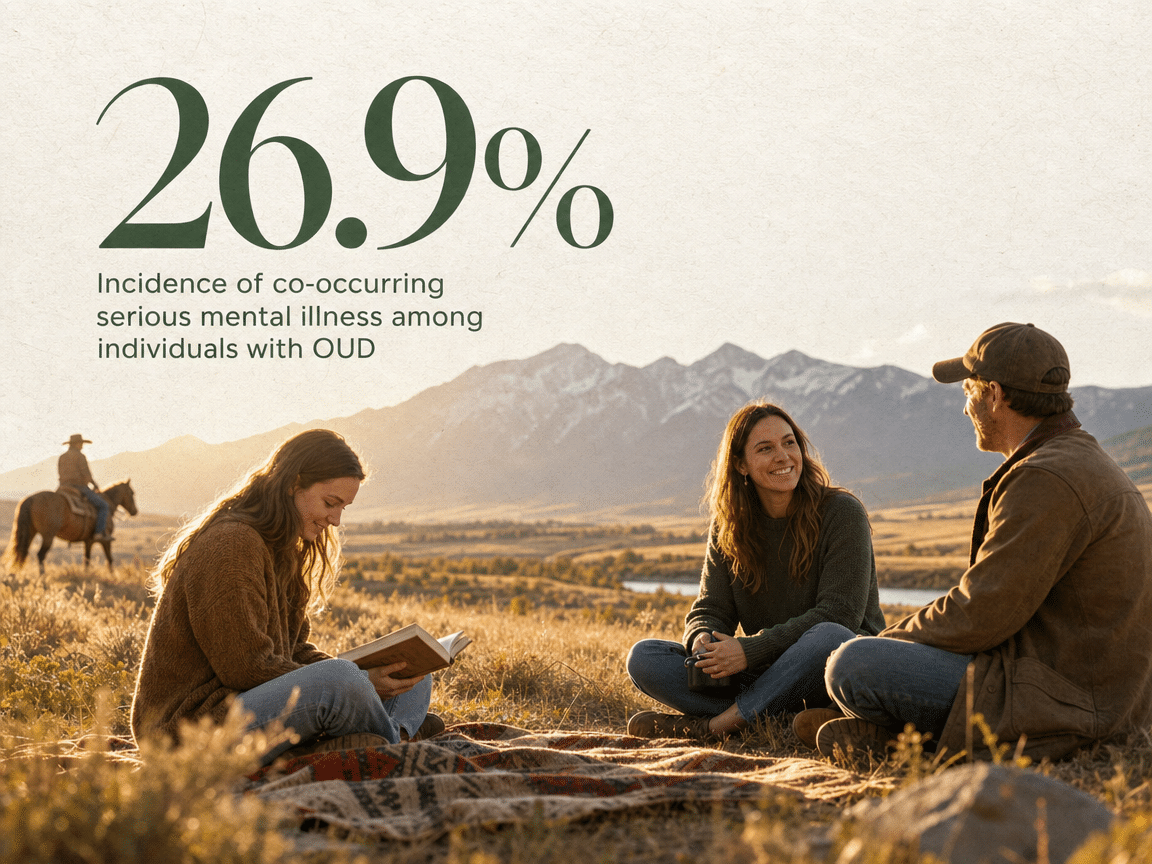
This is common enough that it is closer to the rule than the exception. Research on people enrolled in opioid treatment programs has reported the rate of co-occurring serious mental illness at 26.9% or higher. That is roughly one in four people sitting in group with you, carrying a second diagnosis underneath the first. You are not unusual. You are not making it up. And treating only the opioid use while leaving the depression or anxiety untouched is one of the most reliable ways to end up using again.6
Integrated care means a psychiatric provider is part of your team, not a referral you chase after discharge. It means a depression that has been dragging on for years gets evaluated and, if it fits, treated with a non-addictive medication alongside therapy. It means panic attacks get a plan that isn’t a pill from someone in a parking lot.
If you have been told for years that you just need to try harder, hear this clearly: a mood or anxiety disorder is a medical condition, not a character flaw, and treating it is part of treating the opioid use — not separate from it.
Counseling, groups, and the slow work of rebuilding trust
Once your body is steady and the medication question has an honest answer, the real work starts. Most of it happens in two chairs and a circle of folding ones.
Individual counseling is where you tell the truth out loud, often for the first time. Not the version you tell your family. Not the version you tell yourself at 2 a.m. The real one. A good counselor doesn’t flinch when you tell them what you did to get the drug, who you lied to, what you lost. They’ve heard worse and they’re still in the chair. That alone starts to undo something.
Group is different. Group is where you sit with seven or eight other people who are inside the same storm. Someone says the thing you were too ashamed to say, and the room nods. You stop being the only one. Programs where over 80% of staff are themselves in recovery shift the temperature of the room even further — you are not being studied, you are being recognized.
Counseling and group are what the medication makes possible. Steadying the body is step one; the standard of care is steady body plus this slower psychosocial work, week after week. Trust comes back the way it left — one honest conversation at a time.4
Family week: what gets repaired when people sit in the same room again
Your family has been carrying this too. Maybe they tiptoed around you for years. Maybe they yelled. Maybe they stopped picking up the phone because the last six calls ended badly. By the time you walk into treatment, the people who love you are exhausted, scared, and angry in ways they may not even know how to name.
A structured family week — usually three days of sessions with a counselor in the room — is where some of that starts to come apart in a useful way. Your spouse learns what opioid dependence actually does to the brain, so they stop reading every relapse as a personal betrayal. Your kid gets to ask the question they’ve been holding for two years. Your mom hears, maybe for the first time, what was underneath all of it.
This is not a hallmark moment. There are hard conversations. People cry. Someone usually says something that stings. A counselor keeps the room safe enough that the truth can come out without anyone storming off.
Family involvement is not a sentimental add-on to treatment. A narrative review of family work across substance use disorder care found that structured involvement shifts treatment engagement, outcomes, and longer-term recovery. People who go home to a family that understands what they’re walking back into do better than people who go home to a family still operating on guesswork.7
You don’t have to fix everything in three days. You just have to sit in the same room again, with someone holding the space, and start.
Horses, fences, and why experiential therapy isn’t a gimmick
The first time someone tells you that part of treatment involves spending an afternoon with a horse, you might roll your eyes. That’s a fair reaction. Fancy add-ons are how a lot of treatment centers pad a brochure.
Here is what the research actually shows. A 2022 systematic review of equine-assisted services in substance use disorder treatment found a potential positive effect on treatment retention and completion, as well as on participants’ mental health. People stayed. People finished. That matters when so much of recovery comes down to whether you walk back through the door for the next session.8
Why does it work? A horse doesn’t care what you used or what you’ve done. It reads your body — your breathing, your shoulders, whether your hands are tight on the lead rope. A qualitative study of clients in this kind of work described the patient-horse relationship as central to the experience, helping people practice trust, calm, and presence in a way that talking in a group sometimes can’t reach.9
For a Montana morning, that might mean standing in a paddock with a counselor nearby, learning how to ask a 1,200-pound animal to move without using force. You notice when you’re tense. You notice when the horse mirrors that tension back. You try again. Something old in your nervous system, the part that has been bracing for years, starts to soften.
It is not a replacement for medication, counseling, or family work. It is one more honest doorway in.
Leaving the 26-bed unit: discharge planning, naloxone, and the road home
Why repeat detox cycles cost more and help less than continuing care
Here is a pattern worth knowing about, because it has eaten years out of a lot of people’s lives. Someone goes through detox, leaves, feels okay for a few weeks, returns to use, overdoses or comes close, lands back in detox. Repeat. Each cycle takes something out of the body and the family that is hard to put back.
The research on this is plain. Strategies built around ongoing outpatient medication and supportive care tend to cost less over time than repeated acute detox episodes, and they hold people better. Detox by itself is a beginning, not a treatment. What changes the trajectory is what comes after — weekly counseling, medication management if that’s your path, alumni groups, follow-up calls at 30 and 90 and 180 days, a phone number you can use when the night gets long.5
Plan the after before you leave. That is the single most useful thing you can do in your last week of residential care.
Naloxone in the glovebox: Montana’s HB 333 and what your family should carry
That’s not a reason to panic. It’s a reason to put naloxone in three places before you walk out the door — your bag, your kitchen drawer, and the glovebox of whoever drives you most. In Montana, the 2017 Help Save Lives from Overdose Act (House Bill 333) expanded access so that pharmacies can dispense naloxone under a standing order and community organizations can distribute it, no individual prescription required.11
Teach the people who love you how to use it. A nasal spray, a 911 call, rescue breaths if needed. Montana State University Extension keeps a current list of local treatment, prevention, and recovery resources worth saving in your phone before discharge.10
Carrying naloxone is not planning to fail. It’s the same logic as a seatbelt. You wear it because you want to be here tomorrow.
Recovery is a path you walk with people
If you remember nothing else from this article, remember this: nobody recovers from opioid use disorder alone, and you were never supposed to.
The body gets steady in detox. The medication question gets an honest answer. The reason it started gets named in a counselor’s office. Your family stops guessing. A horse, a group, a 90-day follow-up call, a friend who has been where you are — these are not extras stacked on top of treatment. They are the treatment, woven together the way the standard of care says they should be.4
You are exhausted. You are scared. You are also still here. That counts. When you are ready to take the next step, places like Rocky Mountain Treatment Center exist to walk it with you.
Frequently Asked Questions
How long does opioid withdrawal last in a medically supervised setting?
For most short-acting opioids like heroin or fentanyl, the worst physical symptoms peak around day two or three and start easing by day four or five. Methadone withdrawal lasts longer. In a supervised setting, comfort medications and round-the-clock care make those days survivable, and many people sleep and eat normally again within a week.1
Do I have to take buprenorphine or methadone to recover from opioid use disorder?
No, but you should have the conversation honestly. Medication is the current standard of care because it lowers relapse and overdose risk, especially after heavy fentanyl use. Some people recover without it. Many more do better with it. The right answer depends on your history, your tolerance, your support, and what you and the medical team decide together.1,4
Isn’t medication for opioid use disorder just trading one drug for another?
No. Buprenorphine and methadone, taken as prescribed, steady the brain receptors that opioid use disrupted. They do not produce a high or the chaos that came with using. Federal guidance calls this misconception one of the biggest barriers keeping people away from care that saves lives. Recovery on medication is recovery.1
What happens if depression, anxiety, or trauma is part of why I used?
That’s common — at least 26.9% of people in opioid treatment programs carry a co-occurring serious mental illness. Integrated treatment means a psychiatric provider is part of your team, not someone you chase later. Depression, anxiety, PTSD, and unprocessed grief get evaluated and treated alongside the opioid use, because leaving them untouched is one of the most reliable paths back to using.6
Why does family involvement matter if I’m the one in treatment?
Because you’re going home to them. A narrative review of family work in substance use disorder care found that structured involvement improves treatment engagement, outcomes, and longer-term recovery. Family sessions give the people around you accurate information about what dependence is, what triggers look like, and how to support you without policing you. That changes the room you walk back into.7
What should I have at home after leaving residential treatment in Montana?
Three things, at minimum. Naloxone in multiple locations — Montana’s Help Save Lives from Overdose Act expanded pharmacy and community access without an individual prescription. A scheduled follow-up plan with a counselor or medication provider. And a saved list of local recovery and crisis resources, like those Montana State University Extension maintains, so you’re not searching when the hard night comes.10,11
References
- TIP 63: Medications for Opioid Use Disorder – Full Document. https://www.samhsa.gov/resource/ebp/tip-63-medications-opioid-use-disorder
- TIP 63 Part 1: Introduction to Medications for Opioid Use Disorder Treatment. https://pahs.unt.edu/images/-departments/rhs/rtp/11-pharmacotherapy-and-recovery/handout1.pdf
- Understanding the Opioid Overdose Epidemic. https://www.cdc.gov/overdose-prevention/about/understanding-the-opioid-overdose-epidemic.html
- The ASAM National Practice Guideline for the Treatment of Opioid Use Disorder: 2020 Focused Update. https://pubmed.ncbi.nlm.nih.gov/32511106/
- Relative Cost Differences of Initial Treatment Strategies for Newly Diagnosed Opioid Use Disorder. https://pmc.ncbi.nlm.nih.gov/articles/PMC7641182/
- Prevalence of Mental Health Disorders among Individuals Enrolled in Opioid Treatment Programs. https://pmc.ncbi.nlm.nih.gov/articles/PMC7756048/
- Family Involvement in Treatment and Recovery for Substance Use Disorders. https://pmc.ncbi.nlm.nih.gov/articles/PMC8380649/
- Equine-assisted services for individuals with substance use disorders. https://pmc.ncbi.nlm.nih.gov/articles/PMC9749232/
- More Than Just a Break from Treatment: How Substance Use Treatment Clients Benefit from Equine-assisted Psychotherapy. https://pmc.ncbi.nlm.nih.gov/articles/PMC5054942/
- Prevention, Treatment, and Recovery Resources (Montana State University Extension). https://www.montana.edu/extension/health/opioid___/preventiontreatmentandrecoveryresources/PreventionTreatmentandRecoveryResources.html
- Montana Implementation Guide for Access to Naloxone Opioid Antagonists. https://dphhs.mt.gov/assets/publichealth/EMSTS/opioids/MontanaImplementationGuideforIncreasedNaloxoneUpdatedMay2019.pdf