Key Takeaways
- Montana families face real structural barriers, with 38 counties flagged as at-risk and parents often waiting three to six months for substance use and mental health services.4,13
- Location matters when choosing help: rural distance, insurance type, and whether a program accepts Medicaid all shape which door opens fastest for your family.
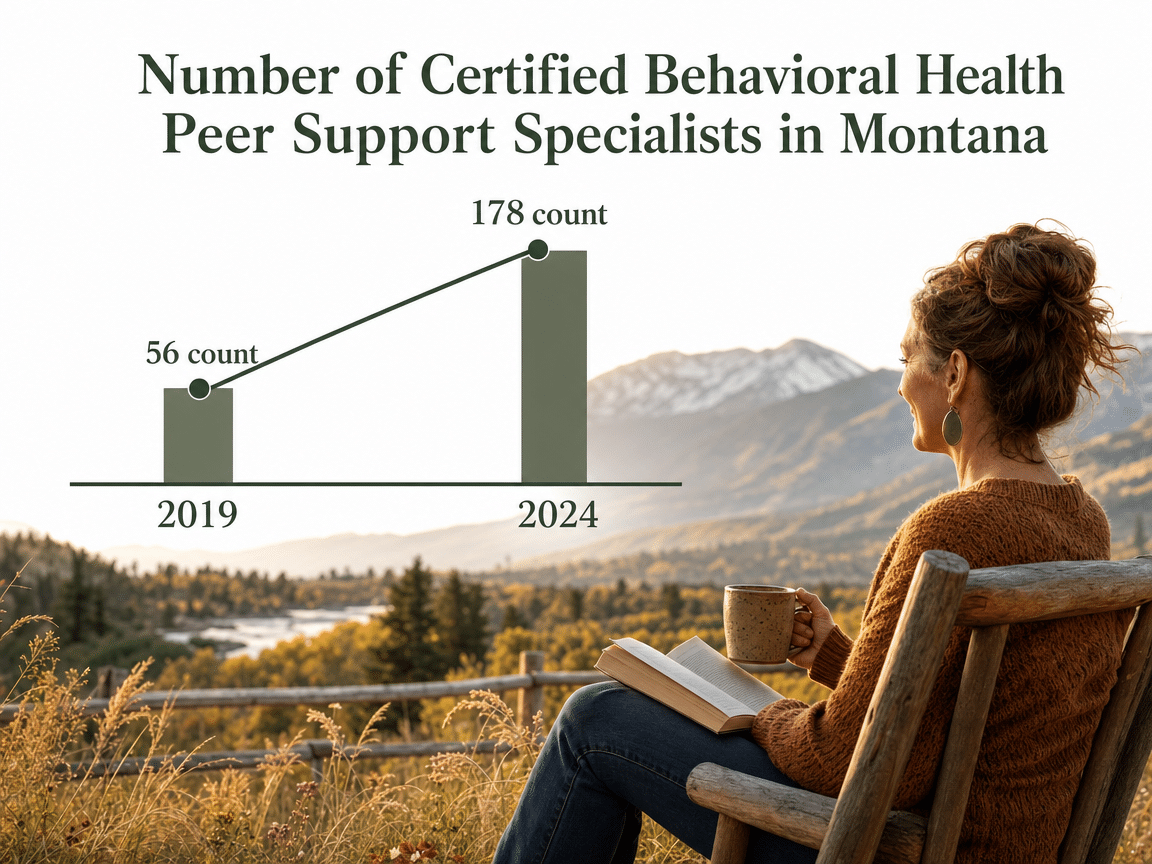
- Montana’s peer support workforce more than tripled from 56 specialists in 2019 to 178 in 2024, making lived-experience support more reachable across the state.1
- Start with one phone call tonight, whether that’s 988, Montana Crisis Recovery at 1-877-503-0833, SAMHSA at 1-800-662-HELP, or Rocky Mountain admissions in Great Falls.12,18
You’re not the first Montanan to make this call
If you’re reading this from a kitchen table in Great Falls, a truck cab outside Billings, or a quiet spot down the hall from someone you love, take a breath. You made it to the search bar. That counts.
Alcohol and drugs have a way of shrinking a family’s world down to the next twenty-four hours. You already know the weight of that. What you might not know yet is how many other Montana families are carrying something similar right now, and how many concrete places there are to set part of it down.
This guide is a plain map of family support for addiction Montana: who to call first, which state programs exist, how peer meetings and rural resources fit in, what insurance actually covers, and how Rocky Mountain Treatment Center’s Family Week and year-long follow-up plug into that network. We’ll be honest about the gaps too, including long waitlists and the shortage of services in rural counties.4,13
You don’t have to figure this out alone tonight. You just have to keep reading, then make one call. The rest of this page is written to make that call easier, whether you’re the person struggling or the family member trying to help.
Why family support changes what recovery looks like
Addiction rarely stays in one person’s body. It shows up at the dinner table, in the way your kid flinches at a slammed door, in the argument your partner has already rehearsed before you walk through the door. If you’re the one drinking or using, you feel that too, even when it looks like you don’t.
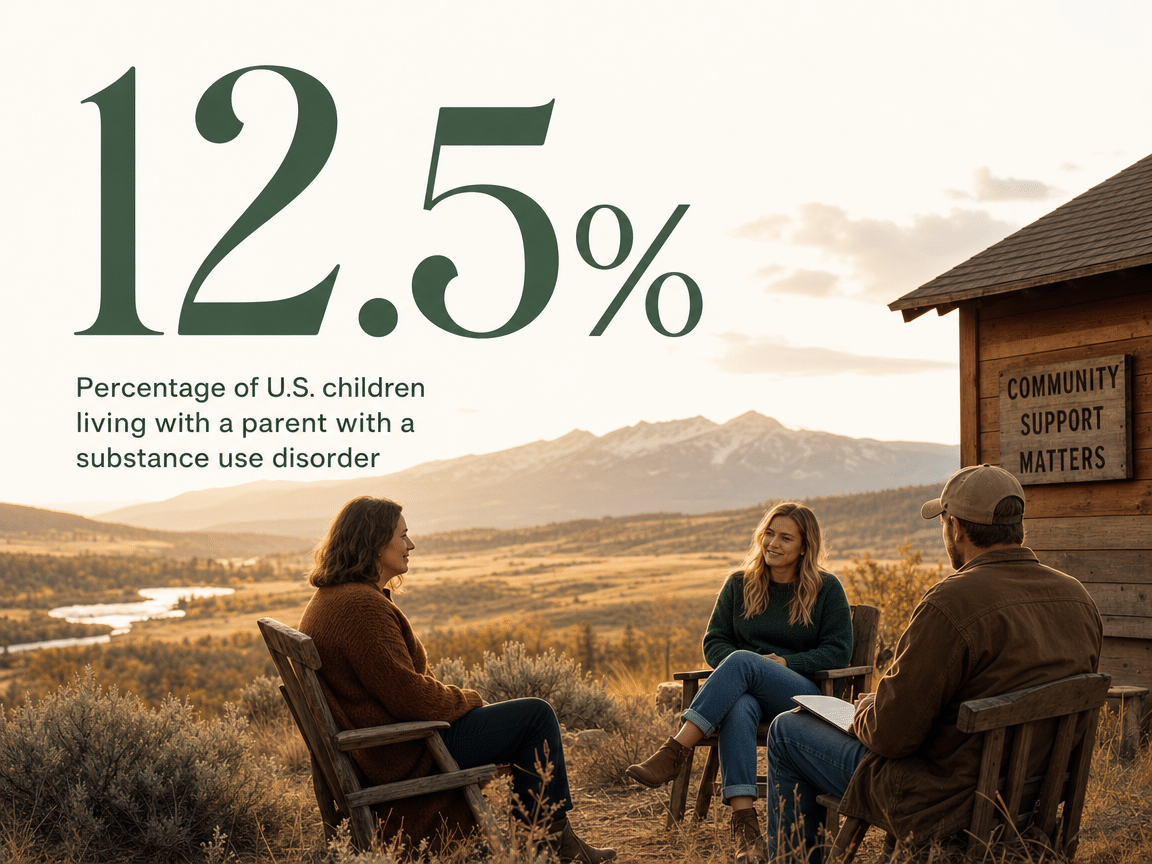
Here’s a number worth sitting with: about 1 in 8 U.S. children aged 17 or younger lives with at least one parent who has a substance use disorder, which works out to roughly 8.7 million kids a year. You are not an outlier. You are part of a very big, very quiet group of families trying to figure out the next right step.10
What that number tells the people who study this is simple. If treatment only fixes the person, the house they come home to is still carrying the same weight. The old rules, the old silences, the old worry that tonight might be the night something happens all stay put. Recovery holds up better when the family gets its own support running alongside.
That’s why residential care at Rocky Mountain Treatment Center in Great Falls builds family therapy and a three-day Family Week into the program instead of tacking it on at the end. It’s also why the rest of this guide points you to Montana-specific resources for the people around you, not just for the person using. Your spouse, your parents, your kids, your closest friend, they all get to put something down too. That’s not extra. That’s the work.
The Montana reality: rural distance, real waitlists
Before you make a plan, it helps to know what you’re actually up against in Montana. Not the polished brochure version. The real one. Because when you understand why finding help here can feel so hard, you stop blaming yourself for how long it’s taken to get this far.
Montana is big country. The map looks simple until you’re the one driving two hours to a counseling appointment, or trying to find a family therapist who takes your insurance and has an opening this month. Rural distance and long waitlists are not personal failings. They are the shape of the ground you’re standing on. Once you can see that ground clearly, you can plan around it instead of tripping over it.
The good news buried in this section: the same reports that name the gaps also point to workarounds, and residential care at Rocky Mountain Treatment Center in Great Falls is built partly to solve for them. When outpatient options are three months out, a 30, 60, or 90-day inpatient stay can be the fastest, safest door in.
The shortage no one talks about at the kitchen table
Here’s what Montana’s own planners will tell you, if you read past the headlines. The 2025 statewide needs assessment describes a severe shortage of treatment for pregnant women and caregivers with substance use disorders, and flags 38 Montana counties as at-risk, with most specialty providers clustered in the larger cities. If you live outside Great Falls, Billings, Missoula, or Bozeman, you already knew this in your gut.4
That shortage hits families in specific ways. A mom who’s ready to get sober may not find a bed close to her kids. A grandparent raising grandkids may not find a counselor who understands both roles. The state has been open about this gap in its planning documents, and that honesty matters. It means you’re not imagining the wall you keep hitting. You can stop apologizing for the map.
What 3-to-6 month waitlists mean for your family
The federal review of Montana’s child welfare system found that parents often wait three to six months, sometimes longer, for substance abuse and mental health services. Read that again. A season, or two, between deciding to get help and actually starting.13
Waitlists that long change what the decision looks like at your kitchen table. They mean outpatient counseling once a week may not be a realistic first move if the drinking is already unsafe or the relapses are stacking up. They also mean that if a bed opens, you probably shouldn’t wait for a better week to take it. Residential admission at Rocky Mountain often happens quickly, sometimes the same day, with complimentary pickup from within Montana. That speed is not marketing. It’s the answer to a waitlist you don’t have time to sit on when things at home are already close to the edge.
First phone calls to make in Montana
You don’t need a plan. You need a phone. Here are the five numbers that matter most tonight, in the order most Montana families end up dialing them.12,17,18
-
988 Suicide and Crisis Lifeline. If someone you love is in danger right now, or if you are, dial or text 988. It’s staffed around the clock and works for both mental health and substance use crises. You don’t have to know what to say. You just have to say what’s happening.
-
Montana Crisis Recovery Line: 1-877-503-0833. This is Montana’s own line, and it’s meant for exactly the moments you’re probably having, the ones that aren’t quite 911 but aren’t fine either. The 3 a.m. worry. The relapse. The fight that ended with a door slam. Call it.
-
SAMHSA National Helpline: 1-800-662-HELP (4357). Free, confidential, 24/7, in English and Spanish. They’ll help you think through treatment options and can point you toward providers. It’s a good call for family members who need to talk to a real person without committing to anything yet.
-
Montana DPHHS Get Help portal. The state’s own gateway page for parents, family, and friends supporting a loved one, with links to naloxone, provider searches, and family education. If you like to read before you dial, start here.
-
Rocky Mountain Treatment Center admissions in Great Falls. When you’re ready to talk about a bed, medically monitored detox, or the three-day Family Week, this is the call. Same-day admission happens often, and pickup from anywhere in Montana is complimentary. You can call for yourself or on someone else’s behalf.
Pick one. Start there. You can always work down the list.
Montana’s growing recovery workforce and what it means for your family
Here’s a piece of good news you may not have heard: the people in Montana who know exactly what your family is going through, because they’ve lived it, are no longer as scarce as they used to be.
Certified Behavioral Health Peer Support Specialists in Montana grew from 56 in 2019 to 178 in 2024. That’s more than triple the number of trained people, most of them in recovery themselves, whose job is to sit with someone in early sobriety or with a worried spouse and say, out loud, “I’ve been there.” Five years ago, finding one of those voices in Montana was hard. Today it’s still not easy in every county, but it’s real, and it’s growing.1
Why does that number matter at your kitchen table? Because your husband or your daughter or your best friend does not just need a clinician with a clipboard. They need someone who has walked out the other side of the same fog. And your family needs that too. The parent whose kid keeps relapsing, the wife who’s watched three detoxes, the brother who doesn’t know what to say anymore, they all do better when someone across the table has been on both sides of the conversation.
This is one of the reasons Rocky Mountain Treatment Center staffs its Great Falls program the way it does. More than 80% of the staff there are in recovery themselves. It’s not a marketing line. It’s how the counseling groups, the family therapy sessions, and the hallway conversations actually sound. When you or your loved one walks into detox, the person handing you a glass of water may have been handed one herself, ten or fifteen years ago, in a room a lot like that one.
Ask about peer support when you call anywhere in Montana. If they don’t offer it, ask who does. That question alone puts you further along than most families get in their first month.
Community entry points across Montana
The state agencies and crisis lines are one layer. The other layer, the one that keeps people upright between appointments, is closer to home: a folding chair in a church basement, a paraprofessional trained at MSU, a hotline built for someone who’s been up since 4 a.m. checking cows. These are the community-level doors your family can walk through without a referral, without insurance paperwork, and often without saying much at all on the first visit.
Al-Anon, TORCH, and church-basement meetings for the people who love someone using
If you’re the spouse, parent, or adult child reading this, these rooms are for you. Al-Anon meets in most Montana towns of any size, usually in church basements or community rooms, and it exists specifically for people who love someone using. You don’t share about them. You share about you.
TORCH peer recovery meetings in central Montana welcome “people from all pathways to recovery, as well as family, friends, and allies,” which is unusual and worth knowing about. The Fergus County resource list is a good template for what to look for in your own county. When your loved one is at Rocky Mountain in Great Falls, these meetings back home are where you keep breathing.21
Montana Family Support Program at MSU
Montana State University runs the Montana Family Support Program, which trains behavioral health paraprofessionals “to work with youth and families feeling the impact of Opioid Use Disorder (OUD) and Substance Use Disorder (SUD).” That’s plain English for: more trained people, in more Montana towns, who know how to sit with a kid whose parent is in detox.19
Ask your county’s behavioral health office or school counselor if a paraprofessional from this program is available. If your kids need someone to talk to while you or your partner is at Rocky Mountain, this is one of the quieter answers.
Ranch and farm country: Farm Stress Clearinghouse
If your family works ground for a living, the usual resource lists can feel like they’re written for someone else. The Montana Farm Stress Clearinghouse, run through MSU Extension, was built with ranchers and farmers in mind. It aggregates hotlines, the Montana Substance Use Disorder Providers Locator, and stress support tailored to agricultural communities.20
Bookmark it on the shop computer. Print the page and stick it on the fridge. When calving is done and the drinking has not slowed, you’ll know where the number lives.
Paying for treatment: coverage pathways in Montana
Money is the question most families are afraid to ask out loud. You should ask it early anyway. Knowing what your insurance covers, what Montana Medicaid covers, and which doors those coverages actually open saves you weeks you don’t have.
The short version: Montana has more coverage pathways than it did a decade ago, and the HEART Initiative expanded them further, with newly available Medicaid and grant-funded services reaching 5,092 Montanans in state fiscal year 2024, including 1,612 members who got treatment through expanded Medicaid. That’s a real door. It’s just not the only door, and it’s not the one that leads to Rocky Mountain.2
Private insurance, Medicaid, and where each one leads
If you have private health insurance through work, a spouse, or the marketplace, that’s usually the fastest path into residential care in Montana. Call the number on the back of the card and ask specifically about inpatient substance use treatment and medically monitored detox. Ask what your out-of-pocket looks like for a 30, 60, or 90-day stay.
If you’re on Montana Medicaid or the Montana Kids Plan, SAMHSA’s guidance says beneficiaries can get services for mental health, drug, or alcohol issues through the plan, and the state’s search tools can point you to Medicaid-participating providers. Medicaid opens doors to many outpatient counselors, community mental health centers, and some residential programs across the state.22
What this means for admission at Rocky Mountain Treatment Center
Call before you assume anything. A short conversation with admissions in Great Falls will tell you within one phone call whether your plan is a fit, what a stay would cost, and what your next best move looks like either way.
How Rocky Mountain’s Family Week fits into your Montana network
By the time most Montana families get to Rocky Mountain Treatment Center in Great Falls, they’ve already tried a lot. Talks. Ultimatums. Quiet stretches that felt like maybe this time. What Family Week does is give everyone in the room, not just the person in the bed, a chance to say what’s actually happening and hear something back that isn’t rehearsed.
Family Week is three days built into the residential stay. It’s not a tour. It’s not a viewing. It’s structured time where your spouse, parents, adult children, or closest friend come to the campus and do real work with a counselor, alongside you. That work then hands off, on purpose, to the rest of your Montana support network: the Al-Anon meeting back home, the peer specialist in your county, the outpatient counselor you’ll see after discharge. Rocky Mountain doesn’t try to be your whole answer. It tries to be the part of the answer that sets the rest up to hold.
The three days that change how families talk
-
The first day is usually education. What addiction actually is, what detox does to a body, what your family has been carrying without a name for it. Nobody’s in trouble. Nobody’s on trial. Most families exhale a little by lunch.
-
The second day gets closer to the bone. Counselors sit with you and your people and help translate what’s been said in anger, or not said at all, into something usable. The wife who’s been holding groceries and grudges for six years gets to put both down. The teenager who stopped asking questions gets to ask one.
-
The third day looks forward. What happens when you go home. Who calls whom when it gets hard. Which meeting your partner walks into on Tuesday nights while you’re at yours. That’s where Family Week hands off cleanly to the Montana network already mapped in this guide, from TORCH meetings to the paraprofessionals trained through the Montana Family Support Program.19
What families see when they visit: equine work, small campus, staff in recovery
Rocky Mountain is 26 beds. Not a hospital wing. Not a resort. Families who drive up from Bozeman or fly in from a small town they had to look up on a map are usually surprised by how much it feels like a place, not an institution.
You’ll likely see the paddock. Equine therapy is part of the program, and watching your person work with a horse, quietly, with no words required, tells families something they didn’t know how to ask. Horses read nervous systems. So do the counselors, most of whom are in recovery themselves. More than 80% of the staff have walked this road.
That staff composition is the part families remember. When your mother meets the counselor who’s been sober fifteen years and raised her own kids through it, the fear in her shoulders drops a full inch. You can see it happen.
After discharge: the year that decides whether it sticks
The day you leave residential care is not the finish line. It’s more like the first mile of a longer road, and most people who relapse do it in the first ninety days after discharge. That’s not a scare tactic. That’s why Rocky Mountain builds the year after your stay into the program itself, instead of handing you a folder and wishing you luck.
Continuing care from the Great Falls team includes weekly Zoom groups you can join from a kitchen in Havre, a ranch outside Miles City, or an apartment in Missoula. Follow-up check-ins land at 30, 60, 90, 180, and 365 days after you go home. Those aren’t survey calls. They’re actual conversations with people who remember your name, your kids’ names, and what you were worried about the week before discharge.
For your family, that year is where the Montana network you’ve been building actually gets used. The Al-Anon meeting your spouse found. The peer support specialist your county now has, thanks in part to Montana more than tripling that workforce between 2019 and 2024. The paraprofessional from the Montana Family Support Program helping your teenager talk about what the last two years were like. Rocky Mountain’s continuing care is the thread. The rest of these supports are the fabric.1,19
You will have hard weeks. Some of them will feel like the old ones. Pick up the phone anyway. That’s what year one is for.
If you’re the family member reading this on someone else’s behalf
Switching audiences here on purpose. If you’re the spouse, parent, sibling, adult child, or best friend who opened this tab because someone you love won’t, this part is for you.
You’ve probably been carrying this longer than anyone knows. The bank statements. The missed pickups. The excuses you’ve made to your own mother. Put some of it down for a minute and read this like a checklist you don’t have to memorize.12,18,19
-
Call 988 or Montana Crisis Recovery at 1-877-503-0833 if tonight is unsafe.
-
Call SAMHSA at 1-800-662-HELP if you just need a real human to help you think.
-
Find an Al-Anon meeting this week, even if you’re not sure you belong there. You do.
-
Ask your county’s behavioral health office about a paraprofessional from the Montana Family Support Program if there are kids in the house.
-
Then call Rocky Mountain Treatment Center in Great Falls and ask what admission would look like. You can make that call before your person is ready. Admissions talks to families every day.
You didn’t cause this. You can’t cure it alone. But you can absolutely be the one who found the number.
Frequently Asked Questions
What family support programs for addiction are available in Montana?
Montana offers a mix of state and community programs. The DPHHS Get Help portal is the main state gateway for parents, family, and friends supporting a loved one. The Montana Family Support Program at MSU trains paraprofessionals to work with youth and families impacted by substance use. Al-Anon meetings, TORCH peer recovery groups that welcome family and allies, and the Farm Stress Clearinghouse for agricultural communities round out the community layer.17,19,20,21
Who do I call first if a family member in Montana is struggling with alcohol or drugs?
If tonight is unsafe, call or text 988 for the Suicide and Crisis Lifeline, or dial Montana Crisis Recovery at 1-877-503-0833. If you just need a real person to help you think through options, call the SAMHSA National Helpline at 1-800-662-HELP (4357), which is free, confidential, and open 24/7. When you’re ready to talk about a bed, call Rocky Mountain Treatment Center admissions in Great Falls.12,18
Does Rocky Mountain Treatment Center include families in the treatment process?
Yes. Family involvement is built into the residential program, not tacked on at the end. The three-day Family Week brings your spouse, parents, adult children, or closest friend onto the Great Falls campus for structured work with counselors, alongside you. Family therapy and family education are part of the individualized care plan, and continuing care includes weekly Zoom groups plus follow-up check-ins at 30, 60, 90, 180, and 365 days after discharge.
Does Rocky Mountain Treatment Center accept Montana Medicaid?
No. Rocky Mountain works with most major private insurance plans but does not currently accept Medicaid or Medicare. If Medicaid is your only coverage, SAMHSA’s guidance notes Montana Medicaid beneficiaries can get services for mental health, drug, or alcohol issues through the plan. Admissions in Great Falls can talk through self-pay options or point you toward Medicaid-participating residential programs elsewhere in Montana, so one phone call tells you your next step.22
How can families in rural Montana find support when the nearest provider is hours away?
Rural distance is a real barrier. Montana’s 2025 needs assessment flags 38 counties as at-risk, with most specialty providers clustered in larger cities.4 Start with the Farm Stress Clearinghouse and the Montana Substance Use Disorder Providers Locator it links to. Weekly Zoom continuing-care groups from Rocky Mountain let you stay connected from a ranch or small town, and the center offers complimentary pickup from anywhere in Montana when admission is arranged.20
What happens for families after residential treatment ends?
Discharge is not goodbye. Rocky Mountain’s continuing care includes weekly Zoom groups and structured check-ins at 30, 60, 90, 180, and 365 days after your loved one goes home. Families are encouraged to keep using local supports too: Al-Anon meetings, TORCH peer recovery groups that welcome family and allies, and paraprofessionals trained through the Montana Family Support Program who can work with kids in the house. The first year is where the work actually sticks.19,21
References
- Montana Substance Use Disorder Task Force Strategic Plan. https://dphhs.mt.gov/assets/publichealth/EMSTS/opioids/SUDsStrategicPlan2024.pdf
- HEART Initiative Report. https://archive.legmt.gov/content/Committees/Interim/2023-2024/Children-Families/CFHHS_Meetings/2024_Sept_11/16-12-122-Healing-and-Ending-Addiction-Through-Recovery-and-Treatment-Report-FINAL.pdf
- Montana Substance Use Disorders Task Force Strategic Plan. https://dphhs.mt.gov/assets/publichealth/EMSTS/opioids/MontanaSubstanceUseDisordersTaskForceStrategicPlan.pdf
- 2025 MIECHV Home Visiting Statewide Needs Assessment Update. https://dphhs.mt.gov/assets/ecfsd/2025StatewideNeedsAssessment.pdf
- Montana State Health Improvement Plan 2024-2028. https://dphhs.mt.gov/assets/publichealth/ahealthiermontana/MontanaStateHealthImprovementPlan2024.pdf
- MONTANA STATE HEALTH IMPROVEMENT PLAN (SHIP) Consolidated Implementation Plan (2025–2027). https://dphhs.mt.gov/assets/publichealth/ahealthiermontana/2024-2028_SHIP_Implementation_Plan.pdf
- annual performance report – dphhs. https://dphhs.mt.gov/assets/StatutorilyRequiredReports/2025FYDPHHSAnnualPerformanceReport09302025.pdf
- Behavioral Health Barometer: Montana, Volume 6. https://www.samhsa.gov/data/sites/default/files/reports/rpt32843/Montana-BH-Barometer_Volume6.pdf
- Montana 2023 Uniform Reporting System Mental Health Data Results. https://www.samhsa.gov/data/sites/default/files/reports/rpt53129/Montana.pdf
- Children Living with Parents Who Have a Substance Use Disorder. https://www.samhsa.gov/data/report/children-living-parents-who-have-substance-use-disorder
- Children Living with Parents Who Have a Substance Use Disorder. https://www.samhsa.gov/data/sites/default/files/report_3223/ShortReport-3223.html
- Helping Families Cope with Mental Health and Substance Use. https://www.samhsa.gov/mental-health/children-and-families/coping-resources
- Montana CFSR Final Report. https://acf.gov/sites/default/files/documents/cb/mt-cfsr-r3-final.pdf
- Montana Child Abuse and Neglect Review. https://archive.legmt.gov/content/Committees/Interim/2019-2020/Children-Family/Required-Reports/Jan2021-child-abuse-and-neglect-commission-report.pdf
- Substance Abuse Disorder Strategic Plan 2017 -02019. https://dphhs.mt.gov/assets/BHDD/SubstanceAbuse/SUDStrategicPlan.pdf
- Montana (MT) | CBHSQ Data. https://www.samhsa.gov/data/report/montana-mt
- Get Help – dphhs. https://dphhs.mt.gov/opioid/gethelp
- Crisis Services – dphhs. https://dphhs.mt.gov/BHDD/crisissystemsinformationandresources/CrisisServices
- Montana Family Support Program. https://healthinfo.montana.edu/bhwet/mfs.html
- Get Help Now – Montana Farm Stress Clearinghouse. https://www.montana.edu/extension/wellness/stress-management/mt_farm_stress_clearing_house/get_help_now.html
- Central Montana Mental, Emotional and Behavioral Health Resource List (Fergus County LAC). https://fergusmt.gov/images/local-advisory-council/2023.12.FergusCo-LAC-resourcelist.pdf
- Help for mental health, drugs, alcohol – Montana Medicaid & CHIP. https://www.samhsa.gov/find-support/health-care-or-support/professional-or-program/medicaid-or-chip/montana