
Key Takeaways
- Treatment exists on a continuum from weekly counseling to medically managed inpatient care, and the right starting point depends on withdrawal risk, mental health, home environment, and prior attempts 3.
- The ASAM Criteria’s six areas—withdrawal, medical health, mental state, readiness, relapse history, and living environment—determine which level of care is least disruptive while still safe and effective 3.
- Detox alone isn’t treatment, and research indicates at least 90 days of care plus medications for opioid or alcohol use disorder produce the strongest outcomes 8, 9.
- Aftercare during the year after discharge largely decides whether recovery holds, so ask any program about structured groups, counselor follow-ups, and check-ins through 365 days 6.
Where You Actually Fit on the Treatment Continuum
You’ve probably already tried to stop, perhaps multiple times. Whether you lasted three days, three weeks, or three months before a relapse, this isn’t a sign of weakness. Instead, it provides valuable information about the specific type of help you need. Substance use treatment isn’t a one-size-fits-all solution; it’s a continuum. This spectrum ranges from weekly counseling appointments to hospital-based care, with many options in between 1. The real question isn’t whether treatment works, but rather which point on this continuum best suits your current situation. This includes assessing your withdrawal risk, mental health status, home environment, and previous treatment experiences 3. The treatment landscape includes outpatient counseling, intensive outpatient programs (IOP), partial hospitalization, residential or inpatient care, and medically managed detox, all supported by ongoing aftercare 1, 4. Each level involves trade-offs. More structure can disrupt your job and family life but provides greater distance from triggers. Less structure allows you to maintain daily routines, but it’s only effective if your daily life isn’t contributing to the problem. This guide will explain each level of care in simple terms, detailing what it involves, when it’s appropriate, and what questions to ask. You don’t need to plan your entire recovery journey tonight; just focus on identifying your next step.How Level of Care Gets Decided (In Plain English)
The Six Questions That Determine Where You Start
When a counselor recommends a specific treatment setting, they rely on a structured framework, not guesswork. Most programs use the ASAM Criteria, which evaluates six key areas of your life to determine the least disruptive yet effective and safe treatment environment 3. You don’t need to know the clinical terms; just answer these six honest questions:- What happens to your body when you stop? If you experience tremors, sweating, hallucinations, or seizures during withdrawal, medical supervision is likely necessary.
- What other physical health issues do you have? Conditions like liver problems, pregnancy, untreated diabetes, or chronic pain don’t prevent treatment but influence where it can be safely administered.
- What’s your mental state? If depression, anxiety, trauma, or suicidal thoughts are intertwined with your substance use, you’ll likely need a setting that addresses both simultaneously.
- How ready do you truly feel for change? Be honest about your readiness. If you’re still ambivalent, a more structured environment can provide the necessary support to overcome resistance.
- What’s your history with relapse? Previous attempts to stop and subsequent relapses aren’t failures; they’re indicators of the level of support you need this time.
- What is your home environment like? Living with a roommate who uses, a partner who drinks, or in a neighborhood with easy access to substances can significantly impact your recovery, regardless of your willpower 3.
Why Outpatient Attempts Often Stall Before Residential
Outpatient care is effective for many individuals. Research on intensive outpatient programs indicates that for the right person—someone with a stable home, manageable withdrawal, and adequate mental health support—outcomes can be comparable to residential treatment 5. However, “the right person” represents a smaller demographic than often assumed. If you’ve tried outpatient care once or twice and relapsed, it doesn’t mean you failed. It suggests that the level of care didn’t adequately address the scope of your challenges 3. It’s like trying to fix a leaky roof while it’s still raining. Two common factors predict an outpatient stall: a home environment that triggers substance use upon return, and an untreated co-occurring mental health condition that fuels the addiction 3. If either of these applies to you, transitioning to residential treatment isn’t an overreaction; it’s aligning the treatment structure with your specific needs.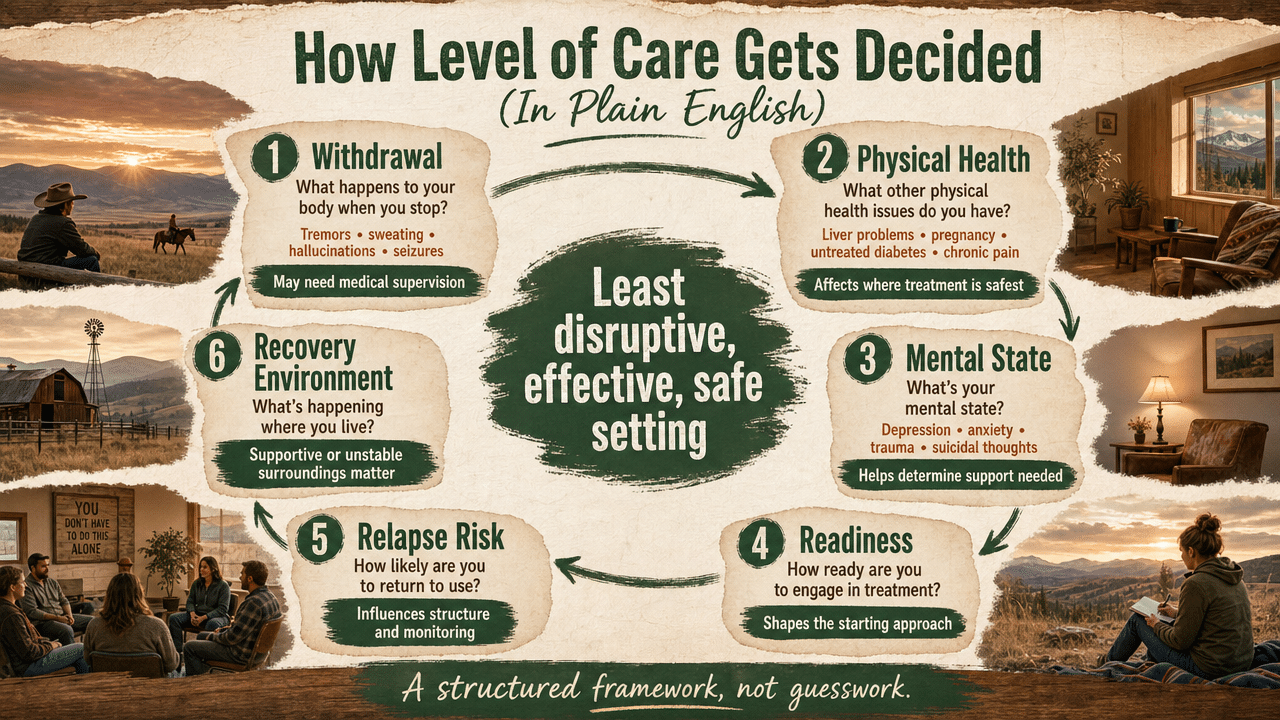
Detox: The First 3 to 10 Days
Detoxification is often a dreaded but necessary first step. It involves your body adjusting to functioning without the substance it has become dependent on. For alcohol and benzodiazepines, this process can be dangerous, with risks of seizures, blood pressure spikes, and delirium tremens. Medically monitored detox provides a safe environment where trained staff can monitor vitals, manage symptoms with medication, and ensure your safety during the most challenging phase. Most withdrawal periods last between three and ten days, varying based on the substance, duration of use, and overall health. Alcohol withdrawal typically peaks around day two or three. Opioid withdrawal, while intensely uncomfortable, is usually not life-threatening on its own. Stimulant withdrawal primarily involves emotional and physiological crashes. None of these experiences should be endured alone. Therefore, detox functions best as a gateway to the next level of care, rather than a standalone solution. As you navigate those initial days, the crucial question isn’t just “Can I get through this?” but “What’s the plan for day eleven and beyond?”Residential and Inpatient Care: What 30, 60, and 90 Days Actually Look Like
Residential care involves living at the treatment facility for a set period, typically 30, 60, or 90 days. Your days are highly structured, including therapy sessions, group work, meals, and sleep, with limited access to external triggers. This isn’t a punitive measure but a temporary change of environment designed to allow your nervous system, relationships, and decision-making processes to reset away from your usual surroundings. It’s a common misconception that residential care is the default. SAMHSA’s national survey shows that outpatient services are the predominant form of treatment in the U.S., with non-hospital residential care and hospital inpatient treatment being less common 12. Residential beds are reserved for situations where outpatient care has been insufficient, the home environment is problematic, or the combination of withdrawal risk, mental health issues, and history necessitates 24/7 support 3. The 30, 60, and 90-day durations are not arbitrary. Research from NIDA indicates that most individuals with addiction require at least three months of treatment for a meaningful reduction or cessation of substance use, with longer durations generally yielding better outcomes 8. A 30-day stay can stabilize you and initiate the therapeutic process. Sixty days allows for deeper work as the initial fog clears and underlying patterns emerge. Ninety days is where research suggests changes have the best chance of becoming sustainable 8, 13. A typical day in residential treatment often begins with a community check-in or meditation. The majority of the day is dedicated to therapy, including individual sessions, group counseling, education on addiction’s impact on the brain, and skill-building for managing cravings and conflict. Afternoons might involve experiential therapies like equine therapy, recreational activities, or family sessions. Evenings could include 12-step meetings, journaling, or quiet time. Phone and outside contact are usually limited, especially early on, to foster focus on recovery. Smaller programs, with fewer beds, often feel more like a supportive home than an institution. You share meals with the same people, and your counselor quickly becomes familiar with your story. This personalized environment can be particularly beneficial if you’ve felt overlooked in larger systems 1. While larger facilities may offer more amenities, smaller ones often provide more individualized attention. The best choice depends on your personal needs and preferences.IOP and Partial Hospitalization: Honest Comparison
Between weekly outpatient sessions and full residential care, Intensive Outpatient Programs (IOP) and Partial Hospitalization Programs (PHP) offer intermediate levels of support. Both allow you to live at home while requiring a significant time commitment to treatment. IOP, classified as ASAM Level 2.1, typically involves nine to twenty structured hours per week, spread over three or four days, often in evening blocks to accommodate work schedules 4. This includes group therapy, individual sessions, and education on addiction. Partial Hospitalization (PHP), also known as day treatment, is a step up, requiring twenty to thirty hours per week, often five days a week. PHP provides the structure of residential care but allows you to return home at night 4. Above PHP is residential treatment, where the entire environment is therapeutic. At the highest level is medically managed inpatient care (Level 4), a hospital setting for complex withdrawal or medical instability 4. A peer-reviewed review of IOP research found that outcomes can be similar to inpatient or residential treatment for appropriately selected individuals 5. This “appropriately selected” clause is crucial; these studies typically involved people with stable housing, manageable withdrawal symptoms, and existing support systems at home 5. If your home environment contributes to your substance use, or if you struggle to get through a day without using, this comparison may not apply to your situation. A practical self-assessment: can you attend a three-hour evening group and return home without relapsing by midnight? If the answer is consistently yes, IOP or PHP could be highly effective. If you find yourself negotiating with yourself on the way home, that’s a clear indicator of the level of support you truly need.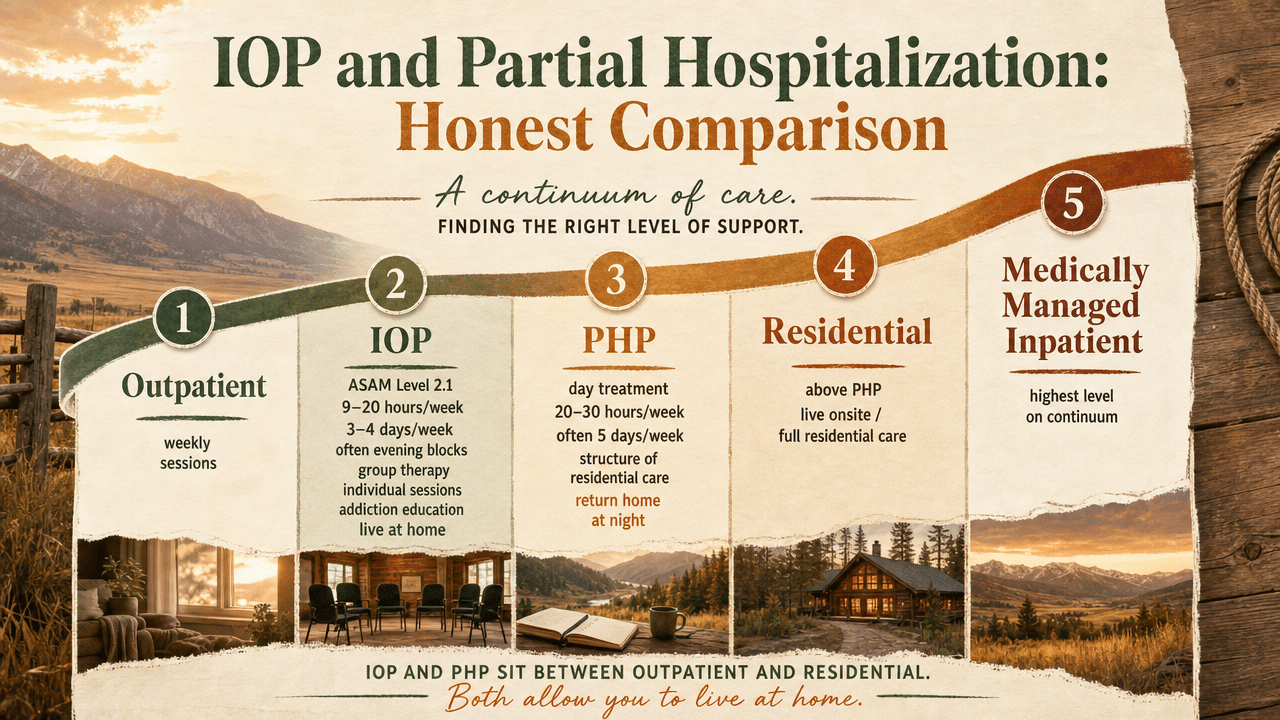
Counseling, Medications, and 12-Step Support: The Core Ingredients
Individual and Group Therapy
At its core, treatment involves meaningful conversations. Individual therapy, where you meet consistently with a counselor, provides a safe space to explore the underlying reasons for your substance use. This could involve addressing past trauma, managing long-standing depression, or navigating relationship challenges. It’s an opportunity for honest self-reflection without external pressures. Group therapy offers a different, yet equally essential, dynamic. In a group setting, you connect with others who understand your struggles, fostering a sense of shared experience and reducing feelings of isolation 1. The collective wisdom and peer feedback in a group can be incredibly powerful. Both individual and group therapy are fundamental components of residential care, often complementing each other; what you might hesitate to share in a group can be explored in a private session the next day 7.Medications for Opioid and Alcohol Use Disorder
For opioid use disorder (involving heroin, fentanyl, oxycodone, etc.), medication is a critical component of treatment. The CDC emphasizes that medication-assisted treatment for opioid use disorder reduces overdose risk and overall mortality, and detox without medication is not recommended 9. Buprenorphine, methadone, and naltrexone are the primary options, chosen based on your history, health conditions, and availability. Similarly, for alcohol use disorder, medications like naltrexone, acamprosate, and disulfiram can help reduce cravings or create an aversion to alcohol. SAMHSA identifies these as evidence-based tools that are most effective when combined with counseling 2. The outdated belief that taking medication isn’t “true” sobriety has had severe consequences. Medications for opioid and alcohol use disorder are standard medical care, not a shortcut. A reputable residential program will discuss medication options honestly, integrate them into your treatment plan, and ensure you don’t have to choose between necessary medication and receiving care.12-Step and Peer Support
The 12-step framework, encompassing groups like AA and NA, represents the longest-standing peer support network for addiction. It’s distinct from therapy or medical care, offering a community of individuals who share similar experiences, a structured path for personal growth, and a network of support available around the clock. SAMHSA recognizes mutual-help groups as a core evidence-based component of treatment, alongside counseling and medications 2. In residential programs that incorporate 12-step principles, you begin attending meetings during treatment, establishing a support system for when you transition home 1. The key is consistent engagement, even if you don’t immediately connect with every aspect or individual.Family Work and Experiential Therapy: Not Just Extras
Elements of treatment often dismissed as “soft”—such as family sessions, equine therapy, outdoor activities, art, and music—are, when implemented effectively, integral to the healing process. They are not merely supplementary but often facilitate breakthroughs that traditional talk therapy alone cannot achieve. Family involvement is crucial because addiction impacts every member of a household. Spouses, children, and parents often develop coping mechanisms to navigate the challenges of a loved one’s substance use. If you return to an unchanged family dynamic, your recovery efforts will face significant obstacles. SAMHSA highlights family involvement as a vital part of treatment, recognizing its role in mitigating relapse risk 1. A structured family week, where loved ones learn about addiction, their roles, and new ways of relating, is a demanding but highly impactful component of residential care. Experiential therapies also play a significant role. Equine therapy, for instance, has shown associations with improved treatment engagement, self-efficacy, and emotional regulation for individuals with substance use disorders, though research is still developing 10. Horses respond to authentic emotions rather than spoken words, providing immediate, unfiltered feedback that can help individuals who have learned to mask their feelings. This can create a powerful opening for emotional processing that might not occur in a traditional counseling setting. Similarly, recreation, music, art, and time in nature complement counseling and medication by engaging the body and nervous system in ways that extend beyond a clinical setting.Aftercare: The Year That Decides Whether Treatment Sticks
The period immediately following residential treatment is as crucial as the treatment itself. Continuing care research consistently shows that interventions extending support for a year or longer are associated with better long-term substance use outcomes compared to short, isolated treatment episodes 6. Treatment that ends abruptly upon discharge is often merely interrupted, not completed. Effective aftercare typically combines weekly group meetings (often virtual to overcome geographical barriers), individual check-ins with a counselor, ongoing 12-step or peer support, and scheduled follow-up calls from the program at key intervals: 30, 60, 90, 180, and 365 days post-discharge. These check-ins are strategically timed to address common relapse points—the initial adjustment home, the three-month mark when early enthusiasm wanes, the six-month point when life feels “normal” enough to rationalize old behaviors, and the one-year milestone that researchers identify as significant for sustained recovery 6. When evaluating programs, inquire specifically about their aftercare plan. A simple list of meetings is not comprehensive aftercare. True aftercare involves a structured weekly group, a counselor who follows up if you miss sessions, and accessible support when challenges arise months later 1. The year following residential treatment is where the foundation built in treatment either solidifies or erodes.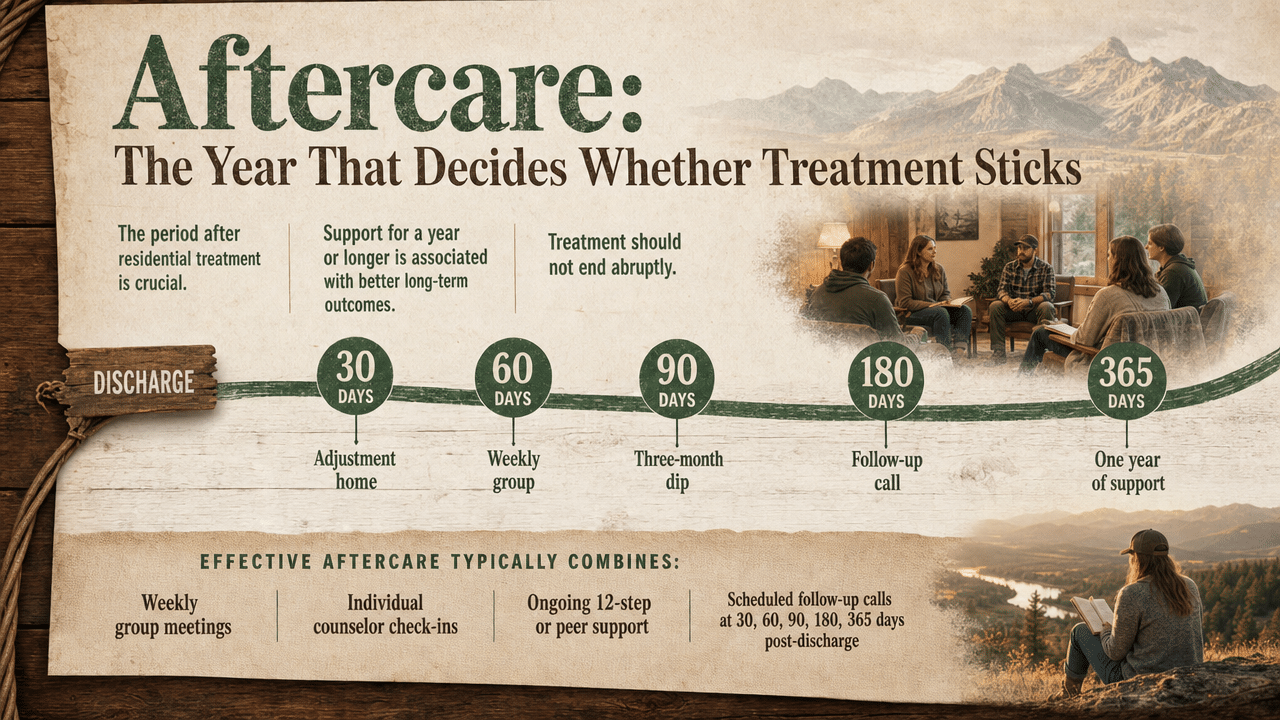
How to Make the Call — and What to Ask
If you’ve read this far, you’re already better informed than many individuals seeking treatment. Here’s how to use that knowledge: Choose one program to contact this week. When you speak with someone, ask these key questions:- What level of care do you recommend for my history, and how is that determined?
- What does a typical day look like?
- Is medication for opioid or alcohol use disorder available and coordinated on-site if needed 9?
- How is family involved, and when?
- What does aftercare include—group, individual, and scheduled check-ins for up to a year 6?
- Do you accept my insurance, and what costs are not covered?
Frequently Asked Questions
How do I know if I need residential treatment or if outpatient is enough?
Consider your withdrawal severity, current mental health, home environment, and previous outpatient attempts. If your home triggers substance use, or if outpatient care hasn’t been effective before, it indicates that a higher level of care might be necessary to address the problem adequately 3.
Is detox by itself enough to get sober?
No. Detox cleanses your system but doesn’t address the root causes of substance use or the environment you return to. For opioids, the CDC explicitly states that detox without medication-assisted treatment is not recommended and is linked to a higher risk of overdose post-discharge 9. Detox is a starting point, not a complete solution.
Why do treatment programs run 30, 60, or 90 days?
These durations are based on research, not marketing. NIDA’s guidelines suggest that most individuals with addiction need at least three months of treatment for significant reduction or cessation of substance use, with longer durations yielding better results 8. Thirty days provides stabilization, sixty days allows for deeper therapeutic work, and ninety days offers the best chance for sustained change 13.
Do I have to take medication, or can I do this without it?
It depends on the substance. For opioids, medications like buprenorphine, methadone, and naltrexone are crucial, as they are linked to reduced overdose risk and lower mortality 9. For alcohol, medications such as naltrexone or acamprosate can reduce cravings and are effective when combined with counseling 2. Using medication is standard care and supports recovery, not a way to avoid the work.
What happens after I leave residential treatment?
The year following discharge is critical. Research on continuing care indicates that interventions lasting twelve months or more lead to better outcomes than shorter treatment episodes 6. Effective aftercare typically includes weekly groups (often virtual), individual check-ins, ongoing peer or 12-step support, and scheduled follow-ups at 30, 60, 90, 180, and 365 days. Simply receiving a list of meetings is not sufficient aftercare.
Does family really need to be involved in my treatment?
If you plan to return to your family, yes. Addiction affects everyone in the household, leading family members to develop coping mechanisms. SAMHSA identifies family involvement as a significant component of treatment and recovery support 1. A structured family week, though challenging, is vital because the home environment plays a crucial role in either supporting or hindering long-term recovery.
References
- Treatment Types for Mental Health, Drugs and Alcohol. https://www.samhsa.gov/find-support/learn-about-treatment/types-of-treatment
- Treatment Options for Substance Use Disorder. https://www.samhsa.gov/substance-use/treatment/options
- The ASAM Criteria®: At a Glance. https://www.azahcccs.gov/PlansProviders/Downloads/CurrentProviders/ASAMCriteriaBrochure.pdf
- Chapter 3. Intensive Outpatient Treatment and the Continuum of Care. https://www.ncbi.nlm.nih.gov/books/NBK64088/
- Substance Abuse Intensive Outpatient Programs: Assessing the Evidence. https://pmc.ncbi.nlm.nih.gov/articles/PMC4152944/
- The Continuing Care Model of Substance Use Treatment. https://pmc.ncbi.nlm.nih.gov/articles/PMC4007701/
- Treatment. https://nida.nih.gov/research-topics/treatment
- Principles of Drug Addiction Treatment: A Research-Based Guide (Third Edition). https://nida.nih.gov/sites/default/files/podat-3rdEd-508.pdf
- Opioid Use Disorder: Treating. https://www.cdc.gov/overdose-prevention/hcp/clinical-care/opioid-use-disorder-treating.html
- Equine-assisted services for individuals with substance use disorders: a scoping review. https://pmc.ncbi.nlm.nih.gov/articles/PMC9749232/
- National Helpline for Mental Health, Drug, Alcohol Issues. https://www.samhsa.gov/find-help/helplines/national-helpline
- National Survey of Substance Abuse Treatment Services (N-SSATS): 2020 Data on Substance Abuse Treatment Facilities. https://www.samhsa.gov/data/sites/default/files/reports/rpt35313/2020_NSSATS_FINAL.pdf
- Principles of Effective Treatment (section). https://www.drugabuse.gov/publications/principles-drug-addiction-treatment-research-based-guide-third-edition/principles-effective-treatment