
Key Takeaways
- Medication support stabilizes withdrawal and improves survival, retention, and birth outcomes, giving therapy and relational work a foundation to build on.
- Cognitive behavioral therapy retrains the thought patterns that lead to a reach, and its effects are roughly five times larger when paired with medication.
- Motivational interviewing and contingency management keep people engaged long enough for the rest of treatment to work, with evidence ranking them among the most effective psychosocial interventions.
- Family involvement reduces substance use and improves how households actually function, with family-based models outperforming other empirically supported treatments in adolescent studies.
- 12-step facilitation offers durable community after discharge, but as a stand-alone intervention its evidence base is thinner than CBT, MI, or contingency management.2
- Duration itself acts as a treatment variable — outcomes track with how long someone stays engaged, and 90 days is the floor where stacked methods compound.1
- Continuing care decides whether the work holds, since CBT skills can fade after eight months without booster sessions, scheduled check-ins, and ongoing groups.3
Why “Most Effective” Is a Stack, Not a Single Therapy
If you’ve landed here, you’re probably tired. Maybe you’ve tried outpatient. Maybe a 28-day program a few years back. Maybe willpower, white-knuckled, until it slipped. That history isn’t failure — it’s information. It tells you which pieces were missing.
Here’s the part most articles bury: there is no single most effective addiction treatment method. Decades of research keep landing on the same finding — the methods that hold up are the ones that get combined, sustained past the first few weeks, and reinforced after you go home. A medication that quiets withdrawal without therapy to retrain your thinking tends to drift. Talk therapy without family repair tends to leave you walking back into the same kitchen, the same Friday night, the same trigger. Each piece on its own is useful. Stacked together over time, they’re what the evidence actually supports.2
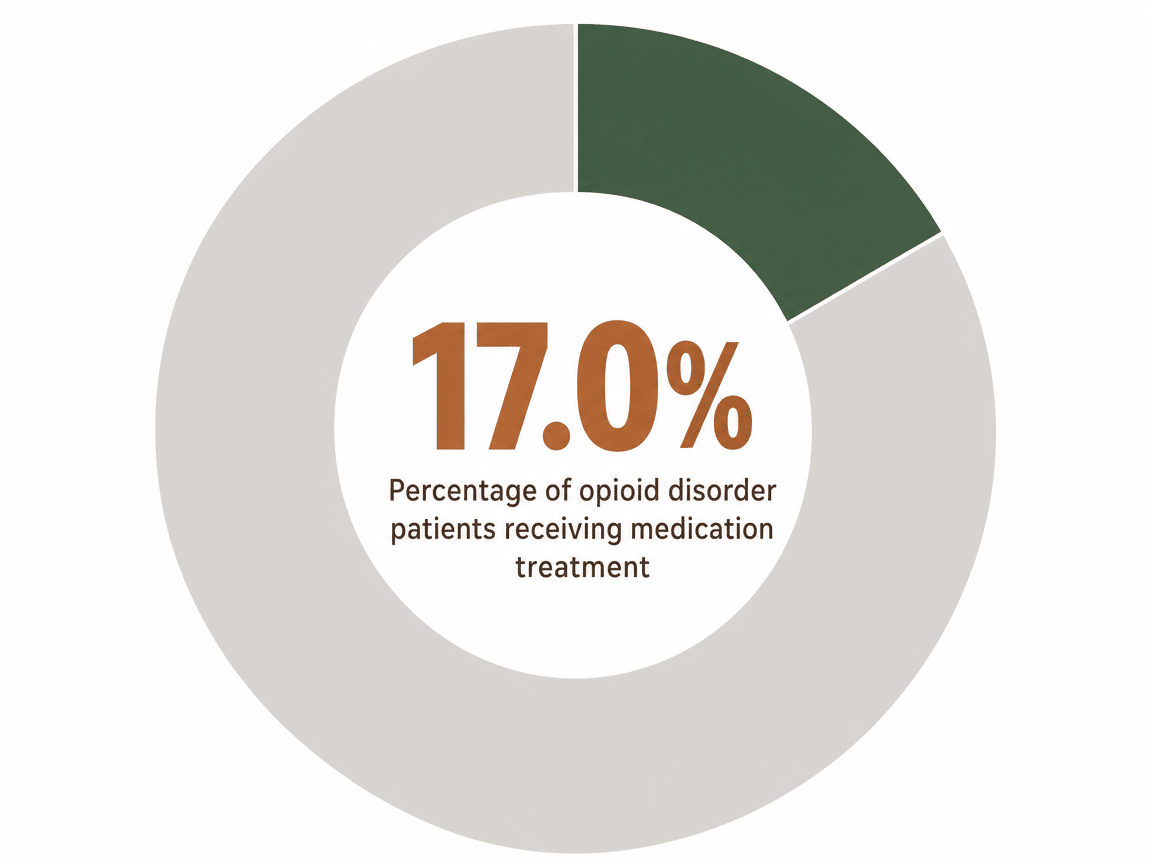
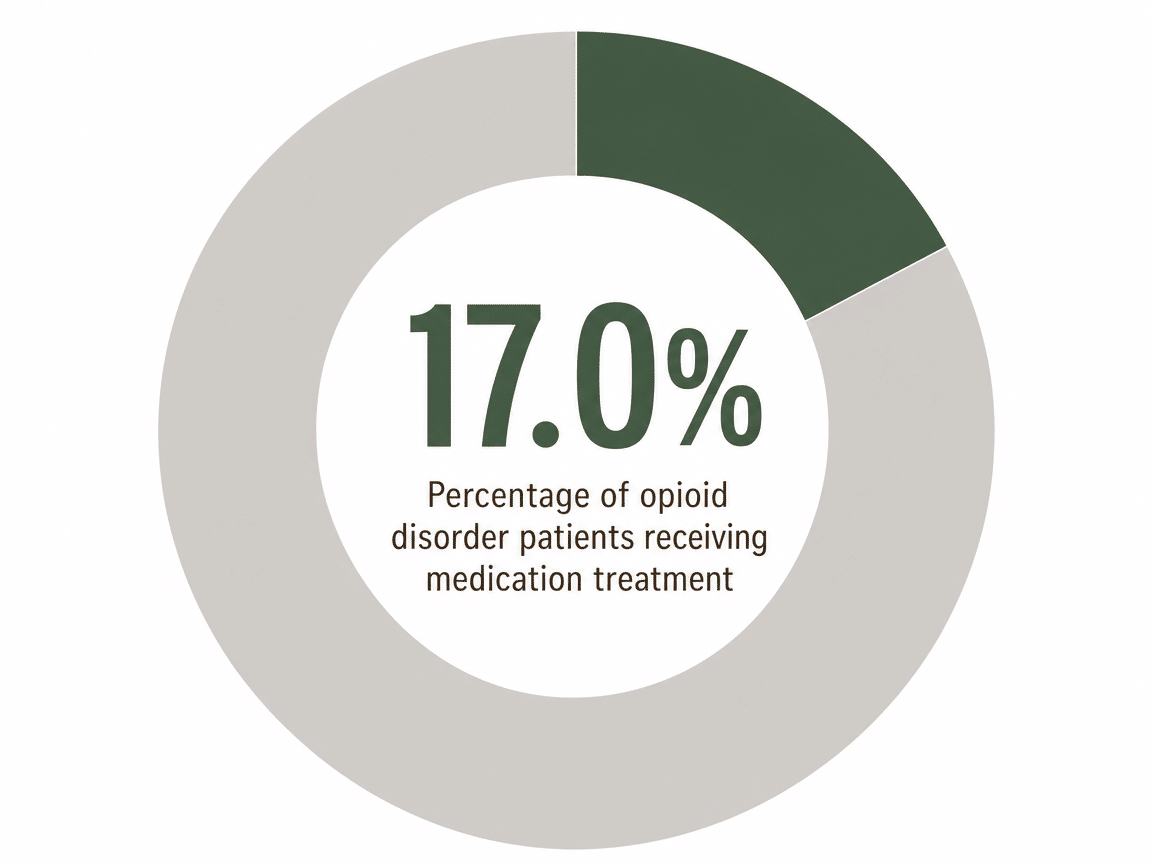
And the access gap is real. SAMHSA’s 2024 National Survey on Drug Use and Health found that among people 12 and older who needed substance use treatment in the past year, only about 1 in 5 — 19.3%, or roughly 10.2 million people — actually received any. Among the 4.8 million people with opioid use disorder, just 17.0% received medications for OUD. That’s a self-report survey with its own limits, but the direction is clear: most people who need help don’t get it, and many who start don’t get the full stack.10
So this list isn’t seven competing options. It’s seven things that, layered inside a structured residential container with continuing care after, give you the best odds the research has to offer. Let’s walk through them.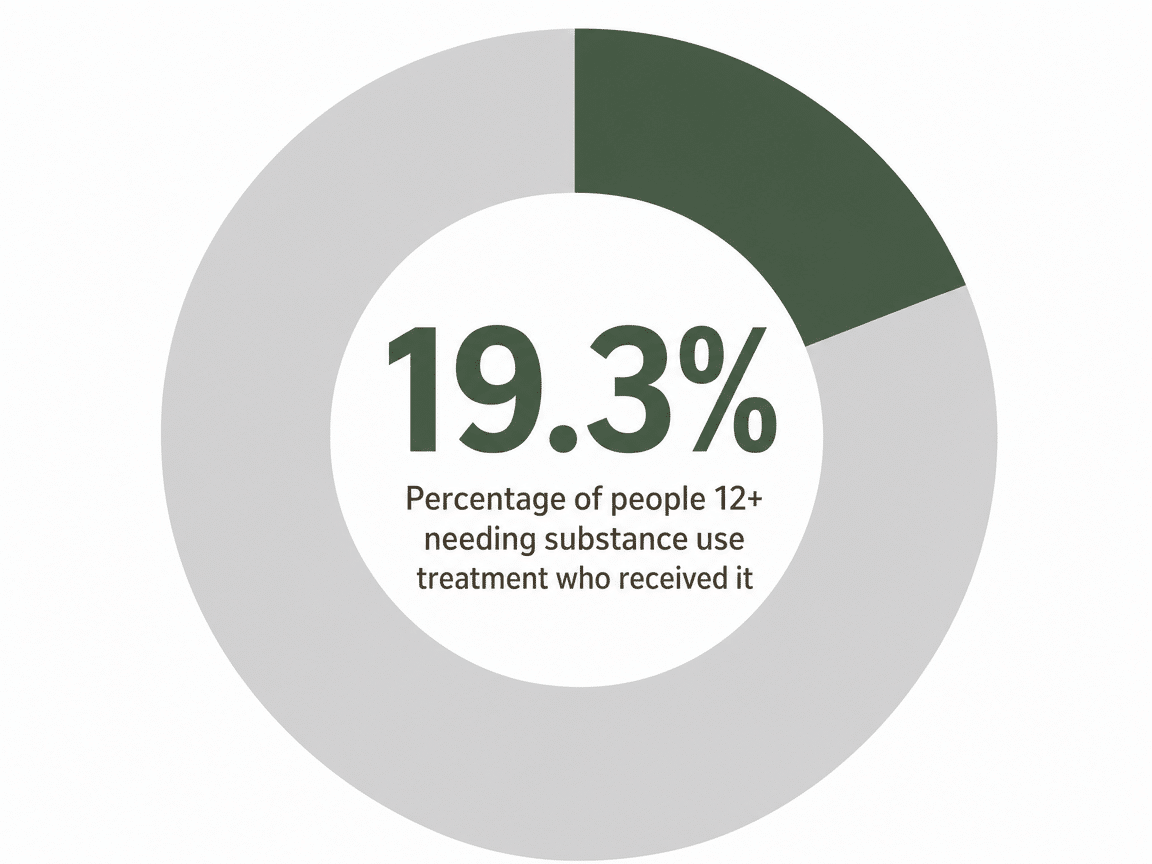
Medication Support: The First Stabilizer
For a lot of people, the first wall isn’t motivation — it’s biology. Withdrawal from alcohol can be dangerous. Withdrawal from opioids feels like the worst flu of your life stacked on top of panic. Trying to outlast that on a couch, alone, is how good intentions die in week one.
Medication support — what clinicians call medication-assisted treatment, or MAT — is the part that quiets the storm enough for everything else to work. For opioid use disorder, that usually means methadone, buprenorphine, or naltrexone. For alcohol, it can mean naltrexone, acamprosate, or disulfiram. These aren’t replacements for sobriety. They’re scaffolding while your brain chemistry resets and you start doing the harder relational and cognitive work in therapy.
SAMHSA is direct about what the evidence shows: MAT improves survival rates, keeps people in treatment longer, lowers illicit opioid use, and improves employment and birth outcomes among women in recovery 5. Those aren’t small wins. “Improves survival” means people are alive a year later who otherwise wouldn’t be.
Even with strong evidence behind it, retention in MAT programs stays low — people start, then drop off. That’s why medication on its own, handed out at a clinic with no counseling and no community, tends to underperform what it could do inside a structured residential setting. When the medication is paired with daily group, individual counseling, and people around you who get it, it does what it’s designed to do: hold the line while you build something to replace what you’re letting go of.6
Cognitive Behavioral Therapy: Retraining the Reach
The medication quiets the body. CBT works on the part of you that, three weeks in, decides on a Tuesday afternoon that one drink with an old friend would be fine.
Cognitive behavioral therapy — really, talk therapy that retrains the thought patterns leading up to a reach — is one of the most studied approaches in addiction care. The work is unglamorous and concrete. You map the chain: a feeling, a thought, a memory, a place, the reach. Then you and a counselor pull that chain apart link by link and build something different to put in its place. A different response to the 5 p.m. tightness in your chest. A different script for the family wedding. A different plan for the Friday you used to lose.
The research backs this up clearly. A recent meta-analysis gave CBT a “strong recommendation” as an empirically supported treatment for substance use disorder, with small-to-moderate effects compared to inactive treatment, and the strongest results in the first one to six months after. That early-window finding matters — it tells you CBT does its loudest work while you’re actively practicing the skills, which is exactly why doing it inside a residential setting, where you practice the skills daily, is different from doing it once a week in an office.3
Here’s the part worth slowing down on. CBT is 15–26% more effective than average outcomes among untreated or minimally treated controls. And when CBT is paired with medication support rather than delivered alone, effect sizes are roughly five times larger. Five times. That single finding is the whole argument of this article in one number — the methods stack. CBT alone helps. CBT plus medication helps a lot more. Add family work, peer support, and a structured day on top, and you’re stacking layered odds in your favor.4
What this looks like on a Tuesday inside a residential program: a morning group where you work through a thought record from yesterday’s craving, an individual session that afternoon where your counselor asks what your hand was reaching for before the drink became the answer, and a homework page that goes back to your room with you. Repeat. The repetition is the medicine.
One honest caveat — CBT’s effects can fade after eight months without ongoing reinforcement. That’s not a flaw in the method. It’s a reason to take continuing care as seriously as the work you do in residential, which is exactly where this list is heading.3
Motivational Interviewing and Contingency Management: The Engagement Layer
Here’s a quiet truth nobody likes to say out loud: even the best treatment plan does nothing if you walk out of it on day four. The methods in this section aren’t about teaching you skills or quieting your body. They’re about keeping you in the room long enough for the rest of the work to happen.
Motivational interviewing is the conversational style your counselor uses when you’re ambivalent — and you will be ambivalent. Some mornings you’ll be sure you want this. Other mornings you’ll be writing the speech where you check yourself out and tell everyone you’re fine. A counselor trained in motivational interviewing doesn’t argue with the second version of you. They ask questions that let you hear your own reasons for staying. The shift is subtle and it’s why it works. You’re not being talked into recovery. You’re being helped to remember what brought you here.
Contingency management is the other half of the engagement layer, and it’s blunter. You hit a target — a clean drug screen, a session attended, a week completed — and you get a tangible reward. A voucher. A small prize. Something concrete. It sounds almost too simple, and it makes some people uncomfortable, but the evidence behind it is solid. Systematic reviews place contingency management alongside CBT and motivational interviewing as among the most effective psychosocial interventions for substance use. Your brain has spent months or years getting reinforced by the substance. Contingency management gives early sobriety its own reinforcement loop while you build internal ones.2
Both methods sit underneath the others. They’re not the headline therapies. They’re the reason you’re still there on day twelve when CBT starts to actually click — and the reason a Tuesday-morning group keeps having you in it.
Family Involvement: The Relational Anchor
You don’t recover into a vacuum. You recover back into a kitchen, a marriage, a phone that still rings with your mother’s name on it. The people in those relationships have their own version of your story — what they watched, what they covered for, what they stopped trusting. If they’re not part of the work, you walk out of treatment carrying skills into a system that hasn’t changed, and the system tends to win.
Family involvement isn’t the soft layer of a treatment plan. It’s one of the most evidence-supported components in the field. A narrative review of family work across the continuum of substance use disorder care points to a meta-analysis of 45 adolescent studies in which family-based models prevailed in almost every comparison — including head-to-head tests against other empirically supported treatments. That’s a striking finding for an approach a lot of people still picture as a single tearful conversation with a counselor in the room.8
The adult evidence is consistent. A 2022 systematic review of randomized controlled trials concluded that incorporating family members into substance use treatment reduces consumption and improves how the family actually functions day to day. Less drinking, less using — and fewer of the silent dinners, the slammed doors, the calls that go to voicemail. Both things move together.7
One specific approach worth knowing about is Brief Strategic Family Therapy. In a NIDA Clinical Trials Network study, BSFT was significantly more effective than treatment as usual at engaging and retaining family members in care, and it improved parent reports of family functioning. Translation: it didn’t just help the person in treatment. It got the family to actually show up and stay — which is the part that usually breaks down.9
Inside a residential setting, this work tends to take a few concrete shapes. There’s a structured family week — usually a few days where parents, partners, or adult children come on-site, sit in guided sessions, learn what they’ve been doing that helps and what’s been quietly enabling, and start telling the truth to each other with a counselor in the room. There’s family education so the people who love you understand what addiction actually is, not what cable TV told them. And there are scheduled family calls during the rest of the stay, so the relationships are being rebuilt in real time, not saved for discharge day.
Here’s the part to hold onto if your family is exhausted, angry, or scared: their willingness to show up for a few days is not a small ask, and it’s not a side project. It may be one of the highest-leverage things either of you do this year.
12-Step Facilitation: Honest About What It Does and Doesn’t Do
Time to be straight with you about something the field is quietly mixed on.
12-step facilitation — structured sessions inside treatment that introduce you to the steps, the language, the meeting culture, and the idea of a sponsor — shows up in the major reviews of evidence-based practices for substance use disorders. It’s there for a reason. People who plug into a meeting community after discharge tend to have something most relapse stories are missing: a place to go on a Thursday night where nobody is surprised you’re an addict and somebody will pick up the phone at 2 a.m.1
Here’s the part most brochures skip. As a stand-alone intervention, the evidence base for 12-step is thinner than people assume. Systematic reviews of psychosocial interventions point out that the research support for 12-step on its own is limited compared to approaches like CBT, motivational interviewing, and contingency management. That doesn’t mean meetings don’t help. It means meetings alone, without therapy, without medication when it’s indicated, without family work, are not a treatment plan.2
Inside a residential program, 12-step facilitation does its best work as one layer of a larger stack. You learn the steps with a counselor. You go to meetings while you’re in care so the routine is built before you go home. You start identifying who, in your local rooms, might become a sponsor. If the spiritual language doesn’t fit you, that’s okay — secular alternatives exist, and a good program won’t push.
Use it as community. Don’t expect it to do the clinical work alone.
Duration: Why 90 Days Keeps Showing Up in the Research
Thirty days feels like a lot when you’re standing at the front door with a duffel bag. From the inside, it goes fast. Week one is detox and disorientation. Week two, the fog starts to lift. Week three, you’re finally doing the work — and then you’re packing.
That’s why the field keeps circling back to longer stays. Reviews of evidence-based practices for substance use disorders are consistent on one finding that’s easy to skim past: positive outcomes correlate with treatment retention and the duration of treatment. The longer you stay engaged in care, the better the numbers get. Not by a little. By enough that duration itself functions as a treatment variable.1
Ninety days isn’t a magic number — it’s a floor. It’s roughly the window where the methods stacked in the earlier sections actually have time to compound. Medication support gets past the first hard weeks and into a stable rhythm. CBT skills get rehearsed enough times that a thought record stops feeling like homework and starts feeling automatic. Family work gets past the first awkward family week into the harder second and third conversations. Peer relationships go from “the people I eat lunch with” to “the people who will text me on a Friday.”
There’s a related finding worth pairing with this one. CBT’s strongest effects show up in the first one to six months, and they can fade after eight months without ongoing reinforcement. Read those two pieces together and the case for longer residential plus continuing care isn’t a sales pitch — it’s just what the curves do.3
If a 30-day stay is what your work, your insurance, or your life can hold right now, that’s still real. Showing up is the first piece. But if 60 or 90 days is on the table, the research is asking you to take it.
Continuing Care: The Quiet Variable That Decides Whether It Holds
Discharge day is not the finish line. It’s the start of the part of recovery the research keeps quietly underlining: what happens in the weeks and months after residential is often what decides whether the work holds.
Reviews of evidence-based practices for substance use disorders are blunt about this — outcomes track with how long people stay engaged in care, not just how intensive the treatment was while they were inside it. And the CBT meta-analysis already mentioned in this article points the same direction from the other side: skills practiced in residential show their loudest effects in the first one to six months, and they can fade after eight months without booster work. Those two findings together aren’t a footnote. They’re the reason continuing care belongs on this list as a method, not a postscript.1,3
What does continuing care actually look like when it’s done well?
- Weekly group sessions over video — usually with the same people you sat with in residential, the ones who already know your story, so you’re not starting over with strangers every Thursday night.
- Scheduled check-ins at 30, 60, 90, 180, and 365 days post-discharge, where someone calls you and asks the real questions.
- A clear plan for the first 72 hours after you walk out the door, because that window is where a lot of relapses live.
- A relationship with a counselor you can text on the day your old dealer’s number lights up your phone.
Here’s the part to hold onto. The first family dinner that doesn’t end in silence. The first month where you make rent without a drink to cope with the bill. The first 90 days where the Zoom group is just part of your week, like Wednesday night basketball used to be. Those aren’t soft wins. Those are the curve bending — and continuing care is what bends it.
How to Tell a Serious Program From a Marketing Brochure
Websites all start to look the same after the third one. Soft photos, words like “holistic” and “world-class,” a contact form. Here’s what to actually look for behind the photography.
Ask which evidence-based methods are part of the daily schedule, by name. A serious program can tell you, without flinching, that medication support is available when it’s clinically indicated, that CBT is a regular part of individual and group work, and that motivational interviewing and contingency management show up in how counselors actually engage with you. If the answer is vague — “we use a variety of approaches” — keep asking.2,3,5
Ask about family. Is there a structured family week, or just a visiting day? A program that takes the family evidence seriously builds it into the schedule, not the marketing copy.7,8
Ask about duration honestly. A facility that pushes you toward 60 or 90 days when your situation supports it is reading the same retention research you’d want them reading. One that quietly steers everyone to the shortest stay insurance will cover is solving a different problem than yours.1
Ask what happens after discharge. Real continuing care has names, schedules, and people attached — weekly video groups, follow-ups at 30, 60, 90, 180, and 365 days, a counselor you can reach. If “aftercare” is a pamphlet handed to you on your way out, that’s the brochure talking.
Ask who’s on staff. Counselors with lived recovery experience, sitting next to clinically licensed providers, tend to build the kind of trust that keeps you in the room on the hard mornings.
Frequently Asked Questions
What is the single most effective addiction treatment method?
There isn’t one. The honest answer the research keeps pointing to is that combined approaches outperform any single method — medication support paired with talk therapy, family work, peer community, and continuing care after discharge. If someone tells you one therapy is the answer, they’re selling something. The methods stack, and the stacking is the medicine.1,2
How long should addiction treatment last to actually work?
Longer than feels comfortable. Reviews of evidence-based practices are consistent that positive outcomes correlate with how long you stay engaged in care. Ninety days inside a structured program isn’t magic — it’s roughly the window where skills compound and relationships rebuild. If 30 days is what your life can hold, start there. If 60 or 90 is on the table, the research is asking you to take it.1
Is medication-assisted treatment just replacing one drug with another?
No. A medication taken under medical supervision that keeps you alive, present, and able to do therapy is not the same thing as active addiction. SAMHSA’s evidence is clear that medication support improves survival, raises retention in treatment, and reduces illicit opioid use. It’s a stabilizer while your brain chemistry resets and the harder cognitive and relational work begins — not a shortcut, and not a substitute.5
Do I have to do 12-step meetings for treatment to work?
No. 12-step facilitation appears in the major evidence-based practice reviews 1, and meeting communities give a lot of people somewhere to land on a Thursday night. But systematic reviews note that 12-step as a stand-alone intervention has a thinner evidence base than CBT, motivational interviewing, or contingency management. Use it as community if it fits. Secular alternatives exist, and a good program won’t push.2
What happens after residential treatment ends?
This is the part that decides whether the work holds. Real continuing care has names and schedules attached — weekly video groups with people who already know your story, scheduled follow-ups at 30, 60, 90, 180, and 365 days, and a counselor you can reach when an old number lights up your phone. CBT skills practiced in residential can fade after eight months without reinforcement, which is why the after matters as much as the during.3
How do I know if a treatment program is legitimate?
Ask specific questions and listen for specific answers. Can they name the evidence-based methods on the daily schedule — medication support, CBT, motivational interviewing, contingency management? Is family work a structured week, or just a visiting day? Does continuing care have a schedule, or is it a pamphlet? Are counselors with lived recovery experience on staff alongside licensed clinicians? Vague answers are the brochure talking. Specific ones are the program.2,5,8
References
- Evidence-based practices for substance use disorders. https://pmc.ncbi.nlm.nih.gov/articles/PMC3678283/
- Evidence Based Psychosocial Interventions in Substance Use. https://pmc.ncbi.nlm.nih.gov/articles/PMC4031575/
- Efficacy of Cognitive Behavioral Therapy for Alcohol and Other Drug Use Disorders. https://pmc.ncbi.nlm.nih.gov/articles/PMC9948631/
- An Evaluation of Cognitive Behavioral Therapy for Substance Use Disorders. https://pmc.ncbi.nlm.nih.gov/articles/PMC10572095/
- Treatment Options for Substance Use Disorder – SAMHSA. https://www.samhsa.gov/substance-use/treatment/options
- Clinical Management of Medication-Assisted Treatment for Opioid Use Disorder. https://pmc.ncbi.nlm.nih.gov/articles/PMC12360668/
- Effects of family therapy for substance abuse: A systematic review of randomized controlled trials. https://pubmed.ncbi.nlm.nih.gov/36564902/
- Family Involvement in Treatment and Recovery for Substance Use Disorders. https://pmc.ncbi.nlm.nih.gov/articles/PMC8380649/
- Retention Toolkit: Family Involvement – UW ADAI. https://adai.uw.edu/retentiontoolkit/family.htm
- SAMHSA Releases Annual National Survey on Drug Use and Health. https://www.samhsa.gov/newsroom/press-announcements/20250728/samhsa-releases-annual-national-survey-on-drug-use-and-health