
Key Takeaways
- Tonight, focus only on getting safe and stable. Call SAMHSA at 1-800-662-HELP (4357) or have someone call for you, since trained staff answer around the clock and can match your symptoms to the right level of care 2.
- Start with two trusted tools and one direct call: FindTreatment.gov for licensed facilities by ZIP, the SAMHSA helpline for guidance, then the facility itself to confirm beds and detox protocols 1, 2.
- Severe withdrawal signs like uncontrollable shaking, seizures, hallucinations, or heavy daily alcohol or benzo use point toward medically monitored detox at ASAM Level III.7-D rather than outpatient care 4, 10.
- Run a quick five-question self-check on withdrawal severity, use history, past quit attempts, home environment, and mental health so the intake call goes faster and lands you at the right level of care 7.
- In Montana, cross-check FindTreatment.gov results against the DPHHS licensed provider list for your county to confirm a facility is currently licensed and operating under state oversight 3, 5.
- Ask intake about transport before assuming you have to drive yourself, since some Montana residential programs offer in-state pickup or help coordinate rides for people already in withdrawal.
- Vet a facility in one call by asking about licensing, on-site detox, specific evidence-based therapies like CBT, family involvement, aftercare structure, and how much clinical staff is in recovery 4, 5, 9.
- Expect structured days of group, individual counseling, experiential work like equine therapy and family week, plus written aftercare with alumni check-ins at 30, 60, 90, 180, and 365 days post-discharge.
If your hands are shaking right now
If you’re reading this at 3 a.m. with your stomach in knots and your hands shaking, take one slow breath. You don’t have to make the perfect decision tonight. You just have to make the next safe one.
Searching for addiction treatment near you when you’re already in withdrawal is one of the harder things a person can do. Your brain is trying to plan a 30-day stay while your body is begging for relief. That’s not weakness. That’s biology. And the fact that you opened this page, or that someone who loves you did, already counts. Quietly, but it counts. Here’s what you need to know before you scroll any further: you don’t have to figure out the whole road tonight. The goal for the next few hours is simple. Get safe. Get stable. Get a real human on the phone who can tell you whether what you’re feeling needs medically monitored detox or something less intensive 4. Everything after that, the program length, the therapies, the family piece, the insurance call, can wait until daylight. The rest of this guide is built like a staircase. Short steps. One at a time. You can stop on any one of them and breathe.The two phone calls and one website to start with tonight
Before you read another paragraph, here are the three things that can move you from a sick night to a safer morning. You don’t need all three. You need any one of them to work.
Figuring out if you need medically monitored detox or something lighter
What withdrawal looks like when it’s actually dangerous
Not every withdrawal needs a hospital bed. But some absolutely do, and you deserve a straight answer about which one you’re in.
The symptoms that should move you toward medically monitored detox right now are the ones your body can’t safely ride out alone. Shaking that won’t stop. A racing heartbeat. Sweating through your shirt while you’re freezing. Throwing up so much you can’t keep water down. Seeing or hearing things that aren’t there. A seizure, even a small one. A blood pressure spike that makes your head pound. If you’ve been drinking heavily every day for months or years, alcohol withdrawal can turn dangerous quickly, sometimes within 24 to 72 hours after your last drink. Benzodiazepine withdrawal carries the same kind of risk. Opioid withdrawal feels brutal but is rarely deadly on its own, though dehydration and underlying heart conditions can make it serious. Here’s the part nobody tells you: if you’re scared of what your body is doing, that fear is information. Trust it. A clinician on the SAMHSA helpline or at a residential intake line can listen to your symptoms and tell you within a few minutes whether you need 24-hour medical supervision or whether something less intensive will keep you safe 2, 4.ASAM levels of care, translated into plain English
When you call a treatment center, you’ll probably hear the phrase “level of care.” That’s clinical shorthand for how much supervision your body and brain need to detox safely. The American Society of Addiction Medicine, ASAM, lays out a ladder of these levels, and the names sound technical, but the differences are pretty plain once you translate them 4.
Outpatient (Level 1). You live at home, drive yourself to appointments a few times a week, and meet with a counselor or doctor. Who this fits: someone with mild symptoms, a stable home, no history of severe withdrawal, and strong support around them. Intensive outpatient (Level 2). Still living at home, but now you’re in treatment 9 to 20 hours a week, often in evening groups. Who this fits: someone who can stay safe between sessions but needs more structure than once-a-week therapy. Medically monitored inpatient detox (Level III.7-D). 24-hour medically supervised detoxification in a residential or hospital-like setting, with nurses and physicians available around the clock to manage withdrawal 4. Who this fits: someone whose withdrawal symptoms are moderate to severe, who has a history of seizures or DTs, who’s been using heavily for a long time, or who has medical or mental health complications layered on top. Residential treatment (Level 3). After detox is done, you stay in a structured live-in program, often for 30, 60, or 90 days, where the focus shifts from withdrawal to recovery skills, counseling, group work, and aftercare planning. Most people in a true detox crisis land at Level III.7-D first, then step down into residential. The meta-analyses comparing inpatient and outpatient settings make clear that more severe presentations do better with the higher-supervision option, even when milder cases can succeed in outpatient care 10. You don’t have to memorize any of this. You just need enough vocabulary to ask, on the phone, “What level of care do you think I need, and why?”Five questions a quick self-check will answer for you
You don’t need a clinical assessment to start. You need five honest answers. Clinicians use a similar set of dimensions, withdrawal risk, medical history, mental health, readiness, and your living environment, to recommend a level of care 7. You can run a rough version on yourself right now.
- How bad are your withdrawal symptoms in the last 24 hours? Mild shakiness and queasiness is one thing. Hallucinations, seizures, or vomiting blood is another.
- How long and how heavily have you been using? Daily heavy alcohol or benzo use over months raises the risk of dangerous withdrawal sharply.
- Have you tried to quit before, and what happened? If past attempts brought seizures, ER visits, or a fast relapse, that history matters.
- What’s going on at home? Is there alcohol in the kitchen, a partner who uses, a job that runs you ragged? Your environment shapes whether outpatient is safe.
- Are you also dealing with depression, anxiety, trauma, or thoughts of hurting yourself? Co-occurring mental health needs usually point toward a higher level of care, not a lower one.
What ‘near me’ actually means when you’re searching from Montana
Using FindTreatment.gov and the SAMHSA helpline by ZIP
When you type “addiction treatments near me” into your phone at midnight, Google will hand you a wall of ads first. Skip those. Open FindTreatment.gov instead 1. Type in your ZIP code, set the distance you’re willing to travel, and check the box for residential or detox services. The list that comes back is filtered by what’s actually licensed and reporting to SAMHSA, not by who paid for the top slot.
Each result shows the facility name, a phone number, and what services they offer. If you’re not sure how to read the list, that’s exactly what the SAMHSA helpline is for. Call 1-800-662-HELP (4357) and ask the person on the line to walk you through it 2. They can pull up your area, narrow it to medically monitored detox, and tell you which numbers to try first. The CDC sends people to this same combination of locator and helpline for substance use treatment 8. Two tools, one ZIP code. That’s the whole first move.Cross-checking the Montana DPHHS licensed list (Cascade County and beyond)
The SAMHSA list is solid, but it’s not the only one worth checking. Montana’s Department of Public Health and Human Services keeps its own roster of licensed substance use treatment providers, broken out by county 5. If you’re searching from Great Falls or anywhere in Cascade County, that list is the cleanest way to confirm a facility is currently licensed by the state to deliver residential care. Flathead, Yellowstone, Missoula, and the rest of the state’s counties are listed too.
Why bother with two sources? Because the clinical literature on building local treatment directories is pretty direct: the first step in finding good care is collecting information about what’s actually available and licensed in your community, not what’s marketed to you 3. Cross-checking the SAMHSA result against the DPHHS list takes about five minutes and tells you whether a facility is real, current, and operating under state oversight. If a name shows up on FindTreatment.gov but not on the DPHHS list, call DPHHS or the facility before you commit. If it shows up on both, you can move the conversation forward with more confidence. You’re not being paranoid. You’re being a careful consumer of a service that, in Montana, is governed by real licensing rules for a reason.If you’re outside Great Falls: pickup, transport, and getting there
Montana is a big state and most people don’t live ten minutes from a residential facility. If you’re calling from Havre, Billings, Bozeman, or somewhere off a back road in the Hi-Line, ask one question early in the intake call: How do I actually get to you?
Some Montana residential programs offer complimentary in-state pickup or will help coordinate a ride. Others will tell you which bus, which family member, or which sober transport service typically gets people to their door. Don’t assume you have to figure out the drive yourself when you can barely keep water down. Ask. “I’m four hours away and I’m in withdrawal. What does admission day actually look like for someone like me?” A good facility will have a calm, practiced answer.How to vet a facility in one phone call
One phone call can tell you most of what you need to know. Not every facility deserves your trust just because it has a website and a 1-800 number. You’re allowed to ask questions, and a good program will sound relieved that you did.
Here are five things to ask, and what a solid answer sounds like.- Are you state-licensed, and are you accredited? In Montana, that means licensed by DPHHS and ideally accredited by a body like the Joint Commission 5. If they hesitate or change the subject, that’s your answer. A licensed facility will tell you their license number without flinching.
- Do you offer medically monitored detox on-site, or do you partner with somewhere that does? If you’re in active withdrawal, you need to know whether you’ll be admitted directly into a detox bed or sent somewhere else first 4. Either can be fine. Vagueness is not.
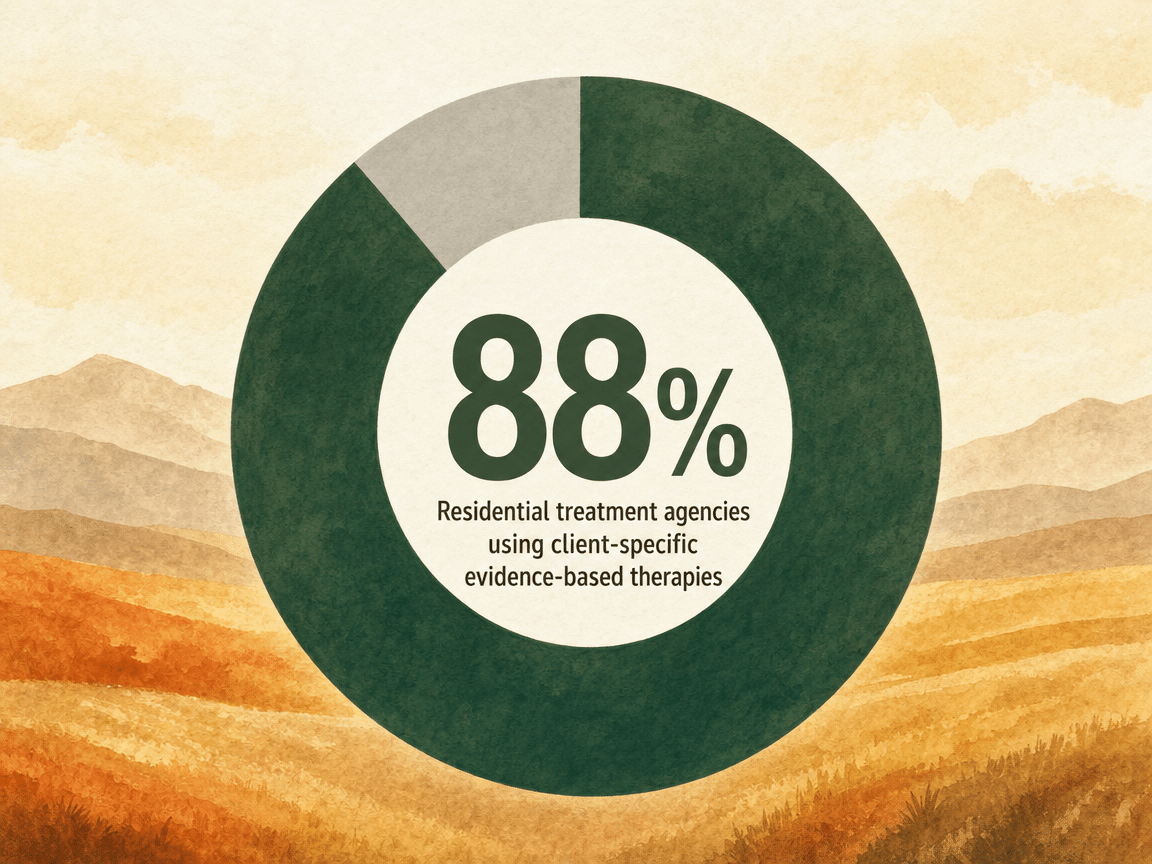
- What evidence-based therapies do you actually use, day to day? A review of residential treatment agencies found that 88% reported implementing client-specific evidence-based practices like cognitive behavioral therapy and dialectical behavior therapy 9. That’s a survey of residential agencies that responded, not a guarantee about any one facility, which is exactly why you ask. You want to hear specific names: CBT, motivational interviewing, trauma-focused work, 12-step facilitation. “We do counseling” is not an answer. “Your individual sessions use CBT, and group runs on a 12-step framework with trauma-informed groups twice a week” is.
- How are families involved, and how is aftercare structured? Ask whether they offer a family week, family counseling, and a real continuing care plan after you leave, not just a goodbye handshake. Programs that schedule alumni check-ins at 30, 60, 90, 180, and 365 days are taking the long view.
- How much of your clinical staff is in recovery themselves? This one is personal preference, but for a lot of people it changes everything. A counselor who has lived through their own withdrawal answers your fear differently than someone who has only read about it.
What 30, 60, or 90 days inside a good residential program actually looks like
A normal day: counseling, group, meals, and quiet hours
If you’ve never spent a night inside a residential program, the word “residential” probably sounds heavier than the reality. Most days have a rhythm, and after the first week, that rhythm is one of the things people end up liking.
You’ll wake up in a bed that isn’t yours, in a room that’s quieter than you’re used to. Breakfast is shared. Mornings usually run on group: a check-in circle, then a longer therapy group built around something specific, like coping skills, relapse prevention, or processing what brought you in. Mid-morning is often individual counseling, one-on-one time with the counselor assigned to you. Lunch. An afternoon group, sometimes educational, sometimes experiential. A break. Maybe a 12-step meeting on-site in the evening, then quiet hours, then sleep. The structure is the point. When your nervous system has been running on alcohol or drugs for a long time, a predictable day is medicine. You don’t have to decide what’s next. The schedule decides for you, and your job is to show up.Equine therapy, family week, and the parts that don’t feel like a hospital
The best residential programs build in hours that don’t look like therapy on paper but do more work than people expect.
Equine therapy is one of those hours. You’re in a barn or a paddock with a horse, a counselor, and a halter. You’re not riding. You’re learning to be present with a thousand-pound animal who reads your anxiety before you say a word. People who haven’t cried in years cry in front of a horse. Something about being seen without being judged cracks the surface open in a way a folding-chair group sometimes can’t. Family week is another. Many programs schedule three or so days where the people closest to you fly in or drive in for guided conversations, education about addiction, and supervised repair work. It’s not easy. It’s also where a lot of the lasting change starts, because addiction is rarely a solo problem and recovery is rarely a solo project. Hiking. Recreational outings. Art. A gym. A meal cooked together. These aren’t filler. They’re proof that a sober life can have texture, and that’s a lesson you have to feel, not read.Aftercare: alumni Zoom check-ins at 30, 60, 90, 180, and 365 days
Discharge day is not the finish line. The first year out is where most of the work either holds or quietly comes apart, and a real program plans for that before you ever leave.
Look for aftercare that’s specific, not symbolic. Weekly alumni Zoom groups so you can see familiar faces from your cohort. Scheduled follow-up calls at 30, 60, 90, 180, and 365 days post-discharge. A continuing care plan in writing that names your outpatient counselor, your local meeting schedule, and who to call if a Tuesday afternoon goes sideways. When you ask a facility about aftercare, listen for dates and structure, not vibes. “We stay in touch” is a brochure line. “You’ll be on a Wednesday alumni Zoom and I’ll personally call you on day 30, day 60, and day 90” is a plan.Insurance, payment, and what to ask before you say yes
Money is the question people are most afraid to ask, so let’s just put it on the table.
Most residential treatment centers in Montana work with major commercial insurance plans, and a quick benefits check is usually a 10-minute phone call, not a week-long process. When you call a facility, ask three things: Do you accept my insurance? Will you run a verification of benefits for me right now? And what would my out-of-pocket cost realistically look like for 30, 60, or 90 days? A real intake coordinator can pull this up while you’re on the line. One thing to know going in: not every residential facility accepts Medicaid or Medicare. Some accept commercial plans only. If you’re on a public plan, ask directly so you don’t waste a call you don’t have the energy for, then ask the SAMHSA helpline to point you toward facilities in your area that do take it 2. The state DPHHS list can also help you find publicly funded options 5. If you’re uninsured or underinsured, ask about sliding-scale fees, payment plans, and scholarship beds. They exist more often than people assume. You won’t know until you ask, and asking is not rude. It’s the conversation.Your next 24 hours: a short, kind checklist
You’ve read enough. Here’s what the next day can look like, broken into pieces small enough to actually do.
- In the next hour: Drink some water. Sit down somewhere safe. Call SAMHSA at 1-800-662-HELP (4357) or hand the phone to someone who can call for you 2.
- In the next two hours: Open FindTreatment.gov, type your ZIP code, and check the box for residential and detox services. Write down two or three names 1.
- Before you sleep: If you’re in Montana, cross-check those names against the DPHHS licensed provider list for your county 5. Call one facility. Tell them what you’re using, how long, and how you’re feeling right now.
- In the morning: Ask about admission, transport, insurance, and whether they offer medically monitored detox on-site 4. Pack a small bag: ID, insurance card, a phone charger, a few changes of clothes.
- Within 24 hours: Get to the door. That’s the whole job today.
Frequently Asked Questions
How do I know if I need medically monitored detox or if outpatient is enough?
If you have shaking that won’t stop, a racing heart, hallucinations, a seizure history, or you’ve been drinking heavily every day for months, your withdrawal probably needs 24-hour medical supervision, which is what ASAM Level III.7-D inpatient detox is built for 4. Milder symptoms with a stable home and support can sometimes be managed outpatient. Call SAMHSA at 1-800-662-HELP and let a trained voice tell you which side of that line you’re on 2.
What’s the fastest way to find licensed addiction treatment near me tonight?
Open FindTreatment.gov, type your ZIP code, and check the box for residential and detox services 1. That gives you a list of licensed facilities reporting to SAMHSA, not a wall of paid ads. If you’d rather talk to a person, call 1-800-662-HELP. It’s free, confidential, and answered around the clock 2. The CDC sends people to the same two tools, so you’re starting where the experts start 8.
What questions should I ask a treatment center before I agree to admit?
Ask five things. Are you state-licensed and accredited? Do you offer medically monitored detox on-site or partner for it 4? What specific evidence-based therapies do you use day to day, like CBT, motivational interviewing, or trauma-focused work 9? How are families involved, and what does aftercare look like at 30, 60, and 90 days post-discharge? How much of your clinical staff is in recovery? Vague answers are an answer.
Will my insurance cover residential addiction treatment?
Most Montana residential programs work with major commercial insurance, and a benefits check is usually a quick call. Ask the facility directly: do you accept my plan, will you verify benefits now, and what’s my realistic out-of-pocket for 30, 60, or 90 days? Not every program accepts Medicaid or Medicare, so confirm before you commit. If you’re uninsured, ask SAMHSA about publicly funded options or sliding-scale beds 2.
I live hours from Great Falls. Can a facility help me get there?
Often, yes. Some Montana residential programs offer complimentary in-state pickup or help coordinate transport. When you call intake, say plainly, “I’m hours away and I’m in withdrawal. How do people in my situation actually get to your door?” A licensed program will have a calm, practiced answer and can also point you to the DPHHS list of providers closer to your county if travel isn’t realistic tonight 5.
How long should I plan to stay in residential treatment, 30, 60, or 90 days?
It depends on how long and how heavily you’ve been using, your withdrawal severity, any co-occurring mental health needs, and what’s waiting for you at home 7. Thirty days stabilizes most people. Sixty or ninety gives more time to lay down new habits, work through trauma, and prepare aftercare. Meta-analyses suggest more severe presentations do better with longer, higher-supervision stays 10. Decide with your clinical team, not alone.
References
- Treatment Locators: Mental Health, Drug, Alcohol Issues – SAMHSA. https://www.samhsa.gov/find-help/locators
- Treatment | National Institute on Drug Abuse – NIDA. https://nida.nih.gov/research-topics/treatment
- Chapter 5—Specialized Substance Abuse Treatment Programs – NCBI. https://www.ncbi.nlm.nih.gov/books/NBK64815/
- 2 Settings, Levels of Care, and Patient Placement – NCBI – NIH. https://www.ncbi.nlm.nih.gov/books/NBK64109/
- Treatment Provider Information – dphhs. https://dphhs.mt.gov/BHDD/SubstanceAbuse/treatmentproviderinformation
- 2025 National Directory of Mental Health Treatment Facilities. https://www.samhsa.gov/data/report/2025-national-directory-mental-health-treatment-facilit
- Chapter 4—Assessment – A Guide to Substance Abuse … – NCBI – NIH. https://www.ncbi.nlm.nih.gov/books/NBK64828/
- Treatment of Substance Use Disorders | Overdose Prevention – CDC. https://www.cdc.gov/overdose-prevention/treatment/index.html
- Implementing Evidence-Based Practice in Residential Care – PMC. https://pmc.ncbi.nlm.nih.gov/articles/PMC6510514/
- Summary of Evidence – Inpatient and Outpatient Treatment … – NCBI. https://www.ncbi.nlm.nih.gov/books/NBK507689/