Key Takeaways
- Great Falls pairs early recovery with accessible outdoor and indoor options, including the Missouri River, River’s Edge Trail, and the Scheels Aim High Big Sky Aquatic and Recreation Center.
- Recreation builds protective factors like self-control, grit, peer connection, and positive social involvement that research links to reduced substance use 4, 5.
- Before committing, weigh cost, schedule, and social fit: free trail and river access, drop-in classes, adult leagues, and seasonal programs listed in the city’s Summer Guide 2, 7.
- Sustained recovery aligns with the Surgeon General’s view of ongoing management, so families and individuals should plan consistent weekly activities rather than one-time fixes 12.
Your First Week Sober in a Town That Knows How to Move
The first week without a drink or a pill can be disorienting. Your mind races, and you might feel an urge to fill the void left by old habits. A common question arises: what am I supposed to do with myself now?
Great Falls, Montana, provides a unique answer to this question. With the Missouri River flowing through its heart, the vast prairie to the east, and the Rocky Mountains to the west, the city offers a dynamic environment. Facilities like the Scheels Aim High Big Sky Aquatic and Recreation Center provide pools, fitness classes, and sports leagues, while extensive trails are easily accessible. You don’t need to be an outdoor enthusiast or an athlete; you just need places where your body and mind can find stability as you navigate early recovery.
This guide explores how recreational programs in Great Falls support individuals in early recovery, both within residential treatment and after discharge. The goal isn’t just to fill your schedule but to demonstrate that a sober life here has structure, depth, and community. You’re not starting from scratch; you’re beginning in a city that embraces an active lifestyle.
Why Recreation Is Medicine, Not Filler
What the Research Actually Says About Staying Sober
The activities scheduled during treatment are not merely time-fillers; they are integral to the recovery process. Public health researchers identify “protective factors” as elements in a person’s life that reduce the likelihood or severity of substance use. These factors are specific and include strong bonds with family, school, and community, opportunities for positive social involvement, and resilience developed through overcoming challenges 4. Research on adolescent substance use further highlights the importance of self-esteem, self-control, grit, positive peer influences, parental monitoring, and academic competence 5. Each of these can be cultivated through recreational engagement.
For instance, during an equine session, learning to calm your body to interact with a horse demonstrates self-control. Joining a casual volleyball game at the recreation center fosters healthier peer interactions. Completing a hike along the Missouri River bluffs builds grit. The aquatic center, arts classes, and team sports are not just optional extras; they are practical avenues for developing these protective factors.
Therefore, activities like gym time and group walks are crucial components of maintaining sobriety, contributing significantly more than often realized.
The Montana Stakes, Said Once
Montana faces significant challenges related to substance use, which underscores why recovery is taken seriously in Great Falls. The Montana Substance Use Disorders Task Force Strategic Plan reveals that over 100 individuals die from drug overdoses annually in the state, and more than 15,000 emergency department visits each year are linked to substance use 10. These statistics, for a state with a population of just over a million, highlight the profound impact of addiction. This reality drives the community’s commitment to developing recreational opportunities that do not involve alcohol, such as pools, sports leagues, trails, fitness classes, and youth summer camps.
While these numbers are stark, they serve to illustrate that your recovery is not an isolated journey. It is part of a broader community effort, and the recreational resources available in Great Falls are a vital support system in this collective movement.
Inside the Program: What Recreational Therapy Looks Like Day to Day
Equine Sessions, Hikes, and the Quiet Power of Doing Something With Your Hands
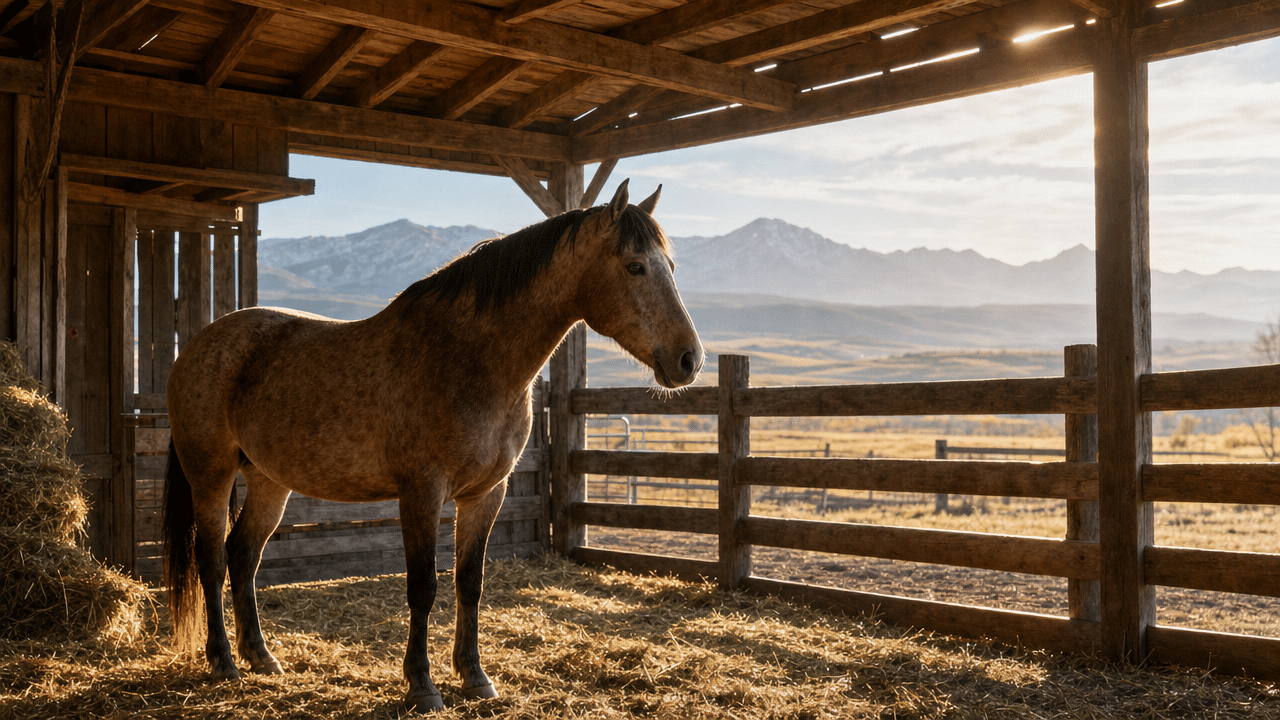
Imagine stepping into a barn, encountering a horse, and realizing the interaction itself is the therapy. Equine therapy often surprises participants. It’s less about immediate emotional breakthroughs and more about subtle, profound interactions. A horse instinctively responds to your physical state, noticing tension in your shoulders or shallow breathing. This interaction encourages you to slow down and become more present. This process aligns with the U.S. Surgeon General’s report, which emphasizes treatment as ongoing care that requires experiential and psychosocial support, beyond just verbal therapy 12.
Hikes offer a different kind of engagement. On a trail near Great Falls, the natural environment provides a grounding experience. Whether you’re conversing with a peer or walking in silence, the physical act of moving and engaging your hands—perhaps picking up a rock or adjusting a shoelace—is significant in early recovery. Such activities help redirect focus from old habits, promoting a sense of calm and routine that the nervous system can learn to trust.
These activities don’t demand perfection; they simply require your presence, a manageable step in recovery.
Gym Time, Group Walks, and Why Your Nervous System Needs This
Early sobriety can be physically and emotionally taxing, affecting sleep, appetite, and overall comfort. The solution lies in consistent, repetitive actions. Gym sessions within a residential program focus not on intense physical transformation but on stress release. Short periods on a treadmill, simple strength exercises, or stretching can help your body process stored tension. Research consistently highlights self-control, self-esteem, grit, and peer connection as protective factors against substance use 5. Attending the gym when you’d rather not, completing a workout, and doing so alongside others facing similar challenges all contribute to these factors.
Group walks provide a more subdued form of engagement. Moving side-by-side with others can be less intimidating than direct conversation, allowing for comfortable silence or light interaction. These walks help stabilize your heart rate and relax your body, offering a sense of calm that sedentary activities might not achieve.
These repeated physical activities build muscle memory, creating healthy routines that your body can rely on when life becomes challenging.
Stepping Out: City Recreation Built for Real Life After Discharge
Scheels Aim High Big Sky Aquatic and Recreation Center
The transition from a treatment program back into daily life can feel overwhelming. Fortunately, Great Falls offers a central hub for healthy activities: the Scheels Aim High Big Sky Aquatic and Recreation Center, managed by the Great Falls Park and Recreation Department. This facility provides pools, fitness classes, and various leisure programs, creating a welcoming space for diverse individuals to engage in positive activities 7. For someone newly sober, entering an environment where people are simply swimming or stretching, free from the pressures of alcohol-centric social settings, can be incredibly therapeutic.
Whether you choose to swim laps, attend a class, or simply read in the lobby, your presence there is a victory. The city designed this center to enhance community health and livability 7, making it a resource for everyone, regardless of their current circumstances.
Adult Leagues, Fitness Classes, and Friday Nights That Don’t Revolve Around a Bar
Friday nights can be particularly challenging in early recovery, as old routines often centered around substance use. Adult recreation programs offer a constructive alternative. The Park and Recreation Department organizes fitness classes and leisure activities throughout the week and on weekends 7. The city’s Summer Guide details options like volleyball, soccer, ice skating, dance, hiking, and various sports, many of which are open to adults 2. Online and in-person registration makes participation straightforward 2.
These leagues and classes provide a sense of accountability and community that traditional social settings might lack. The expectation of showing up each week fosters new connections. Research consistently points to peer connection and positive social involvement as crucial protective factors against substance use 4. A volleyball team or a regular fitness class offers a natural environment to build these connections, replacing old social patterns with healthier ones.
The River, the Trail, and Free Things That Hold You Together
Some days, a structured class isn’t feasible, and simply being outdoors is what’s needed. Great Falls excels in providing accessible natural spaces. The Missouri River flows through the city, accompanied by the River’s Edge Trail, which stretches for miles. You can walk, bike, or simply sit by the water, finding solace without expectation or cost. Black Eagle Falls is nearby, the prairie is a short drive east, and the Rockies are visible from many points in the city. These natural resources are free and require no performance.
In early recovery, free resources are invaluable. The U.S. Surgeon General’s report emphasizes that treatment is an ongoing process, not a one-time event 12. A walk along the river or a quiet moment on a bluff contributes to this sustained management. The CDC notes that many adults with substance use disorders began using during their youth 3. The natural environment offers a consistent, non-judgmental space for continued healing, regardless of your past or present circumstances.
What This Actually Costs You
Financial concerns are common in early recovery. The median household income in Great Falls is approximately $63,373 (2020–2024, in 2024 dollars), slightly above Montana’s statewide average of $60,560 and below the U.S. average of $69,021 13, 14. This economic reality means that most residents operate within a defined budget. The city’s recreation programs are designed with this in mind, aiming to enhance community health and livability through affordable options 7.
Many recreational opportunities are free: the River’s Edge Trail, the Missouri River, and exploring the prairie. A drop-in fitness class or a swim at the Scheels Aim High Big Sky Aquatic and Recreation Center costs less than previous habits might have 7. Seasonal programs and leagues can be viewed online, allowing you to check prices before committing 2. If a particular class is beyond your budget one month, the free options remain available. The availability of recreation doesn’t diminish with financial constraints.
A Week of Sober Recreation in Great Falls, Sketched Out
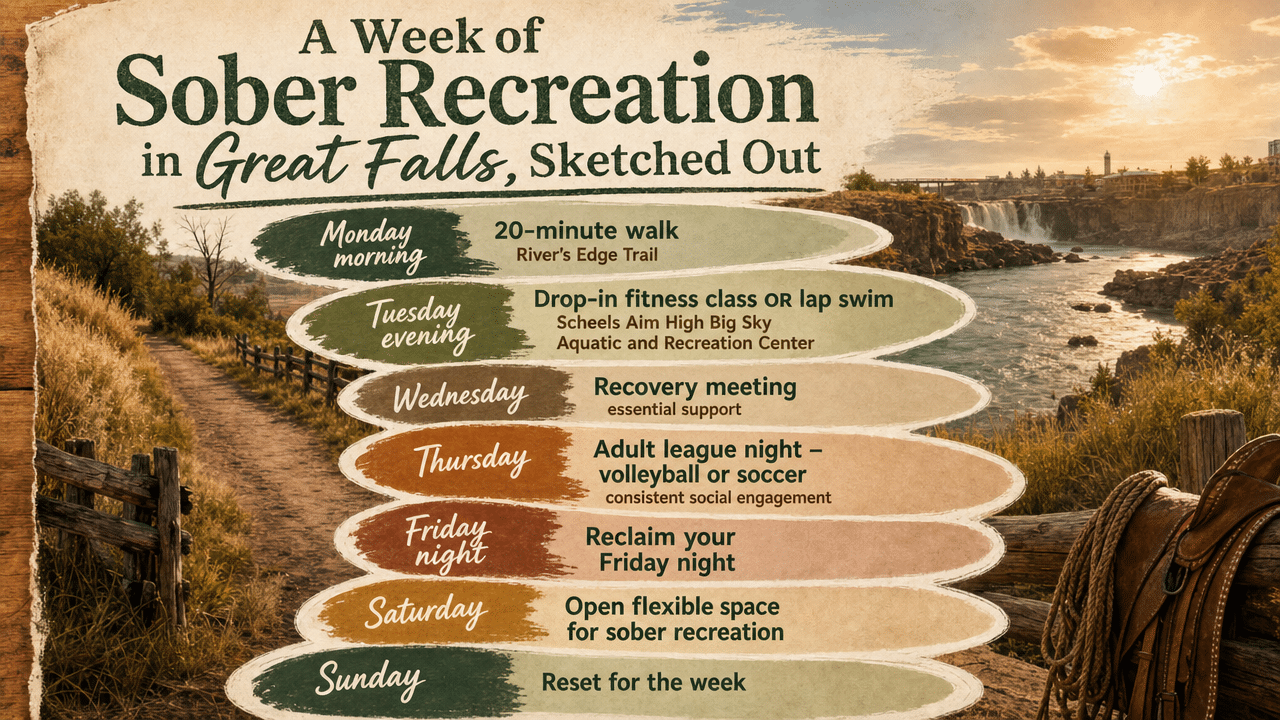
Structuring your time can be a challenge in recovery. Here’s a sample week of sober recreation in Great Falls, offering a framework rather than a rigid schedule:
-
Monday morning. Begin your week with a twenty-minute walk along the River’s Edge Trail before work. The movement of the water can be a calming start to your day.
-
Tuesday evening. Attend a drop-in fitness class or go for a lap swim at the Scheels Aim High Big Sky Aquatic and Recreation Center 7. Simply showing up is the goal.
-
Wednesday. Incorporate a recovery meeting. While not recreation, it provides essential support for the rest of your week.
-
Thursday. Participate in an adult league night, such as volleyball or soccer, depending on the season 2. This consistent social engagement is a protective factor against substance use 4.
-
Friday night. Reclaim your Friday evenings. Consider a movie night at home with family, bowling with a sober friend, or a long walk to Black Eagle Falls to watch the sunset. Plan this activity in advance.
-
Saturday. Dedicate time to outdoor activities. Explore the prairie east of town or go for a hike with someone supportive. Engaging your hands and focusing on your breath can be grounding.
-
Sunday. Prioritize rest. Cook a meal, connect with family. The U.S. Surgeon General’s report views recovery as ongoing management 12, and rest is a vital part of that process.
This is a flexible template. Customize it to fit your needs and preferences. The key is to create structure and intentionality in your week.
Talking to the Fears You Haven’t Said Out Loud
“I’ll Be Bored.” “I’ll Lose My Friends.” “I Won’t Know Who I Am.”
Addressing these unspoken fears is crucial for sustained recovery.
-
“I’ll be bored.” Boredom is a common experience in early sobriety, but it’s a feeling, not a trigger for relapse. The solution isn’t constant excitement but consistent engagement. Regular activities like a Tuesday swim or a walk along the river, even if they become routine, train your brain to find contentment in ordinary life. This repetition helps establish a new sense of normalcy.
-
“I’ll lose my friends.” Some friendships may change. Relationships built primarily around substance use often prove to be superficial. The distinction between a drinking buddy and a true friend becomes clear. Research consistently highlights peer connection and positive social involvement as protective factors 4, 5. Joining a league or a fitness class offers a natural way to meet new people who share healthy interests, fostering genuine connections.
-
“I won’t know who I am.” This is a profound fear, yet it often leads to self-discovery. Sobriety can reveal your authentic self, perhaps for the first time. This journey of self-redefinition is both challenging and deeply rewarding.
For Families: How to Support Without Hovering
If you are supporting a loved one in recovery, your role is to create a supportive environment, not to manage their recovery directly. Practical assistance is often more valuable than advice. Offer rides to the recreation center instead of lectures. Consider signing up for a class together at the Scheels Aim High Big Sky Aquatic and Recreation Center 7to ease their initial entry. Provide childcare during recovery meetings. Take walks on the River’s Edge Trail without probing questions. Montana DPHHS prevention guidance emphasizes that consistent support across home and community, sustained over time, significantly improves outcomes 8.
Avoid constantly monitoring their schedule or interrogating them about their progress. Trust is rebuilt through small, consistent actions, much like recovery itself. Your steady, non-intrusive presence is the most effective form of support during this period.
Where Rocky Mountain Treatment Center Fits
For those considering or currently in a treatment program in Great Falls, Rocky Mountain Treatment Center bridges the gap between structured therapy and real-world application. Residential care provides essential skills, while the city’s recreational resources—the river, the recreation center, leagues, and trails—offer venues to practice and integrate these skills into daily life.
Rocky Mountain Treatment Center’s 30, 60, and 90-day residential programs combine individual and group counseling, 12-step support, equine therapy, and family week. This is complemented by continuing care through Zoom and follow-up check-ins at various intervals post-discharge. This long-term approach aligns with the U.S. Surgeon General’s view of recovery as ongoing management rather than a one-time fix 12. The vibrant recreational scene in Great Falls becomes an integral part of this sustained commitment to sobriety, helping individuals maintain their progress long after their program concludes.
Frequently Asked Questions
What kinds of recreational programs are available in Great Falls, MT?
The Great Falls Park and Recreation Department manages the Scheels Aim High Big Sky Aquatic and Recreation Center, which offers pools, fitness classes, and various leisure programs 7. The city’s Summer Guide also lists camps, swim lessons, youth sports leagues, and seasonal activities such as volleyball, soccer, and ice skating 2. Additionally, the River’s Edge Trail, the Missouri River, and access to nearby prairie and mountains provide extensive outdoor options.
Why does recreation matter in early recovery from addiction?
Recreation is vital in early recovery because it helps build protective factors identified by research, including peer connection, self-control, self-esteem, and positive social involvement 4, 5. The U.S. Surgeon General’s report emphasizes recovery as ongoing management, not a quick fix, meaning that healthy habits developed outside of therapy are crucial 12. Consistent engagement in activities like a weekly league or regular walks provides stability and structure for the nervous system.
What is the Scheels Aim High Big Sky Aquatic and Recreation Center?
It is Great Falls’ primary indoor recreation facility, operated by the Great Falls Park and Recreation Department. The center features pools, fitness classes, and a variety of leisure programs designed to promote community health and livability 7. It also hosts summer camps and youth programs, with registration available online and in person through the city 1, 2.
Are recreational programs in Great Falls affordable for someone rebuilding their life?
Generally, yes. The median household income in Great Falls is approximately $63,373, which is comparable to Montana’s average of $60,560 and slightly below the U.S. average of $69,021 13, 14. The city’s recreation department has structured its pricing for pools, classes, and leisure programs to be accessible to local residents 7. Furthermore, natural attractions like the River’s Edge Trail, the Missouri River, and the prairie are entirely free.
What if I’m worried I’ll be bored or lose my friends if I get sober?
These fears are normal and manageable. Boredom often subsides as you establish new routines, such as a regular swim, a league game, or a consistent walk. While some friendships may change, research indicates that peer connection through structured social activities is a strong protective factor against substance use 4, 5. Joining a team or class provides a natural setting to meet people who share healthy interests, fostering new, supportive relationships.
How can families support a loved one using recreation as part of recovery?
Families can offer practical support, such as providing rides to the recreation center or joining a class together to make the first visit less daunting 7. Walking the River’s Edge Trail together without constant questioning can also be beneficial. Montana DPHHS prevention guidance emphasizes consistent, comprehensive support across home and community over time as key to improving outcomes 8. A steady, non-intrusive presence is most effective.
References
- Summer Camps | City of Great Falls. https://greatfallsmt.gov/868/Summer-Camps
- Summer Guide | Great Falls, MT. https://www.greatfallsmt.gov/589/Summer-Guide
- Substance Use Among Youth | Reducing Health Risks | CDC. https://www.cdc.gov/youth-behavior/risk-behaviors/substance-use-among-youth.html
- Risk and protective factors for substance use – IN.gov. https://www.in.gov/fssa/dmha/substance-misuse-prevention-and-mental-health-promotion/risk-and-protective-factors-for-substance-use/
- Risk and protective factors of drug abuse among adolescents. https://pmc.ncbi.nlm.nih.gov/articles/PMC8590764/
- Legalization of medical marijuana and marijuana use among youths. https://pmc.ncbi.nlm.nih.gov/articles/PMC3638722/
- Park and Recreation | Great Falls, MT. https://greatfallsmt.gov/287/Park-and-Recreation
- Substance Abuse Prevention – Montana DPHHS. https://dphhs.mt.gov/schoolhealth/wellnessandprevention/SubstanceAbusePrevention
- Substance Use Disorder Services and Resources – Montana DPHHS. https://dphhs.mt.gov/BHDD/SubstanceAbuse/
- Montana Substance Use Disorders Task Force Strategic Plan. https://dphhs.mt.gov/assets/publichealth/EMSTS/opioids/MontanaSubstanceUseDisordersTaskForceStrategicPlan.pdf
- Montana Substance Use Prevention Academy. https://www.umt.edu/substance-abuse-prevention-academy/
- Early Intervention, Treatment, and Management of Substance Use Disorders. https://www.ncbi.nlm.nih.gov/books/NBK424859/
- Great Falls city, Montana – QuickFacts. https://www.census.gov/quickfacts/fact/table/greatfallscitymontana/PST045225
- III.B. Overview of the State – Montana – 2024. https://mchb.tvisdata.hrsa.gov/Narratives/Overview/9a5f96d0-a5bd-4671-859f-f15a6cb89294