
Key Takeaways
- Montana’s behavioral health workforce is stretched thin, with 92% of residents with substance use disorders not in treatment 12—long waitlists reflect access gaps, not personal failure.
- LCPCs and LCSWs both complete 3,000 supervised hours and can provide individual counseling 2, 9; fit and trauma experience matter more than which credential someone holds.
- Where you live shapes your options: urban hubs offer more openings, while frontier counties often rely on telehealth, sliding-scale Community Mental Health Centers, or block grant-funded slots 5.
- Pick one concrete step this week—call your insurance, contact a local CMHC, or ask about residential care if weekly sessions can’t hold what you’re carrying.
Why The Search For A Counselor Feels So Hard Here
If you’ve spent an evening clicking through provider directories, leaving voicemails, and getting auto-replies that say the practice isn’t taking new clients, please hear this first: the difficulty you’re running into is not a measure of how ready you are. It’s a measure of the gap between how many Montanans need care and how many people are licensed and available to give it.
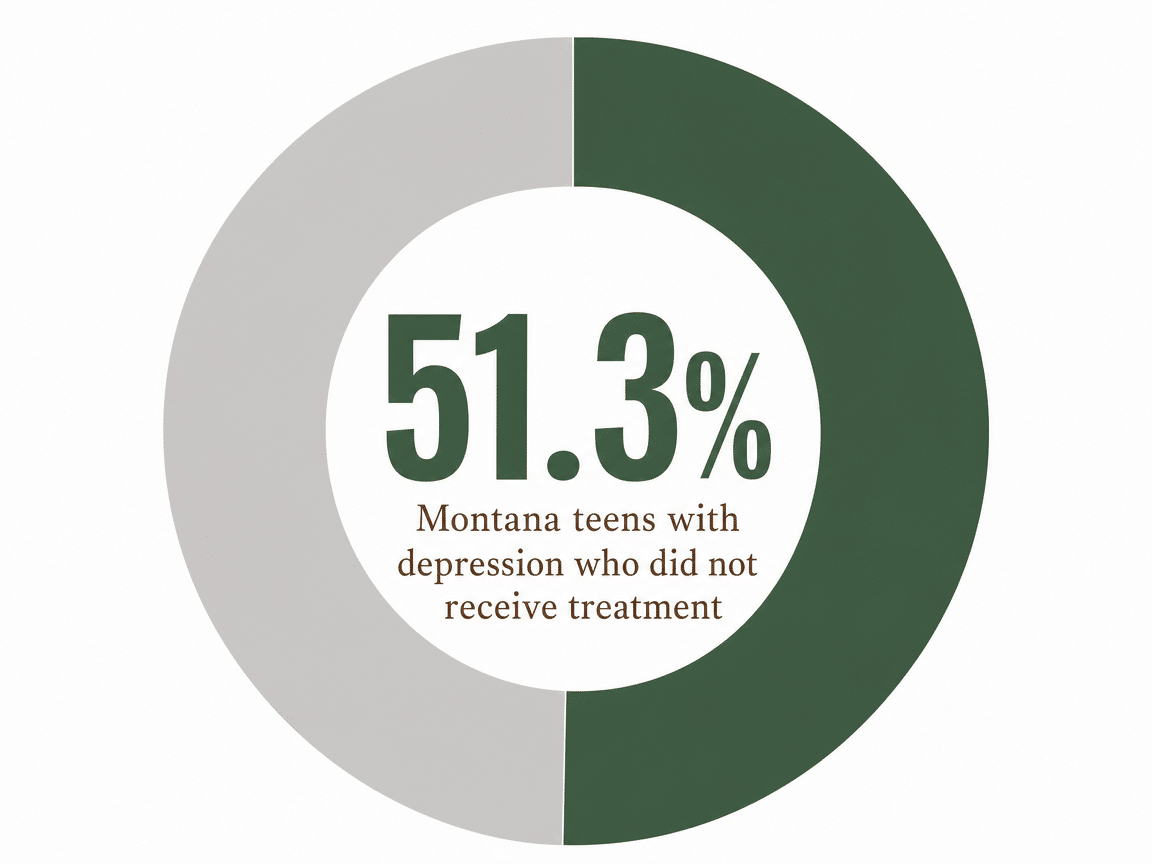
The numbers tell the story plainly. The Montana Substance Use Disorders Task Force found that 92% of Montanans with a substance use disorder are not receiving treatment 12. A separate look at youth depression in the state showed that 51.3% of Montana teenagers with depression did not receive care 13. These are not failures of willpower; they are failures of access—provider shortages, distance, cost, and waitlists that send people back out to their trucks before they ever get an intake call returned.
Read those numbers as permission to stop blaming yourself for how hard this has been. Whether you’re sitting in a Billings apartment, a ranch outside Glasgow, or a duplex in Missoula, you’re working inside a system that loses behavioral health workers from rural counties faster than it can replace them 7. The rest of this guide walks you through how that system actually works—who’s licensed, what’s confidential, what a first session feels like, and what to do when weekly counseling can’t carry the full weight of what you’re holding. One step this week is enough.
Who Is Actually Licensed To Sit Across From You
LCPC And LCSW In Plain Language
The two letter combinations you’ll see most often on Montana counselor profiles are LCPC and LCSW. Both can do individual counseling. Both have done a lot of training to get there. The difference is mostly about the lens they were taught to look through.
An LCPC is a Licensed Clinical Professional Counselor. To put those letters next to their name in Montana, they had to finish a master’s or doctoral degree, complete 3,000 hours of supervised clinical counseling practice, and pass an approved national exam 2. The application also requires fingerprints and a background check 1. Their training centers on the counseling room—what’s happening inside you, how to work with anxiety, depression, trauma responses, grief, and substance use, session by session.
An LCSW is a Licensed Clinical Social Worker. They earned a master’s degree from a program accredited by the Council on Social Work Education, completed 3,000 hours of post-graduate supervised work experience over at least 24 months, and passed the ASWB clinical exam 9. Their training keeps the counseling room in view, but it also widens the frame to include family, housing, work, benefits, and the systems pressing in on your life.
Neither letter set is better. An LCPC who has spent years working with trauma can be a strong fit. So can an LCSW who treats addiction every day. What matters more than the credential is whether the person sitting across from you has real experience with what you’re actually carrying—and whether you feel a little safer in the room after the first session than you did walking in.
Psychologists, Psychiatrists, And Other Titles You’ll See
You’ll bump into a few other titles while you search. A psychologist usually holds a doctoral degree (PhD or PsyD) and can do individual counseling, formal psychological testing, and assessments that other providers can’t. If a court, school, or disability process needs documentation, a psychologist is often the person who produces it.
A psychiatrist is a medical doctor (MD or DO) who can prescribe medication. Some do talk therapy, but in Montana, with the workforce stretched thin, most psychiatrists focus on medication management and coordinate with a counselor who handles the weekly sessions. If you think medication might be part of your picture—for depression, anxiety, sleep, or to steady you while you do trauma work—a psychiatrist or a psychiatric nurse practitioner is who writes that prescription.
You’ll also see LACs (Licensed Addiction Counselors), candidate-level counselors working under supervision toward full licensure, and pastoral or peer support roles. A candidate counselor is not a lesser counselor—they’re licensed to practice while supervised, and many are excellent. Ask. It’s a fair question.
How The State Actually Regulates Conduct
Behind every one of those licenses is the Montana Board of Behavioral Health. The Board sets the administrative rules counselors have to follow, hears complaints, and can suspend or revoke a license when someone crosses an ethical line. Since August 2022, the Board has used standardized public comment guidelines for its meetings, so anyone—including you—can weigh in on the rules that govern care 11.
Practically, this means two things. If you ever feel something went wrong in a session, there is a real place to file a complaint. And every counselor you meet is practicing under rules that can be read, questioned, and changed.
What Confidentiality Really Covers Under Montana Law
One of the first questions people ask, even if they don’t say it out loud, is some version of: if I tell this person what I’ve actually been doing, or what was done to me, where does that information go? It’s a fair question. The answer in Montana is more solid than most people realize.
State law puts the conversation between you and a licensed mental health professional on the same legal footing as the conversation between you and your attorney. Under MCA 26-1-807, the confidential relations and communications between a psychologist, psychiatrist, licensed professional counselor, or licensed clinical social worker and a client are protected on the same basis as those between an attorney and a client 10. That’s not a courtesy. It’s a statute. It means a counselor can’t be casually compelled to share what you’ve said in a session, and the bar for breaking that privilege is high.
Knowing the rule by name can change how the first session feels. You don’t have to trust on faith alone. You can ask your counselor to walk you through their confidentiality policy on intake, and you can read the statute yourself if that helps you settle into the chair.
What A First Session Feels Like When Trauma Is In The Room
The Intake Call And What To Ask Before You Book
The intake call is usually shorter than people expect. Fifteen, maybe twenty minutes. Someone—sometimes the counselor, sometimes a front-desk person—will ask what’s bringing you in, whether you’ve been in counseling before, what your insurance is, and when you can come in. You don’t have to tell the whole story. A sentence or two is plenty. “I’ve been struggling with drinking and some old stuff is coming up” is a complete answer.
Before you book, it’s fair to ask a few things:
- Have you worked with people carrying trauma?
- Do you have experience with substance use, if that’s part of what’s going on?
- What does a first session usually look like with you?
- Do you take my insurance, and what’s the cost if I’m paying out of pocket?
- How long is the wait to get in?
If the person on the phone gets uncomfortable with those questions, that’s information. A counselor who works well with trauma will not be thrown by you asking about it. If they say they’re not the right fit, that’s not rejection—that’s them doing their job. Ask if they can refer you to someone who is. Many will.
Pacing, Choice, And Body Awareness
A first session with a trauma-informed counselor often does not look the way movies have taught you to expect. Nobody hands you a tissue and asks about your childhood in the first ten minutes. The work, especially at the start, is slower and more careful than that. There are three things you’ll feel in the room when someone knows what they’re doing.
The first is pacing. Your counselor follows your speed, not theirs. If a question lands too hard, you can say so, and a good counselor will back up. They’ll often check in—”Is this okay to keep talking about, or should we set it down for now?”—instead of pushing through. Trauma work that moves too fast can re-wound. The slower pace is on purpose.
The second is choice. You decide what to share and what to skip. You can say, “I’m not ready to talk about that yet,” and the session keeps going. You can ask to know what a question is for before you answer it. You can stop. None of that gets you in trouble. Choice is part of the treatment, not a detour from it.
The third is body awareness. A counselor trained in trauma will notice when your shoulders climb up, when your breathing gets shallow, when your hands go still. They might pause and ask you to feel your feet on the floor, or look around the room and name three things you see. These aren’t gimmicks. They’re the nervous system finding its way back to the present, which is where the real work happens.
If those three feel present in the room, you’re in good hands. If they don’t, you’re allowed to try someone else.
Your Right To An Individualized Treatment Plan
Somewhere in the first few sessions, your counselor should start putting together a written plan with you. Not for you—with you. What are the goals? What does progress look like? What approaches are you going to try, and how will you know if they’re working? In Montana, when you enter certain treatment settings, the right to an individualized treatment plan is built into state law: each patient must have an individualized plan, developed by qualified professionals 4.
Outpatient counselors in private practice work the same way, even when the statute doesn’t apply line for line. If a counselor never mentions a plan, ask. “What are we working toward, and how will we know when we get there?” is a fair question to put on the table. Your time, your money, and your nervous system deserve a direction.
The Geography Problem: Cities, Frontier Counties, And Telehealth
Where you live in Montana shapes how hard this search is going to be. In Billings, Missoula, Bozeman, Great Falls, and Butte, you’ll find more counselors per capita, more group practices, and more chances of getting in within a few weeks. Step outside those city limits, and the math changes fast. The 2024–2025 Montana Healthcare Workforce Report tracks rural counties losing healthcare workers to urban centers, and behavioral health is one of the hardest-hit categories 7. The Montana Department of Public Health and Human Services maintains official Health Professional Shortage Area maps that show where the gaps are most severe 8. Plenty of frontier counties are on that map.
This is not just a Montana story. HRSA’s State of the Behavioral Health Workforce 2025 report found that roughly 40% of the U.S. population—about 137 million people—lives inside a Mental Health Health Professional Shortage Area, with rural counties more likely than urban counties to lack behavioral health providers, and substantial shortages of mental health counselors and psychologists projected through 2038 3. That’s a national projection, not a Montana-specific number, but Montana’s rural map sits squarely inside that pattern. Knowing the trend is national doesn’t fix the drive, but it does tell you the waitlist isn’t personal.
Telehealth is the practical workaround for a lot of Montanans. A licensed Montana counselor can meet with you over video from anywhere with a usable connection—your kitchen table, a parked truck with cell service, a private room at the local library. For weekly individual counseling, video sessions hold up well, and they cut out a two-hour round trip that was probably keeping you from going at all. A few honest caveats: connection quality matters, privacy at home matters more, and some kinds of trauma work feel different on a screen than they do across a room. If telehealth is your only realistic option, name that on the intake call and ask the counselor how they handle it. The good ones have thought about it.
Paying For It: Insurance, Sliding Scale, And Block Grant Programs
Cost is the wall a lot of Montanans hit before they ever sit down with anyone. It’s worth knowing what your real options look like before you decide you can’t afford to start.
If you have insurance through work, the marketplace, or a spouse, individual counseling is almost always a covered benefit. Call the number on the back of your card and ask three things: what your copay is per session, whether you have a deductible to meet first, and whether the counselor you’re considering is in-network. Out-of-network sessions can still be partially reimbursed on some plans, so ask about that too. Write the answers down. Insurance phone trees are not designed for someone already running on empty.
If you’re paying out of pocket, ask every counselor you call whether they offer a sliding scale. Many do, and many don’t advertise it on their website. A sliding scale means the fee moves with your income—same hour, same counselor, lower number. Community Mental Health Centers and Federally Qualified Health Centers are built around this model and are often the most affordable option in any given town.
For people who fall through those cracks, Montana’s Department of Public Health and Human Services uses federal Mental Health Block Grant funding to support community mental health services across the state, including counseling for adults with serious mental illness 5. Ask the intake worker at your local CMHC whether block-grant-funded slots are available. They often are, and they exist precisely so cost doesn’t become the reason you stop trying.
When Weekly Counseling Alone Is Not Enough
Signs Outpatient Sessions Are Carrying More Than They Can Hold
Weekly counseling does a lot of good work. There’s a point, though, where one hour every seven days starts to feel like trying to bail out a boat with a coffee cup. If you’ve been there, you already know the feeling—you leave a session a little steadier, and by Wednesday you’re back underwater.
A few honest signals that the level of care needs to shift:
- You’re using more, or more often, between sessions, and you can’t string together the sober days you used to.
- Trauma material is surfacing faster than the week can hold, and the nights are getting harder.
- You’ve started cancelling appointments because showing up feels like too much.
- Your counselor has gently raised the question of more support, and something in you flinched, then quietly agreed.
- You’re missing work, missing meals, or missing sleep in a pattern that’s not letting up.
None of that means weekly counseling failed you. It means the thing you’re working on is bigger than the container, and you deserve a container that fits. Naming this out loud with your counselor is one of the bravest things you can do in that room. They will not be surprised. They’ve been waiting for the door to open.
How Residential And Intensive Programs Change The Dynamic
When substance use is part of the picture and outpatient sessions can’t keep up, residential treatment changes the math in a way that’s hard to overstate. Instead of one hour a week, you’re inside a structured environment where individual counseling, group work, medically monitored detox if you need it, and time away from the triggers waiting at home all happen together. The trauma work and the substance use work stop competing for the same Tuesday afternoon. They get treated as the connected thing they actually are.
That’s the level of care a place like Rocky Mountain Treatment Center in Great Falls is built around—30, 60, or 90-day inpatient programs for adults, with detox, individual and group counseling, family therapy, and experiential pieces like equine therapy woven through the day. More than 80% of the staff are in recovery themselves, which tends to land differently than reading about recovery in a workbook. Dual diagnosis support means the depression, anxiety, or trauma sitting underneath the drinking or using gets treated alongside it, not after.
What matters as much as the residential weeks is what happens after. Continuity of care—a three-day Family Week so the people who love you understand what you’ve been through, weekly Zoom continuing care groups, follow-ups at 30, 60, 90, 180, and 365 days—is what keeps the work from coming undone the moment you walk back through your front door. If weekly counseling has been carrying more than it can hold, that’s the conversation worth having this week.
Small Steps That Count As Progress This Week
You don’t need a plan for the next year. You need one thing you can do in the next seven days that moves you a little closer.
Pick one:
- Call your insurance and ask what your mental health benefits actually cover.
- Look up the Community Mental Health Center serving your county and write down their intake number.
- Send a single email to a counselor whose profile felt human when you read it.
- Tell one person in your life—partner, sibling, sponsor, friend—that you’re starting to look.
- If substance use is part of what’s happening and weekly sessions haven’t been holding it, ask Rocky Mountain Treatment Center in Great Falls what an intake conversation looks like.
That’s it. One thing. If it took you three tries to even read this far, that counts too. The work of getting better in Montana is rarely a straight line, and showing up for yourself this week—quietly, imperfectly—is already the work.
Frequently Asked Questions
How Do I Find An Individual Counselor In Montana If I Live In A Rural County?
Start with your county’s Community Mental Health Center and ask about telehealth slots—a Montana-licensed counselor can meet with you over video from anywhere with a usable connection. HRSA projects counselor and psychologist shortages through 2038, with rural counties hit hardest 3, so the wait may be real. Ask to be put on a cancellation list, and check whether nearby counties have shorter queues.
What’s The Difference Between An LCPC And An LCSW In Montana?
Both can do individual counseling and both completed 3,000 supervised hours plus a national exam 2, 9. LCPCs are trained primarily through the counseling-room lens—what’s happening inside you, session by session. LCSWs widen the frame to include family, work, housing, and benefits pressing on your life. Neither is better. What matters more is whether they have real experience with what you’re carrying.
Is What I Say To My Counselor In Montana Actually Confidential?
Yes, with limits. Montana law puts your conversations with a licensed counselor, social worker, psychologist, or psychiatrist on the same legal footing as attorney-client privilege 10. The exceptions are narrow: a credible plan to seriously harm yourself or someone else, abuse or neglect of a child or vulnerable adult, and certain court orders. Outside those situations, what you say in the room stays in the room.
What Should I Expect In The First Session If I’m Carrying Trauma?
Slower than you might fear. A trauma-informed counselor follows your pace, not theirs, and won’t push you into the hardest material in the first hour. You decide what to share and what to skip. Expect questions about what’s bringing you in, your history with counseling, and what you’d like to work toward. If something lands hard, you can say so—and a good counselor will back up.
Can I Get Individual Counseling In Montana If I Don’t Have Insurance?
Yes. Community Mental Health Centers and Federally Qualified Health Centers offer sliding-scale fees that move with your income. Montana’s Department of Public Health and Human Services also uses federal Mental Health Block Grant funding to support community counseling, including for adults with serious mental illness 5. Ask the intake worker whether block-grant-funded slots are available. Many private counselors quietly offer reduced fees too—just ask.
When Is Weekly Counseling Not Enough, And What Comes Next?
If you’re using more between sessions, cancelling appointments because showing up feels too heavy, or trauma material is surfacing faster than the week can hold, the level of care needs to shift. Residential treatment—like the 30, 60, or 90-day programs at Rocky Mountain Treatment Center in Great Falls—pairs detox, individual counseling, and dual diagnosis support with continuing care so the work holds after you leave.
References
- [PDF] Licensing Requirements and Application Checklist Licensed Clinical …. https://boards.bsd.dli.mt.gov/Portals/133/Documents/bbh/BBH-LCPC-APP_License-App-Checklist.pdf?ver=2019-04-13-141611-970
- 37-39-309. Clinical professional counseling license required. https://archive.legmt.gov/bills/mca/title_0370/chapter_0390/part_0030/section_0090/0370-0390-0030-0090.html
- State of the Behavioral Health Workforce, 2025. https://bhw.hrsa.gov/sites/default/files/bureau-health-workforce/data-research/Behavioral-Health-Workforce-Brief-2025.pdf
- 53-21-162 – . Establishment of patient treatment plan — patient’s rights.. https://archive.legmt.gov/bills/mca/title_0530/chapter_0210/part_0010/section_0620/0530-0210-0010-0620.html
- Mental Health Block Grant Programs – dphhs. https://dphhs.mt.gov/BHDD/Prevention/MentalHealthBlockGrant
- [PDF] Montana Licensing Reform Task Force. https://esd.dli.mt.gov/_docs/2026-02-24-Consolidated-Comments.pdf
- 2024–2025 Montana Healthcare Workforce Report. https://www.umt.edu/health-research-partnership/unit-updates/24_25healthcare_report.php
- Montana Health Professional Shortage Area (HPSA) Designations. https://dphhs.mt.gov/ecfsd/primarycare/ShortageAreaDesignations
- Licensing Requirements and Application Checklist Licensed Clinical Social Worker. https://boards.bsd.dli.mt.gov/Portals/133/Documents/bbh/BBH-LCSW-APP_License-App-Checklist.pdf?ver=2019-04-13-141859-133
- 26-1-807. Mental health professional-client privilege, MCA. https://archive.legmt.gov/bills/mca/title_0260/chapter_0010/part_0080/section_0070/0260-0010-0080-0070.html
- Administrative Rules – Professional Boards & Licensing. https://boards.bsd.dli.mt.gov/behavioral-health/regulations/administrative-rules
- [PDF] Montana Substance Use Disorders Task Force Strategic Plan – dphhs. https://dphhs.mt.gov/assets/publichealth/EMSTS/opioids/MontanaSubstanceUseDisordersTaskForceStrategicPlan.pdf
- ‘It Just Happens Here:’ In a Perfect Storm of Risk Factors, Montanans …. https://www.umt.edu/news/2024/02/021524here.php